The Question on the Intake Form That People Skip
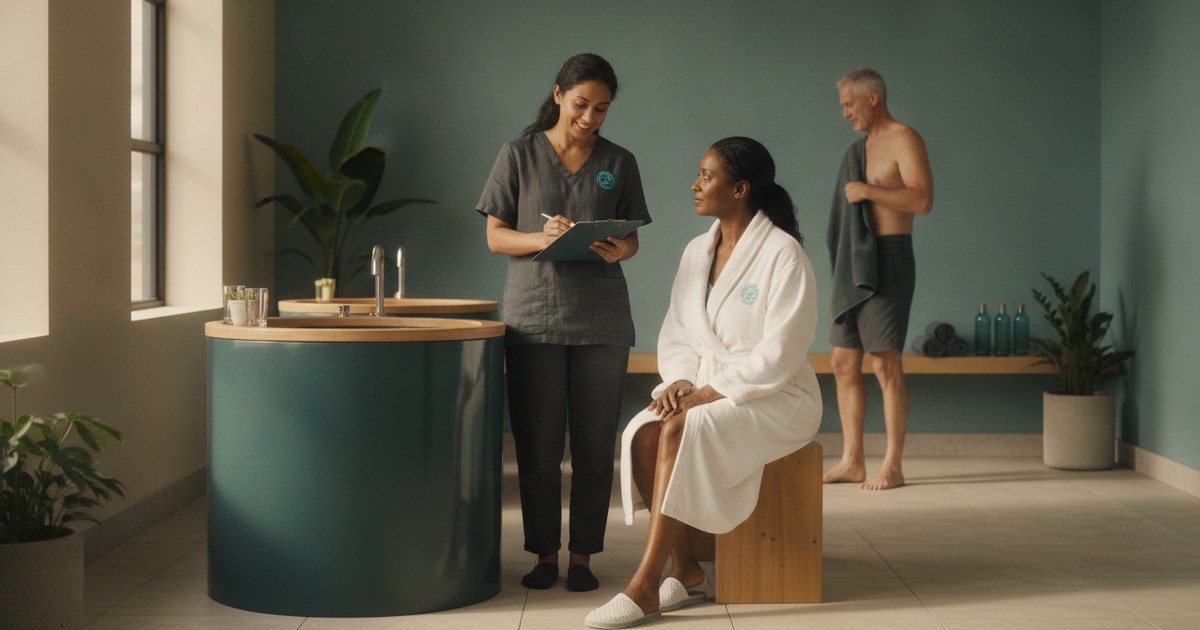
Every plunge studio hands you the same clipboard. Name, emergency contact, then a column of conditions with little boxes next to them. Most people skim it, tick nothing, and hand it back before the pen warms up.
At a studio worth going to, someone reads what you wrote.
That is not a formality. If you check the box next to a cardiac condition, the next thing that happens is a conversation. Not a refusal, and not a lecture either. Someone asks a few more questions, and depending on your answers you either get in the water or you get asked to come back after you have talked to your doctor.
That screening is most of the safety system. The tub is just a tub. What makes cold plunge reasonable for almost everybody and unreasonable for a few is who is standing in front of it.
What Studios Actually Decline
There is a short list that gets a no at nearly every studio, and staff will not negotiate it with you at the counter.
A known heart condition is the first one. Cold immersion changes how hard the heart works in the opening moments, and nobody at a front desk is qualified to guess how your particular heart handles that. Studios do not decline because they have assessed you. They decline because they have not, and cannot. Your cardiologist can.
Uncontrolled or newly diagnosed high blood pressure sits in the same place. If yours is managed and your physician knows you are doing this, most studios will take you. If you are still working out medication, expect to be asked to wait.
Raynaud's is the one people argue about, usually because they have a mild version and have been fine in cold weather their whole life. Studios still decline it more often than not. Cold water is not cold air, and a condition defined by how your blood vessels react to cold is an awkward fit for a tub of ice water more or less by definition.
Pregnancy gets declined almost universally, and the honest reason is policy. A studio is not going to be the party that made that decision for you. Your OB or midwife will tell you what they think, and even if they are relaxed about it, the studio rule generally holds.
None of this is a studio deciding you are fragile. It is a studio declining to make a medical decision on your behalf in a lobby.
The Ones That Get a Conversation First
A second group does not get a flat no. It gets questions.
Medications come up more than anything else. Beta blockers, blood pressure medication, sedatives, anything that changes how your heart rate or blood pressure responds to stress. Staff are not going to tell you whether yours is a problem. They will tell you to ask whoever prescribed it, and that is the right answer even when it is the annoying one.
Recent surgery is another. Fresh incisions and cold water do not go together, and the timeline belongs to your surgeon.
Cold urticaria, which is hives triggered by cold exposure, is rarer than people assume and more serious than the name suggests. If you have ever broken out after swimming in cold water or holding an ice pack against your skin, say so before you get in rather than after.
Age on its own is not a disqualifier. Plenty of older adults plunge regularly and have done so for years. What changes is how much you want a staff member actually watching, and how much sense a shorter, warmer first session makes.
Days to Skip It Even When You Are Cleared
The list is not only about who you are. It is also about what kind of day you are having.
Alcohol is the obvious one. It dulls exactly the judgment the plunge asks you to use, which is your read on how you actually feel in the water. Studios that share a block with bars deal with this constantly, and the good ones turn people around.
Being sick is the next. If you are running a fever or fighting something off, the common practice is to wait until you feel normal again.
Temperature at either end matters too. If you are already cold and shivering, the plunge is not going to give you anything useful. If you have just come in off a long run in Tampa heat and you feel lightheaded, that is not the moment either. Sit down, drink something, get your breathing back to ordinary, then decide.
And plunging alone at home is the situational skip most people ignore, because a home setup has no one in the room by definition.
What the Cold Shock Response Feels Like
Everything on those lists traces back to one thing, which is what your body does in the first seconds of contact with cold water.
You gasp. It is involuntary and it happens before you have an opinion about it. Your breathing goes fast and shallow, your heart picks up, your shoulders climb toward your ears. For most people it passes quickly and the plunge turns into the mental exercise everyone describes. The longer version of what is happening is worth reading if you want the mechanics rather than the summary.
The reason it matters here is the gasp itself. If your face is underwater when it arrives, you inhale water. If your heart or your blood pressure is already under strain, that sudden jump is the part a physician would want to know about in advance.
Which is the part people get backwards. The cold is not really the hazard. The surprise is. That is also why the second plunge feels so much more manageable than the first, and why studios put so much weight on how you get in rather than how long you stay.
If You Are Borderline, There Are Smaller Versions
Plenty of people land somewhere between cleared and declined. Their doctor said fine, but they are not enthusiastic about full immersion on day one. That is a normal place to be.
Shorter helps. Warmer helps more than people expect, and most studios can adjust the setting. Getting in slowly, feet and hands first, keeping your face well clear of the water, and staying within reach of a staff member covers most of what goes sideways for beginners.
Breathwork gets suggested as the gentler substitute, and it is worth doing on its own terms, though certain breath-hold practices come with their own screening questions and are not a blanket safe option for everyone.
People also ask about cryotherapy instead of cold water, on the assumption that it is the milder one. It is a different exposure rather than an automatically safer one, and a reputable cryo studio runs a screening list that overlaps with this one more than most people would guess.
Who the List Is Actually Written For
Most people who walk into a plunge studio will fill out the form, check nothing, get in, hate the first minute, and be completely fine.
The screening questions are not written for them. They exist for the small number of people who would otherwise have found out the hard way, and the only way to know which group you are in is to answer honestly and let someone with your chart in front of them make the call.