Which Goes First
Someone at a recovery studio usually asks this one while they're waiting: boots first, then sauna, or sauna then boots?
Staff often give a confident answer. Both sequences have a rationale, and the right one depends on what you're trying to do.
What Each Modality Does
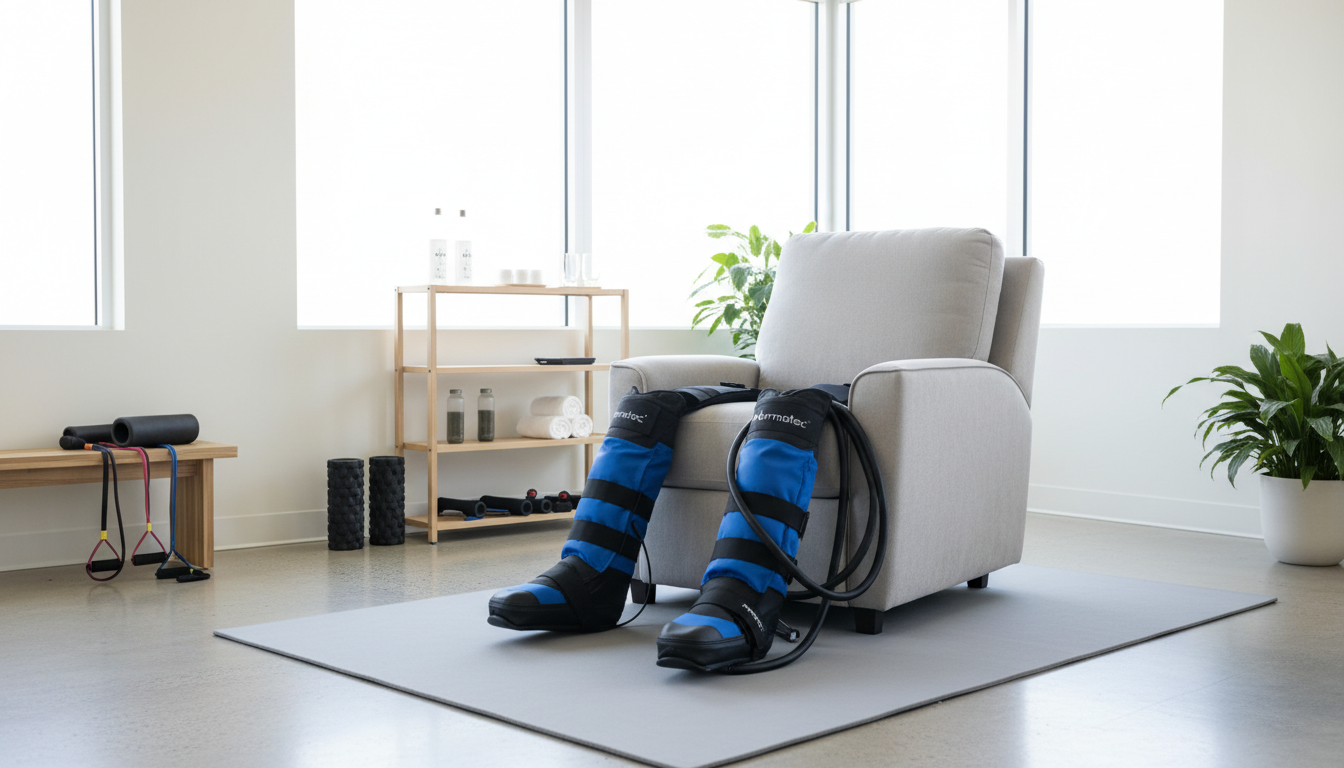
Compression boots move fluid mechanically. They squeeze your legs in a wave from the foot upward, pushing excess interstitial fluid and blood toward the body's core. The effect is clearest when fluid has accumulated: after a run, after a long flight, after a day on your feet.
Sauna heats tissue. Core temperature rises, blood vessels dilate, blood flow to the periphery increases. The systemic stress response (heat shock proteins, cardiovascular load) happens in parallel with the fluid dynamics, but it's separate from them.
These mechanisms interact. The question is which order gets you more of what you came for.
The Case for Compression First
When fluid has pooled in your legs, vasodilation alone doesn't clear it. More blood flow into already-heavy legs can feel like progress, but the fluid sitting in the tissue doesn't drain faster just because circulation increased.
Compression before sauna moves that accumulated fluid first. Your legs enter the heat phase with less congestion. The sauna can do what it does best (systemic warming, cardiovascular stress, sweating) without competing with fluid load in the tissue.
Most practitioners who think about sequencing default to this order for post-training recovery. If clearing legs is the priority, before is the more logical choice.
The Case for Compression After
Some people prefer the opposite, and there's reasoning behind it.
Sauna opens tissue. Heat increases local blood flow, warms muscle, and, anecdotally, makes subsequent compression feel more thorough. Warm legs are more pliable; the pressure waves seem to penetrate further than on cold, tight tissue.
After sauna, compression also works as a structured cooldown. You come out of the heat with body temperature elevated, and the rhythmic squeeze gives you something to do while you come back down. It's calming in a way that just sitting isn't.
Neither approach is wrong. They emphasize different things.
What the Research Says
Not much specific to this question. Most compression research looks at compression in isolation or versus passive rest, not compression-and-sauna sequencing.
What's established: compression after exercise reduces perceived soreness and swelling compared to passive recovery. Sauna after exercise is associated with improved perceived recovery and some cardiovascular adaptation. What order between the two is best? That's practitioner observation and athlete experimentation more than trial evidence.
Anyone claiming otherwise is overstating the research.
The Practical Split
For athletic recovery, when legs are heavy from training and the goal is to clear them:
Compression first. Move the fluid, then heat.
For general wellness or stress reduction, not coming off a hard workout, just want to feel good:
Order matters less. Do whichever has the shorter wait, or whichever you'd rather end on.
For maximum relaxation, if you want to leave feeling loose and calm rather than activated:
Sauna, then compression. End on the rhythmic squeeze rather than the heat spike.
Caveat
Most people using both modalities casually won't notice much difference either way. The gap between before and after is real for athletes with specific recovery goals. For everyone else, the bigger variable is time in each: 20 full minutes of compression is more useful than 8, regardless of when it happens.
Don't let sequence optimization become a reason to cut either session short.