Compression boots make your legs feel better after hard training. That's the honest core of it. The research shows small benefits for soreness and perceived fatigue, and little or no effect on how fast you run or ride next time.
That isn't nothing. If feeling fresher gets you to your next session, it has value. But if you're paying for boots expecting a performance edge, the evidence doesn't back that up.
What Compression Boots Do
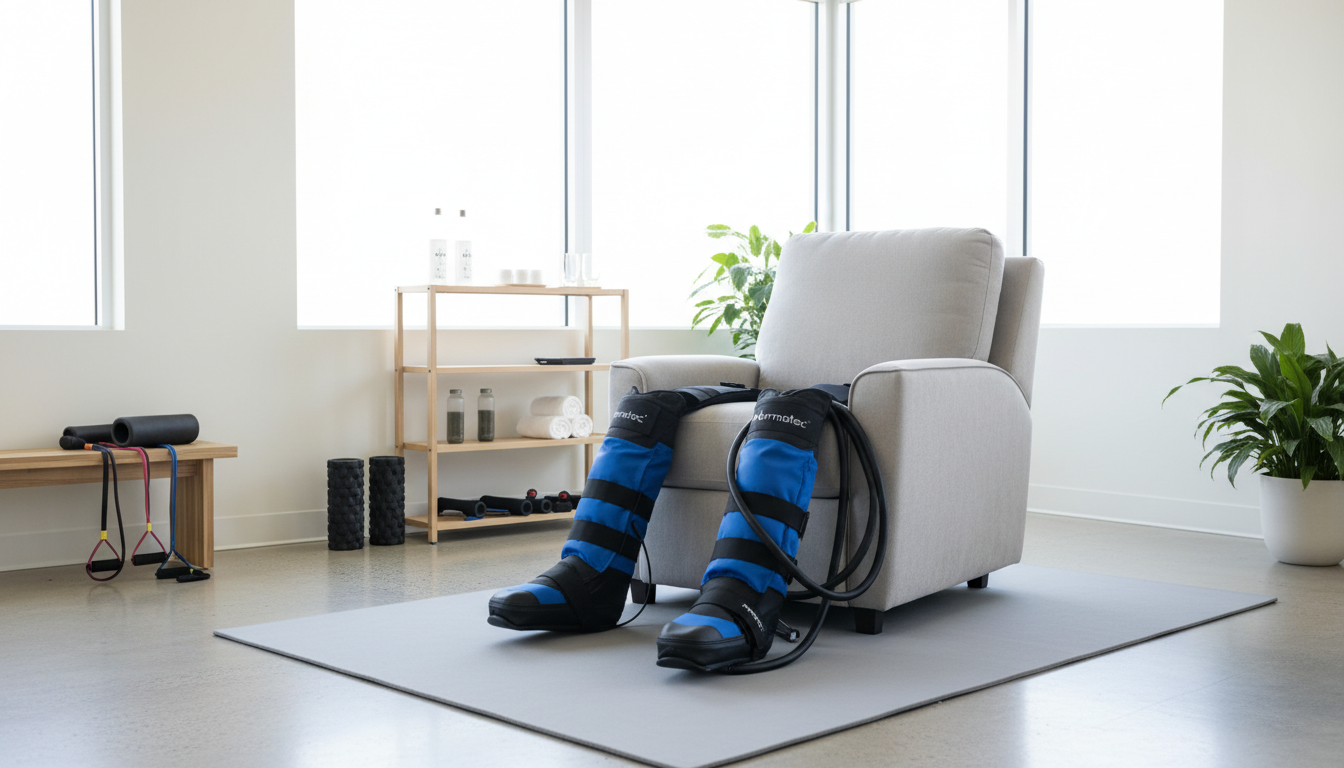
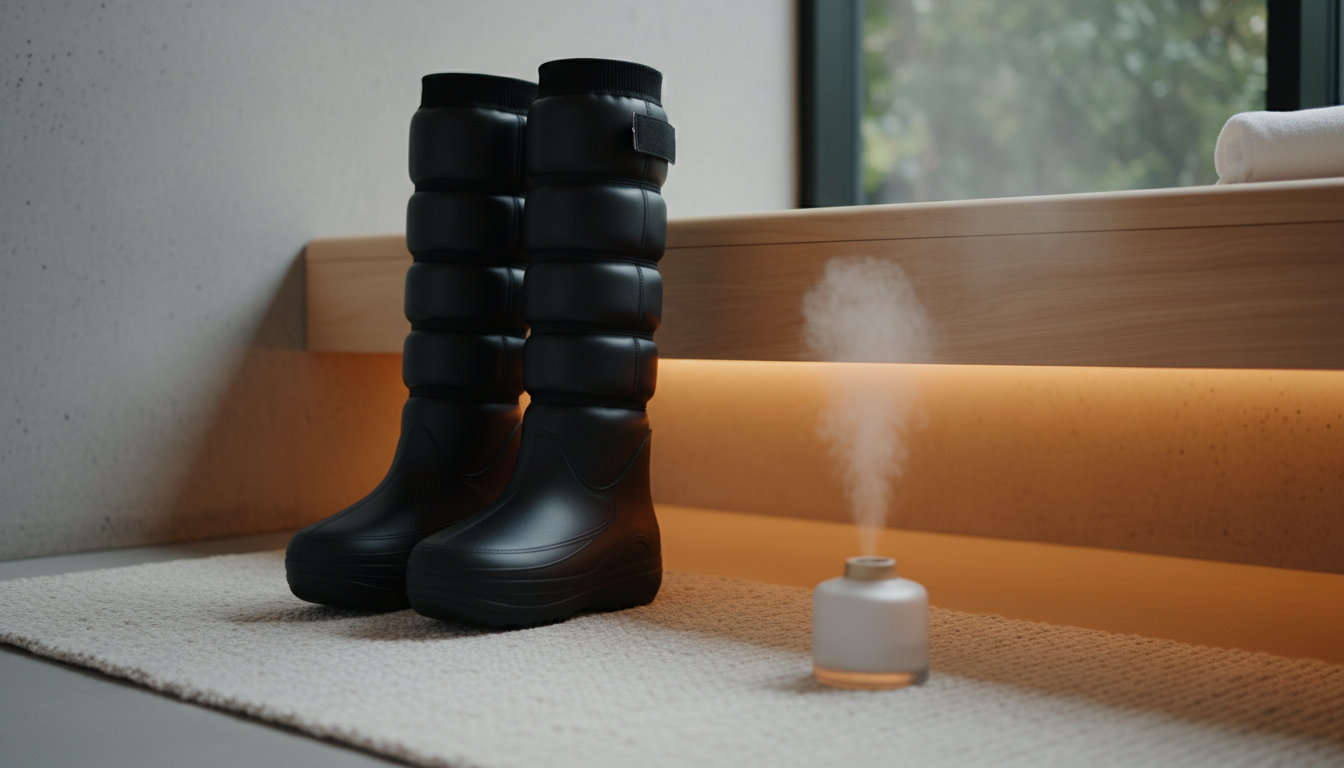
Normatec and similar systems are called intermittent pneumatic compression. You zip your legs into long sleeves with air chambers. The chambers inflate one after another, starting at the feet and moving up toward the hips, hold, then release. A cycle takes under a minute and repeats for the whole session.
The idea is that the rolling squeeze pushes fluid out of the legs and back toward the heart, similar to how your calf muscles do it when you walk. Hospitals have used related devices for decades, mainly to help prevent blood clots in people who can't move, and to manage lymphedema. Recovery boots borrowed the approach for athletes.
Common brands you'll see in Tampa studios include Normatec (made by Hyperice), Therabody RecoveryAir, and Rapid Reboot.
Compression Boots Benefits: What the Research Shows
Less soreness, modestly
A 2024 meta-analysis pooled 17 studies with 319 people who used lower-leg pneumatic compression after exercise. It found a trivial to small benefit for muscle function and a trivial to moderate benefit for pain and soreness, with very mixed results on blood markers of muscle damage. The authors' summary: potentially useful, mainly for perceived soreness (Maia et al., 2024, Biol Sport).
A small Auburn University study in 20 lifters, who did three days of heavy squats, found that pneumatic compression largely prevented the drop in pressure-pain threshold (a soreness measure) seen with a sham treatment (Haun et al., 2017, PLoS ONE). Strength didn't differ between groups.
Feeling fresher right away, not days later
At the 2015 Western States 100-mile race, 72 finishers were randomly assigned to 20 minutes of massage, pneumatic compression, or lying down. Compression lowered fatigue ratings immediately afterward. From one to seven days later, none of the groups differed in soreness, fatigue, or 400-meter run times (Hoffman et al., 2016, J Orthop Sports Phys Ther).
No clear performance boost
In 21 trained cyclists, 30 minutes of boots between a 20 minute ride and a 4 minute all-out effort made no meaningful difference to power in the second effort. Perceived recovery was slightly better, but not significantly (Overmayer & Driller, 2018, Int J Sports Physiol Perform).
What isn't supported
- "Flushing lactic acid." Lactate clears on its own within an hour or so of exercise. The cycling trial found no clear effect of boots on lactate clearance.
- Detox or immune boosts. No evidence.
- Preventing clots on your own. Medical compression devices are used for clot prevention in hospitals under clinical protocols. A recovery studio session is not a substitute. For travel swelling, see compression therapy for travel swelling.
How to Use Compression Boots
- Session length: 20 to 30 minutes. That's the most common protocol in the research, usually at around 80 mmHg (Maia et al., 2024).
- Pressure: Start at a low to middle setting. Firm is fine; painful isn't.
- Timing: After a hard workout or long run, or in the evening to wind down. Using them before a workout is an option too, covered in compression boots before a workout.
- Frequency: As often as you like if you're healthy. Many athletes use them after every hard session.
Wear shorts or leggings, take your shoes off, and plan to sit still. Many people nap.
Compression Boots vs Other Recovery Options
| Method | Evidence for soreness | Evidence for next-day performance | Time |
|---|---|---|---|
| Compression boots | Small benefit | Little or none | 20 to 30 min |
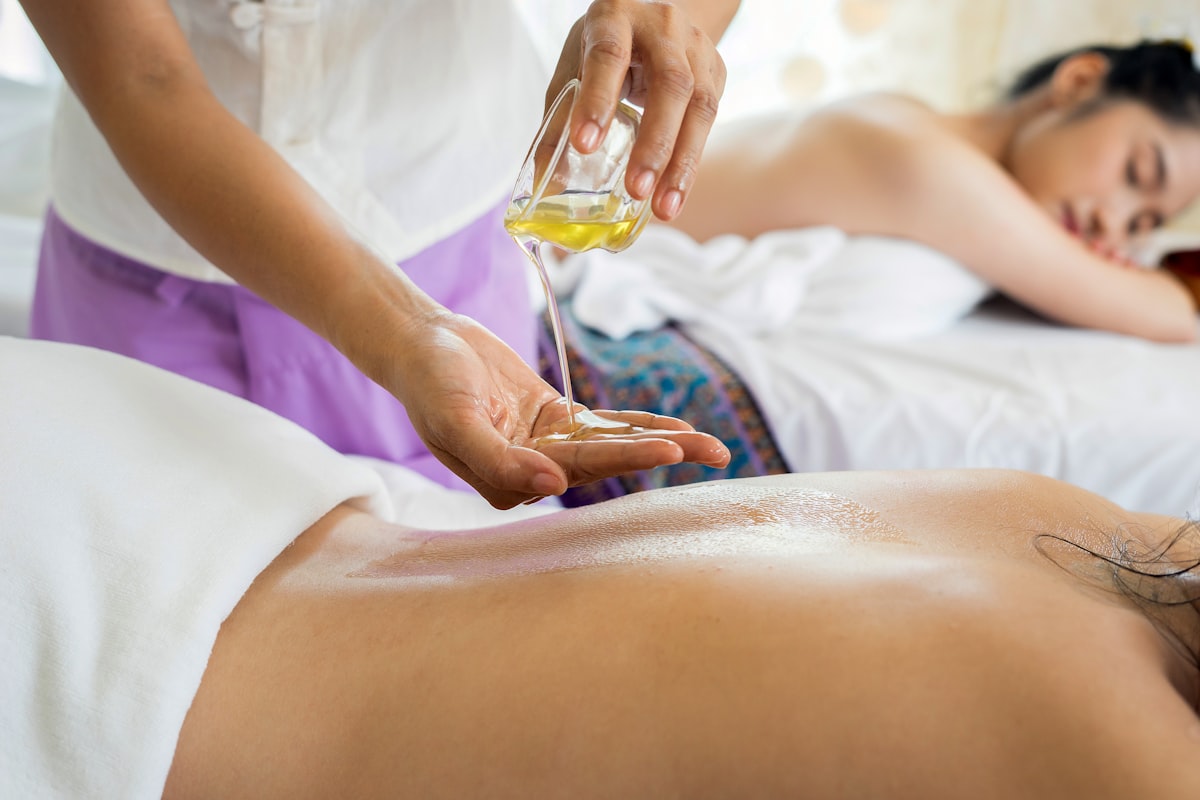
| Massage | Helps short term | Little | 20 to 60 min |
| Cold water immersion | Helps vs rest | Some, for jump and sprint | 5 to 15 min |
| Contrast therapy | Helps vs rest | Mixed | 20 to 40 min |
None of these clearly beats the others. Pick the one you enjoy and will actually do. More on the hot and cold options in contrast therapy.
If swelling or lymph flow is the goal rather than workout recovery, lymphatic compression therapy explains when it's worth the session fee.
Who Should Ask a Doctor First
Don't use compression boots without medical advice if you have:
- A current or suspected blood clot (DVT)
- Severe peripheral artery disease
- Heart failure
- A leg infection, open wound, or recent surgery on the legs
Finding Compression Boots in Tampa Bay
Recovery studios across Tampa Bay offer Normatec and similar boots, often as a standalone 30 minute session or as an add-on to sauna or cold plunge. You'll find them in South Tampa, Westshore, and Carrollwood, and farther north in Wesley Chapel, Lutz, and Land O' Lakes. Prices and the buy-your-own math are in compression therapy cost.
When comparing studios, check:
- Which system they use, and whether it has upper leg and hip coverage
- Session length options
- Adjustable pressure
- A comfortable recliner, since you'll be sitting a while
- Bundles with sauna or cold plunge
Find compression therapy in Tampa or browse the compression therapy directory.