What People Get Wrong
Walk into most cryotherapy studios and you will see signs about -250°F. The number is meant to impress, and it does. It also throws off your sense of what is actually happening inside the chamber.
The air is that cold. Your skin is not. By the time you step out, your skin surface has dropped to maybe 40°F, your core has barely moved, and the muscles underneath are warmer than people assume. The chamber temperature does not cool you to the chamber temperature. It cools you fast enough, for long enough, to trigger a stress response. The stress response is the product.
That distinction matters for understanding why the temperature is what it is and why colder is not better past a point.
The Two Chamber Types and Their Temperatures
Most cryo studios run one of two systems:
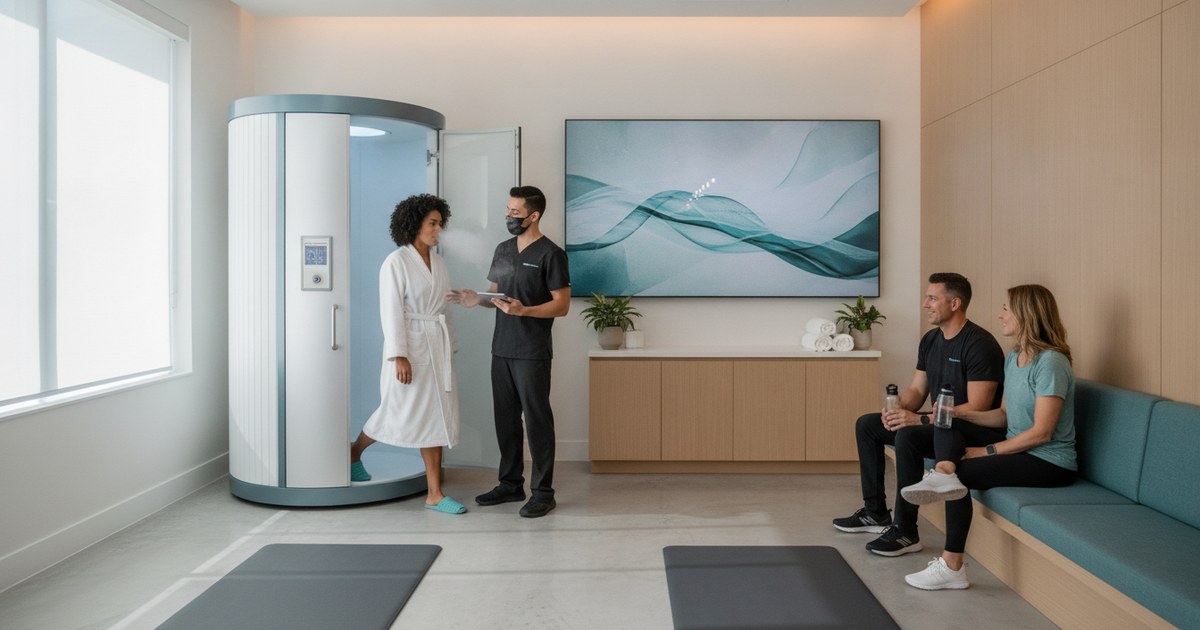
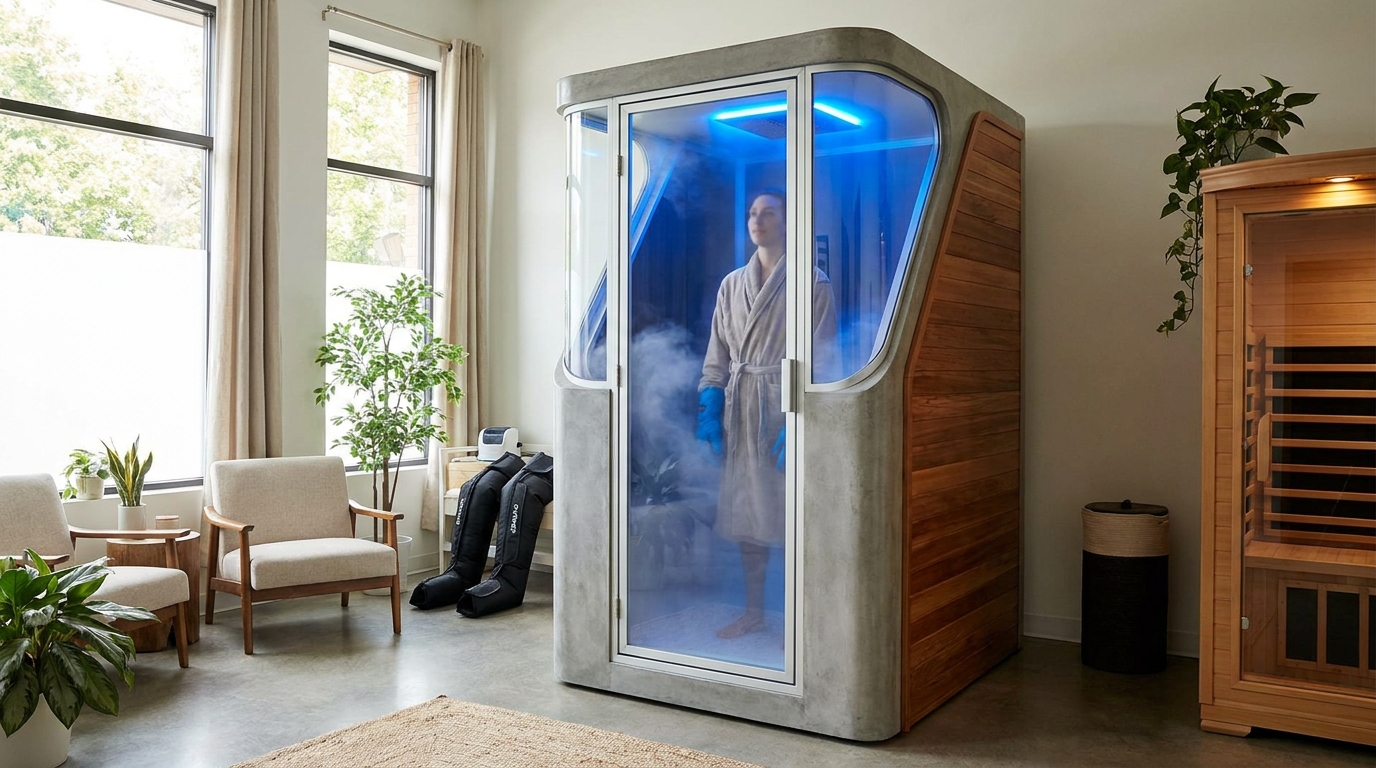
Nitrogen chambers. Liquid nitrogen vaporizes into a cabin that fits one person, head exposed. Air temperature runs -200°F to -300°F (-130°C to -184°C). Sessions last two to three minutes. The cabin warms quickly between users because the nitrogen has to be replenished.
Electric chambers. Refrigerant-cooled walk-in rooms that fit one to four people. Air temperature runs -130°F to -170°F (-90°C to -110°C). Sessions last three to four minutes because the chamber is warmer and the skin needs more time to reach response temperature.
Both systems aim at the same physiological endpoint. They take different paths to get there.
Why The Air Has To Be So Cold
Air is a terrible conductor of heat, which is the whole reason the chambers work the way they do.
If you stand in a 32°F freezer for three minutes, you feel cold. Skin temperature drops a little. Nothing happens that resembles a meaningful stress response. The conduction rate is too slow.
Drop the air to -200°F and the gradient between your skin and the air gets so steep that heat leaves the body fast enough to register as a real threat. The nervous system reacts. Norepinephrine spikes. Vasoconstriction snaps in. The endocrine system flags the event.
This is the trick. The chamber does not freeze you. It scares your nervous system into a useful response and then lets you out before any of the cold reaches deeper structures.
What Your Skin Actually Sees
A few measurements from the research literature:
- Skin surface temperature drops from a baseline near 90°F to between 30°F and 50°F during a typical three-minute session (Cuttell et al., Cryobiology, 2017).
- Muscle temperature one centimeter deep drops about 1 to 2°F.
- Core body temperature drops less than 1°F in most subjects.
- Skin rewarms to near-baseline within ten to twenty minutes after exit.
The thermal effect is shallow and short. The neurological and endocrine effects are what stay with you. That is where the value is, if there is value.
The Temperature Window That Matters
Research on whole-body cryotherapy clusters around two temperature ranges:
- Moderate WBC: -110°C to -140°C (-166°F to -220°F)
- Severe WBC: -140°C to -195°C (-220°F to -319°F)
A 2015 systematic review by Bleakley et al. examined whether colder is better and concluded that the response curve flattens above the moderate range (Bleakley et al., Open Access J Sports Med, 2014). Going colder than -140°C does not produce a proportional jump in norepinephrine, soreness reduction, or inflammatory markers.
The -250°F advertised on the studio wall is not better than the -180°F at a competing studio in any clinically meaningful way. Once you are past the cold-shock threshold, you have the response. Pushing the dial colder mostly increases skin risk.
What About Localized Cryotherapy?
Spot treatments with a cold air gun typically run -30°F to -250°F at the nozzle, applied for a few minutes per area. The skin sees a much smaller cold load than whole-body cryotherapy because the area is smaller and contact is brief.
Localized cryo is reasonable for managing inflammation in a specific joint or trigger point. The systemic stress response that drives whole-body benefits does not show up the same way because you are not cooling a meaningful surface area. The face version of this is covered in cryotherapy facials.
Comparing The Numbers Honestly
A 50°F cold plunge does not look impressive next to -250°F cryotherapy on a sign. The plunge is the more thermally aggressive intervention.
Water conducts heat about 25 times faster than air. Three minutes at 50°F water removes more heat from your tissues than three minutes at -250°F air. Hydrostatic pressure also adds a vascular effect that air chambers cannot reproduce.
It is context. The chamber temperature has to be extreme because air is the wrong medium for moving heat. If you happen to want the deepest thermal effect for the dollar, water at moderate temperatures will outperform air at extreme ones.
If you want a deeper look at how the two stack up in practice, see our cryotherapy vs cold plunge comparison.
Practical Notes If You Are Booking
A few things worth confirming at any Tampa-area studio:
- What system are they running (nitrogen or electric) and what is the actual operating temperature?
- How long are sessions and are they adjusted for system type?
- Are mittens, socks, and shoes provided, and are you screened for contraindications?
- What is their protocol for first-time clients?
A studio that cannot answer these is selling a feeling. A studio that can will explain the temperature, the duration, and the protocol without needing a marketing pitch.
For directory listings of cryotherapy in the Tampa area, see our cryotherapy directory. For more on how cryotherapy works in your nervous system and at the cellular level, the whole-body cryotherapy guide covers the physiology in more depth.