The cold-air part of a whole-body cryotherapy session lasts minutes, not the length of a typical spa appointment. A 2015 Cochrane review describes research exposures lasting two to four minutes. That is a description of study protocols, not a recommended target for every person or device.
Your full appointment takes longer because staff need time for screening, instructions, changing, and equipment setup. Before booking in Tampa, ask for both numbers: the time inside the chamber and the time you should reserve for the visit.
What whole-body cryotherapy means
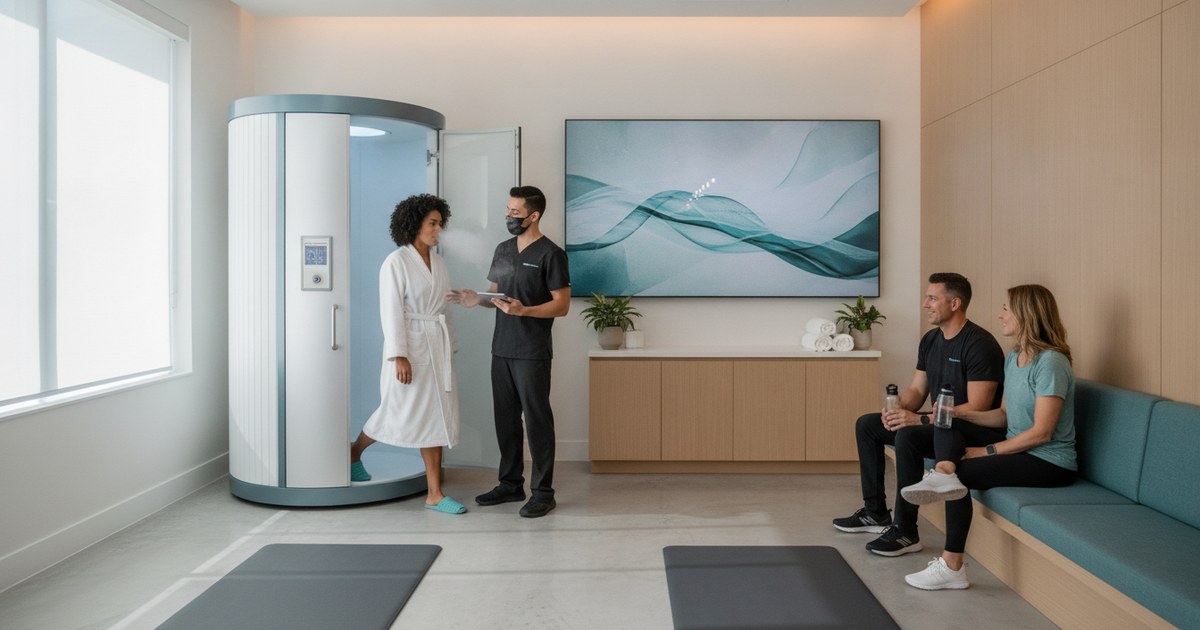
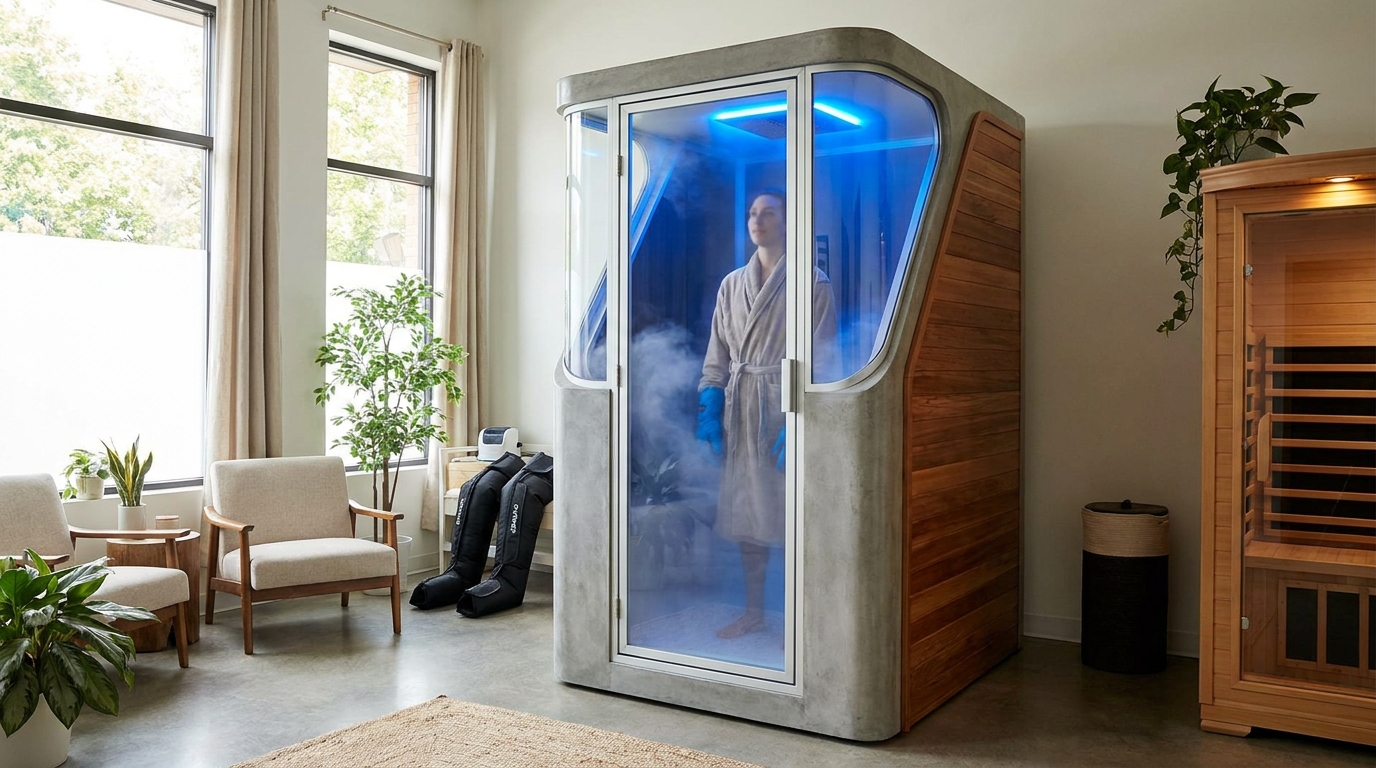
Whole-body cryotherapy uses extremely cold air in a chamber. People sometimes shorten the name to "whole-body cryo." Recovery studios offer it as a brief cold-exposure service, often alongside compression or other treatments.
Equipment varies. Some cabins leave your head outside and cool the area below your neck. Researchers may call that partial-body cryotherapy. Other systems use a walk-in room that exposes the entire body, including the head, to cold air. Nitrogen-based and electrically cooled systems also differ in how they operate.
A 2017 review in Frontiers in Physiology discusses cryotherapy equipment, protocols, and the variation in research findings. The device and procedure matter; the name on a service menu alone does not tell you what you will experience.
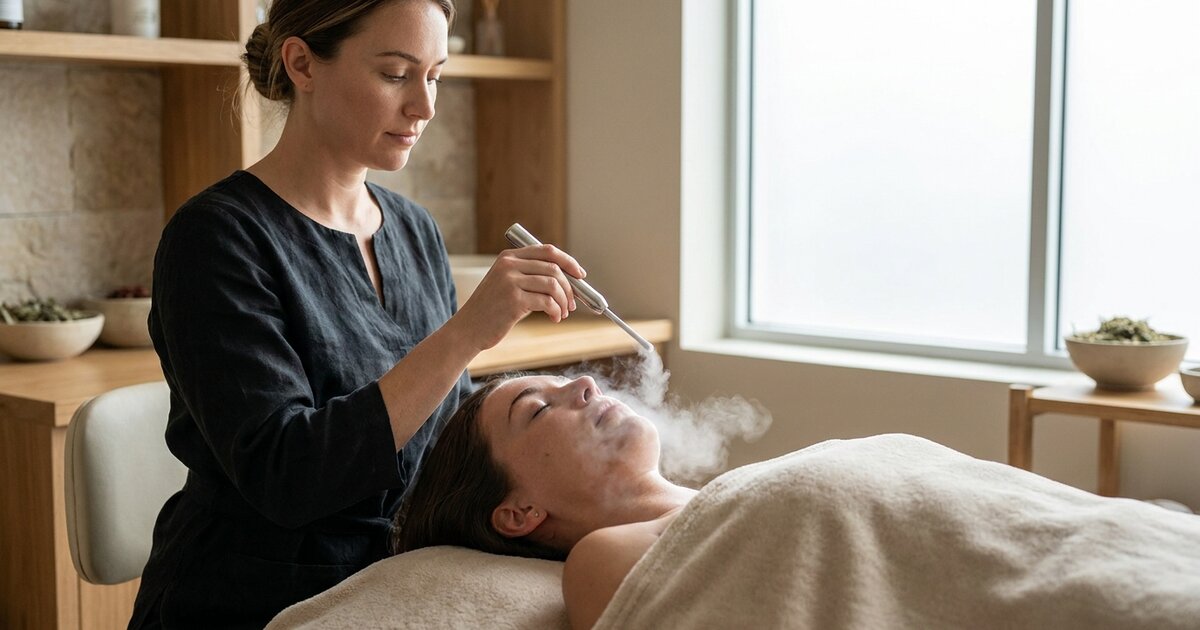
Cryotherapy also describes other treatments. A cryofacial targets your face, while a dermatologist may freeze a skin lesion with liquid nitrogen. Those procedures have different purposes and timing. If you want a facial treatment, see cryotherapy facials in Tampa Bay.
How long is a cryotherapy session?
Separate three parts of the visit:
| Part | What happens | What to confirm |
|---|---|---|
| Before exposure | Screening, instructions, changing, and checking protective equipment | How early to arrive and what to bring |
| Cold-air exposure | Staff run the device for a limited period | The device-specific time limit and how to stop early |
| After exposure | You leave the chamber, get dressed, and check how you feel | Whether staff recommend a rest period before leaving |
Research exposures of two to four minutes do not mean you should ask for four minutes. Follow the provider's equipment instructions and screening process. Do not request extra exposure to make a short appointment feel like better value.
Ask whether the advertised appointment length includes the preparation. If you are fitting a first visit into a lunch break in Carrollwood or South Tampa, do not plan your return to work around chamber time alone.
Does a shorter or colder session work better?
Researchers have not established a universal best dose for recovery-studio cryotherapy. Studies use different temperatures, equipment, numbers of visits, and exercise tests. You cannot judge effectiveness from the lowest temperature printed on a website.
Extreme cold can cause injury. More time increases exposure; it does not establish more benefit. Staff should tell you how to signal discomfort, how they monitor the visit, and how you can exit before the timer finishes.
For the equipment differences, read cryotherapy temperatures explained, but follow the instructions for the device at your appointment rather than treating a general temperature range as a personal protocol.
Recovery benefits: what studies can tell you
The Cochrane review included four small trials involving 64 physically active adults, almost all men. Researchers rated the evidence very low quality and found insufficient evidence to determine whether whole-body cryotherapy reduced soreness or improved recovery compared with rest.
The trials did not actively monitor predefined adverse events. That matters: an absence of reported injuries in small studies does not establish that extreme cold is risk-free.
The 2017 review discusses later findings and possible effects on soreness and physiological markers, while noting that growing use does not always rest on scientific assumptions and safety standards. It is a narrative review, not proof that a particular studio session improves your next workout.
You may enjoy the sensation or feel more alert afterward. Those experiences do not prove faster tissue repair, weight loss, improved immunity, or treatment of a chronic condition. Cryotherapy should not replace sleep, adequate food, appropriate training, or medical care for an injury.
Safety questions before you enter
Tell staff about your health history and medications. Ask a clinician before trying extreme cold if you have heart or circulation problems, Raynaud's disease, a cold-triggered skin reaction, are pregnant, or have another condition that may make cold exposure unsuitable.
Before starting, ask:
- Who monitors the exposure? Confirm that staff can communicate with you throughout the session.
- How do I leave early? Learn the exit procedure before the cold starts.
- What protective clothing does this device require? Follow the provider's instructions for dry skin, socks, gloves, and other protection.
- What happens if I feel unwell? Ask how staff respond to dizziness, breathing problems, or pain.
Do not enter if you feel ill, intoxicated, or unable to follow instructions. Report pain, numbness, dizziness, or difficulty breathing rather than trying to finish the timer. Seek medical help for chest pain, fainting, or severe breathlessness.
A provider who treats an early exit as a failure is not helping you make a safe decision.
Cryotherapy versus a cold plunge
A cold plunge uses water, which transfers heat differently from air. Whole-body cryotherapy uses a chamber and a brief exposure. A minute in one does not equal a minute in the other.
Compare the setup, your comfort, and the safety screening rather than choosing on temperature alone. Both involve cold stress, and neither is a required step after a workout. The cryotherapy versus cold plunge guide explains the choice in more detail.
If you prefer a non-cold option, ask about recovery services such as compression. Those also have limits, and a pleasant session should not become a promise of better performance.
Booking whole-body cryotherapy in Tampa
Compare cryotherapy providers in Tampa or browse the Tampa Bay cryotherapy directory. Confirm that the location offers a chamber rather than only localized cold treatment or facial services.
Ask about the full appointment length, first-visit screening, chamber type, protective equipment, and current single-session price. The Tampa cryotherapy cost guide covers pricing questions to ask before buying a package.
Book one visit before making a recurring commitment. You can decide whether you enjoy the experience without assuming you need a weekly schedule or the coldest setting available.