The schedule is what people get wrong, not the modalities. They book contrast therapy at noon and a float at one, and by 1:20 they are lying in the dark still buzzing from the plunge, waiting to feel calm and getting quietly irritated that it is not happening.
Heat and cold wake you up. That is most of what they are for. Stacking an hour of enforced stillness directly on top of that is like trying to nap right after an espresso.
If you want massage, facials, or a resort pool instead, our Tampa spa day guide covers that kind of day.
10:30 a.m., Contrast Rounds First
Heat and cold go at the front of the day for two reasons. They ask the most of you, so you want them while you still have something in the tank, and they leave you alert, which is useful at 11 a.m. and actively counterproductive at 2 p.m.
A round is time in the sauna followed by a short plunge, repeated a few times. The ordering and timing arguments are their own subject, and worth reading separately in the recovery stack breakdown rather than relitigating here.
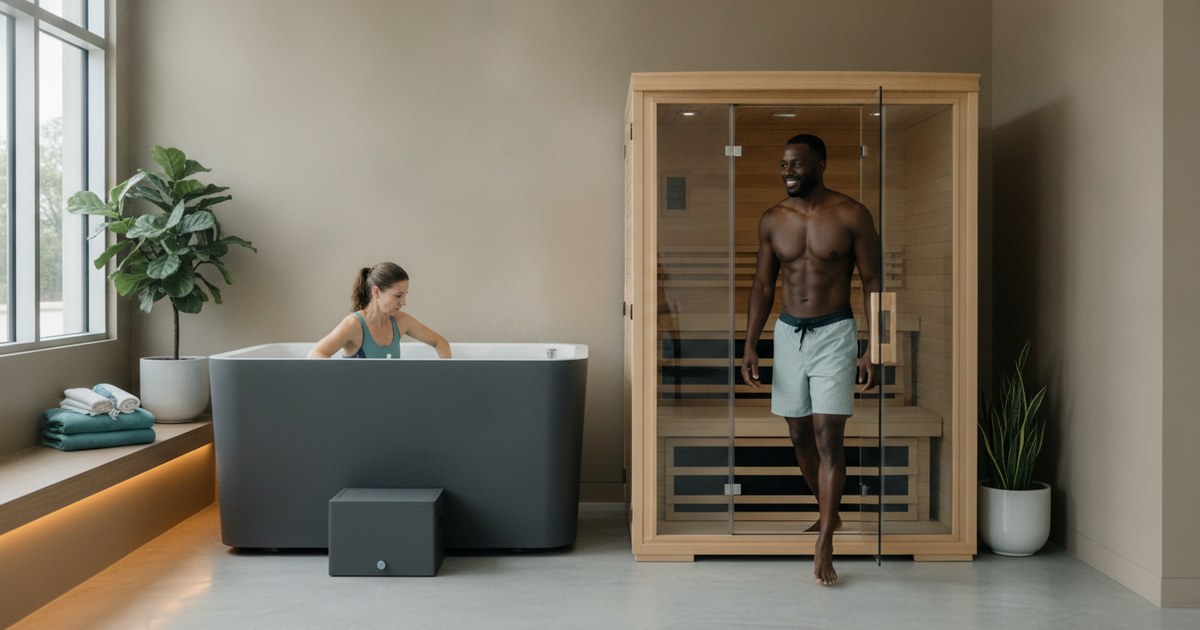
One thing that catches people out: most of the heat rooms around Tampa Bay are infrared, which warms you at a lower cabin temperature than many traditional saunas. The sweat comes on slower. Anyone used to a hot rock sauna occasionally decides the room is broken.
For where to do this, Revivery Westchase over in Oldsmar runs instructor-led sauna and cold plunge sessions, and Florida Float Spa's Tampa location on North Dale Mabry lists contrast therapy alongside its other services. The Tampa contrast therapy listings have the rest of them, and the Tampa cold plunge guide covers studios with a plunge but no full contrast circuit.
12:00 p.m., Lunch and the Gap That Makes the Day Work
The break is the part everyone cuts, and it is the part that decides whether the afternoon lands. Sixty to ninety minutes between your last plunge and getting in the tank.
The obvious reason is that you are wired and the float is asking you to be the opposite. The less obvious reason is fluid. You sweated out a real amount in the sauna, and float tanks are dense salt water that pulls a little more off your skin over an hour. Arriving dehydrated turns the session into a headache with the lights off.
Eat something real, but not enormous. Lying flat on your back in the dark after a large lunch is an education of a different kind.
This gap is also when the heat catches up with you. There is a specific warm, flattened, slightly dim feeling that shows up an hour after a good sauna session, and it is worth not scheduling straight through it. The sauna afterglow notes get into what that is and how long it tends to stick around.
1:45 p.m., The Float
Skin-temperature water, enough Epsom salt to hold you up with no effort on your part, and almost nothing else. Sixty minutes is the usual first-timer length. Studios in the area also list ninety and one hundred twenty minute sessions for people who want the longer version.
After a contrast morning, the float lands differently than it does cold. Your muscles are already loose, so the usual opening stretch of shifting around and hunting for a neck position that works tends to be shorter. What can carry over is the alertness. If you only left thirty minutes between the plunge and the tank, you will feel it, and you will spend the first third of the hour waiting for your system to catch up with the room.
On its own, a float is a slower climb. Stacked at the end of a recovery day, it feels less like starting something and more like the last step of something.
Pause Studio Midtown Tampa lists float therapy, and Florida Float Spa runs float tanks at its Tampa, Wesley Chapel and St. Petersburg locations. The Tampa float tank directory has hours and addresses, which matter more than usual here because several of these places are closed on Mondays.
3:15 p.m., The Optional Add-On
Compression boots or red light, if the studio has them. Pause Studio Midtown Tampa lists compression therapy and red light therapy alongside its sauna, plunge and float. Restore Hyper Wellness in Carrollwood and Westchase lists compression, red light and infrared sauna. Atlas Performance Center up in Wesley Chapel lists cold plunge and compression therapy together.
Whether to actually do it is a question about how you feel at 3:15, not about getting your money's worth. Come out of the tank pleasantly flattened and twenty minutes of leg compression is an easy, low-cost addition. Come out foggy and wrung out, and the add-on is what turns a good day into a long one you did not enjoy the end of.
One Studio, or Two
In the current provider data, Pause Studio Midtown Tampa on Assembly Drive is the single location that lists cold plunge, infrared sauna and float therapy together. Everywhere else, a full day means two stops.
Two stops is not a worse day. The drive is a built-in gap, and it enforces the break people otherwise talk themselves out of. What does not work is a day that has you crossing the whole region twice. Wesley Chapel and South Tampa are a real distance apart, and an itinerary built around the driving rather than the sessions ends with a gas station sandwich and a float you are too annoyed to enjoy.
Pack two towels (ask whether the studio provides them, it genuinely varies), a second swimsuit, flip flops, something to eat, and a warm layer for after the cold. If you are floating, ask about earplugs when you call rather than assuming. Browse the wider recovery category or the Tampa area guide if you would rather build the day around one neighborhood.
What the Day Costs
Per-session ranges tracked across Tampa Bay, current as of November 2026:
- Contrast therapy: $40 to $70
- Infrared sauna on its own: $30 to $60
- Cold plunge on its own: $25 to $50
- Float tank: $60 to $90
- Compression therapy: $20 to $40
- Red light therapy: $20 to $45
Contrast plus a float puts a realistic day somewhere around $100 to $160 before any add-on.
One wrinkle worth knowing about in advance. Several studios in this market run membership credit systems rather than publishing a walk-in rate, so the number a single visit costs is something you have to ask about directly. The ranges above describe the market, not any particular studio's price list. The recovery centers roundup goes through them location by location.
Who This Day Is Not For
Anyone doing all three for the first time. One new thing per day is the rule worth following, and it is the one people break most often on birthdays and visiting-friend afternoons.
Skip it, or shorten it, if heat leaves you lightheaded, if you are coming off a hard training block and already flat, or if you have something athletically meaningful tomorrow. This reads like a rest day activity and it is, but it takes more out of you than an afternoon of sitting still has any right to.
And if you are talking someone else into coming along, the thing to tell them is the part about the cold. People agree to a recovery day picturing the sauna and the float and somehow do not picture the tub.
What Usually Happens Next
The people who do this regularly almost never do the whole day. They did the full version once, found out which part they actually came for, and kept that one. Usually it is the cold or the float, rarely both, and the day they settled into is about half as long as the one they originally planned.