Nobody has to pick one
Someone buys a salt room package in March, when the oaks around Tampa are coating every windshield in yellow, and mentions on the way out that they can probably stop doing the saline rinse now. That trade comes up often enough to be worth addressing directly, and it does not hold up.
The purifier in the bedroom is a third thing again. It runs for eight hours while you sleep, asking nothing of you. A salt session is 45 minutes, once or twice a week, in a building you had to drive to.
Line them up by what they physically do and the overlap between them turns out to be small.
Where the salt actually goes
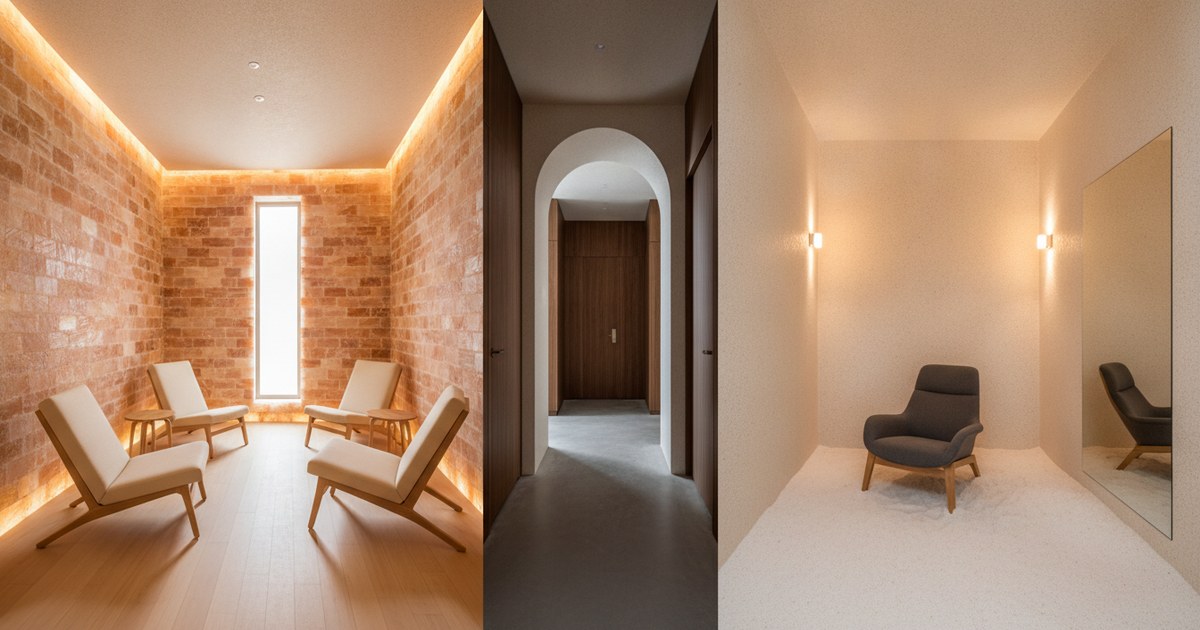
In a real halotherapy room, a halogenerator grinds pharmaceutical grade salt into particles fine enough to stay suspended in the air. You sit in a dim, cool, dry room and breathe normally for 30 to 45 minutes while that aerosol settles on the lining of your nose, throat and airway.
There is no technique to it. Nothing to operate, no protocol to learn, nobody touching you. The full walkthrough of a visit is in what a first salt room session is like.
Two things are worth knowing. The salt on the walls is decor, and the salt you breathe comes out of the machine, so a room without an active halogenerator is a nicely lit pink lounge. And the aerosol travels further down than water can, which is the structural difference between this and a rinse.
Where the rinse goes
A saline rinse is mechanical and unglamorous. Salt water in one nostril, out the other, and whatever was loose in there leaves with it: the pollen that settled on your nasal lining during a walk around the block, and the mucus it got stuck to.
It reaches what water reaches, which is the nasal passages and the sinus openings. Not the lower airway.
The catches are real, though. It has to be distilled or previously boiled water, never straight from the tap. It takes a couple of minutes you will not enjoy. And the people who get the most out of it are the ones who keep doing it, which is exactly the part most of us abandon somewhere around week two.
What a purifier removes, and from where
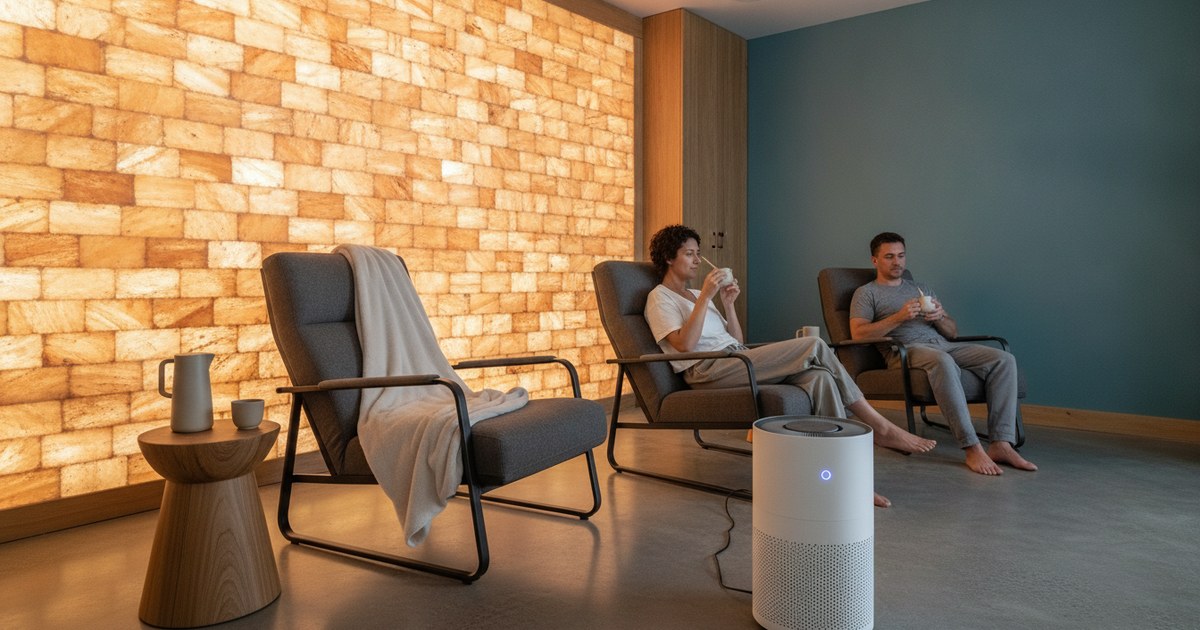
A HEPA purifier does nothing to you at all. It pulls particles out of the air in the room it sits in, and that is the entire mechanism. Less pollen floating in the room means less pollen you breathe, but only in that room, and only with the doors and windows shut.
Which is why the bedroom is usually the right place for it. Eight hours a day, closed door, unit sized for the square footage. An undersized purifier in a big open room is mostly a noise machine.
Tampa complicates it. Mold is part of the local picture year round, and a purifier handles airborne spores in that room without touching the moisture that keeps producing them.
Cost, and the cost nobody counts
Our treatment data puts salt therapy sessions in the Tampa area at 25 to 50 dollars each, with memberships and packages running roughly 100 to 250 dollars. That is the honest per visit number, and it is not the real cost.
The real cost is the drive. Forty five minutes in the room, plus getting there, plus parking, plus getting home. Call it two hours out of a weekday, for something you are supposed to repeat during the weeks you already feel awful.
The rinse and the purifier are both one time purchases with small running costs, saline packets for one and replacement filters for the other. Neither asks anything of your calendar. The rinse costs two minutes. The purifier costs nothing once it is plugged in.
So the comparison is not really price against price. It is a recurring appointment against two things that sit in your house doing their work whether you are paying attention or not.
What people actually report
Careful language here, because salt therapy attracts more confident claims than the evidence supports.
People report easier nasal breathing for a few hours after a session, a throat that feels less scratchy, and, very consistently, that the stillness mattered more than they expected it to. Others sit through the whole thing and notice nothing at all. Both outcomes are common enough that neither should surprise you.
Rinse users report something more immediate and more local. The nose feels open right afterwards, then it fades. Purifier owners report the vaguest and slowest version of all, usually something about waking up less congested after a few weeks, which is hard to separate from the season simply moving on.
None of this makes salt therapy a treatment for allergies or asthma. It may help with the symptom load during bad weeks for some people, and that is the ceiling. We went through the evidence in more detail in salt therapy for allergies in Tampa.
Stacking, and in what order
Plenty of people use all three, and they do not conflict.
The purifier is the background layer. It runs at night and asks nothing. The rinse is the reactive one, used after yard work, a long walk, or any afternoon that ended with the feeling that you inhaled a tree. The salt session is the scheduled one, and it tends to earn its place during the worst four to six weeks of the season rather than year round.
There is no established sequencing rule between the rinse and the session. Some people rinse afterwards because they do not like the faint salt film on their skin. Others do not bother. Anyone who tells you there is a correct order is filling a gap in the research with confidence.
When none of this is the right move
If you are running a fever, think you have a sinus infection, or are coughing up something that worries you, a salt room is not where that gets sorted out. Same with asthma that is not stable, or breathlessness at rest.
And if you are looking at salt rooms because the allergy treatment your doctor prescribed has stopped working, the useful conversation is with the person who prescribed it, not with a front desk. A salt session sitting on top of an unmanaged condition is just an expensive 45 minutes.
Rooms around the area are listed in our Tampa salt therapy directory, and the wider salt therapy overview covers how the modality is used outside allergy season.
Where your bad hours happen
Which one matters most comes down to where your bad hours actually are. If it is your nose after an afternoon outside, the rinse is the cheap and unglamorous answer nobody wants to hear. If it is the eight hours you spend asleep in one room, the purifier is quietly doing more work than either of the other two.
The salt room is the only one of the three that also makes you sit in the dark for forty five minutes with nothing to do, which is either the point of it or a waste of a Saturday, depending on the week you have had.