Both of these get filed under relaxing, which is where the mistake starts. Heat and sensory quiet do genuinely different things to a keyed-up nervous system, and the person who picks wrong usually picked the one that matched their mental image of relaxing rather than the state they were actually in when they walked through the door.
Here is the useful way to sort it. Four questions, in order, and the first one does most of the work.
Question One: Are You Wired, or Are You Worn Out?
These feel similar from the inside and they need opposite things.
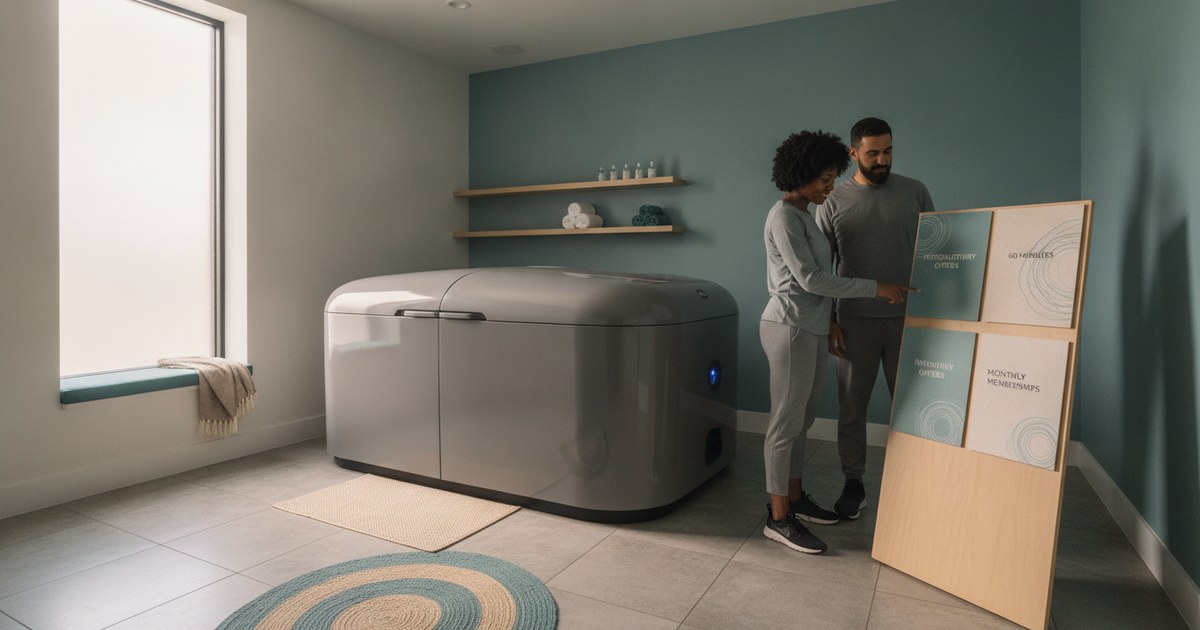
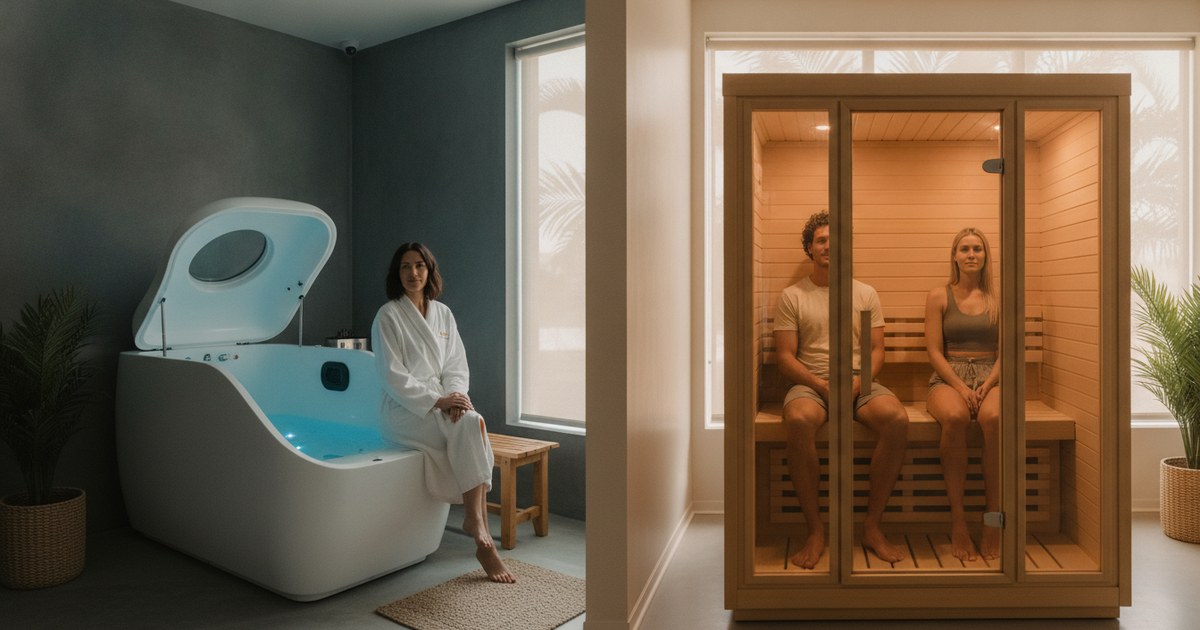
Wired is the state where your head will not stop producing. You are jumpy, you keep checking your phone, you cannot sit through a meal without doing something else at the same time. The problem is input, and there is too much of it. A float tank removes almost all of it at once. Skin-temperature water, no light, no sound, nothing pressing on you. There is nothing left to react to, which is the whole point.
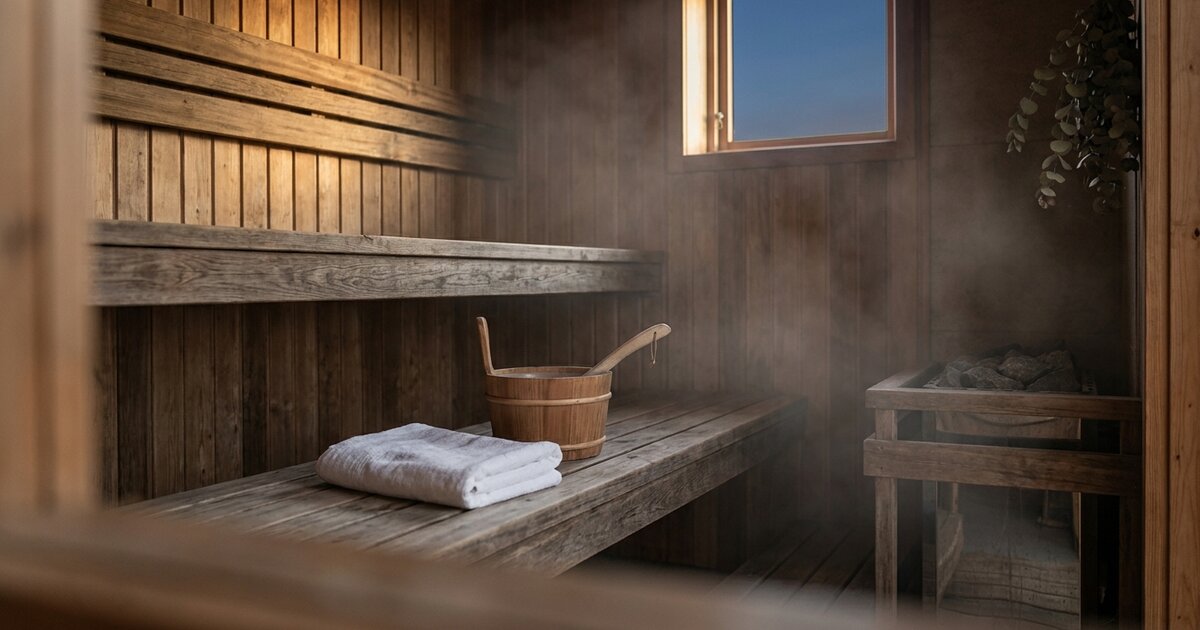
Worn out is different. You are flat, heavy, done. You do not have the energy to be alone with your own head for an hour, and being asked to lie still in the dark feels like a chore rather than a relief. Heat suits this state much better. An infrared sauna session asks nothing of you. You sit, you get warm, you can bring a friend if you want company, and you can walk out whenever you have had enough.
Here is the contrarian bit, and it surprises people. The float is not the gentler option. It is the more demanding one. It is the one that requires something of you.
Question Two: Can You Sit With Your Own Head for an Hour?
Answer this one honestly, because the honest answer predicts the experience better than anything else on this page.
The float drop-off happens around minute twenty. People get in expecting calm to arrive on a schedule, discover their brain is louder in silence than it was in traffic, and decide the tank is not working. Some of them get out. Most of the ones who stay describe the shift happening somewhere in the second half of the session, not the first.
If your honest answer is no, that is not disqualifying, it is just planning information. Book sixty minutes rather than ninety. Leave the light on. Go in knowing the first stretch is the loud part and that it is supposed to be. The mechanics of why the quiet is the active ingredient are covered in the sensory deprivation post.
If your honest answer is no and you are also not curious about changing that, the sauna is not a consolation prize. It is the right pick.
Question Three: How Much Time Is This Actually Getting?
Be realistic about the block, not the ideal version of the block.
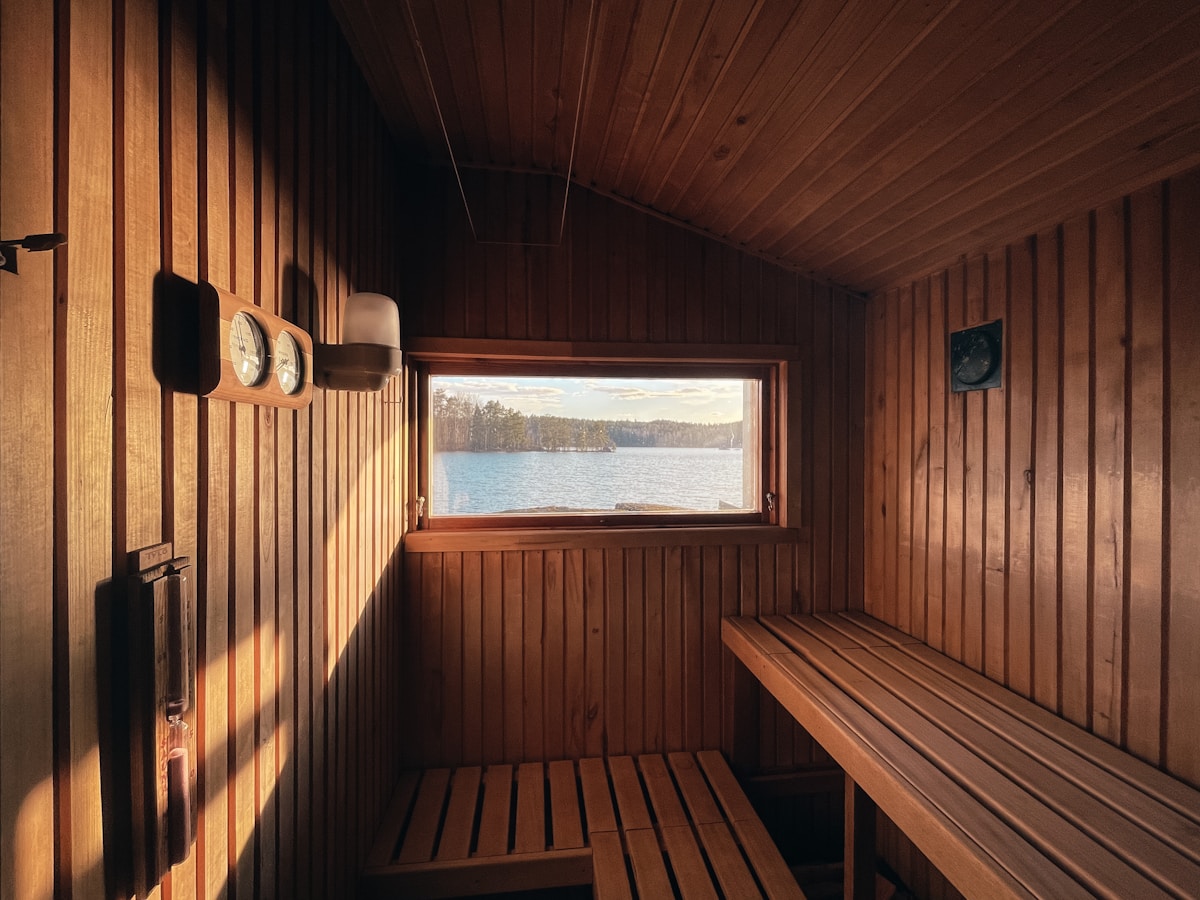
Studios around here sell sauna in thirty and forty minute slots. That fits inside a lunch break, an early morning, or the gap between two other things. You change, you sit, you rinse off, you leave.
A float does not compress like that. The session itself runs sixty, ninety or one hundred twenty minutes, and around it there is a shower before, a salt rinse after, and a slow reentry into being a person with a schedule. Trying to wedge a float into a tight window produces an hour spent tracking a clock you cannot see, which is precisely the state you came in to get out of.
One free hour total means sauna. A genuinely open afternoon opens up the float.
Question Four: What Do You Dislike More, Heat or Enclosed Dark?
The disqualifiers are simpler than the preferences.
If heat makes you feel unwell, irritable or lightheaded, an infrared cabin runs cooler than many traditional saunas, but it is still heat and it will still find you. People who dislike being hot generally do not learn to like it in a wooden box.
If small dark spaces are a problem, know that most float rooms let you keep the door open and the light on, and some studios use open pools rather than enclosed pods. That solves it for a lot of people. It does not solve it for everyone, and there is no benefit to finding out the hard way at minute thirty with salt water in your ears. Fresh tattoos and open cuts are also worth mentioning when you call, since the salt concentration is high enough that studios usually ask you to wait.
What People Actually Report From Each
Grounded version, without overselling either one.
After a sauna, the common description is warm and physically loosened, with a settled feeling that tends to arrive later in the evening rather than immediately. Sleep comes up often in what people report, which is its own topic and covered in the sauna and sleep post.
After a float, the common description is a quieter head. Not euphoria. People talk about the day's noise feeling further away, and about a flat or slightly spacey hour afterward where they do not particularly want to drive or make decisions. How long that lasts varies wildly. Some get an evening out of it, some get most of the next day.
Worth separating two things here. Everyday stress, the kind that builds up over a bad week and eases when the week ends, is what this whole page is about. The heat side of that research is covered in sauna for stress relief. Anxiety is a diagnosis, and it behaves differently. If what you are carrying is persistent enough to be shaping your sleep, your appetite or your ability to work, a clinician is the right first conversation, and a studio session is not a substitute for one. The research picture on floating and anxiety specifically is worth reading with clear eyes: what the float and anxiety studies show.
If You Want to Do Both
Sauna first, float second, with a real gap in between.
The order matters because heat leaves most people alert and slightly buzzy, and walking straight from that into an hour of stillness means spending the first part of the float waiting to come down. An hour between the two is a reasonable minimum. Eat something in the gap.
The reverse order works badly for a different reason. Coming out of a float soft and slowed down and then sitting in a hot room undoes most of what the float did, and you leave feeling like you paid for two things and got neither.
Both in one day is also just a lot. On a week where you are already depleted, doing both is more likely to flatten you than settle you. Pick one and go home. The rest of the relaxation category covers the quieter options if neither of these sounds right on a given week.
The Part Nobody Decides in Advance
Most people who end up regulars at one of these did not choose it by reasoning. They tried both, and one of them stopped feeling like an appointment. That is most of what the decision comes down to in the end, and it is not something you can run in your head beforehand, which makes the first session less of a choice than it looks like from the studio menu.