A sauna may help you unwind after a stressful day, but researchers have not established a sauna prescription for chronic stress. In a survey of 482 sauna users, respondents named relaxation and stress reduction among their main reasons for visiting. That describes what users value, not proof that heat treats a mental health condition.
For a first visit in Tampa, choose a session you can leave early, a room setup you find comfortable, and a time that leaves space to cool down. A rushed drive from Carrollwood or South Tampa followed by a race back to work gives you less opportunity to rest.
What a sauna does to your stress system
A hot room is a physical stress. Your heart rate climbs, blood moves to your skin, and your body releases hormones that help it cope with heat.
In a 1989 study, Finnish researchers measured eight healthy young men in a traditional sauna (Kukkonen-Harjula et al., 1989, European Journal of Applied Physiology). At 80°C (176°F), heart rate rose about 60% and plasma noradrenaline roughly doubled. Cortisol, the hormone most people mean when they say "stress hormone," went down at 80°C and at 100°C. Beta-endorphin rose at the hotter setting.
That mix explains why a sauna can feel both intense and calming. You are under load while you sit there, and the settled feeling often comes after you leave.
Heart rate variability (HRV) is another marker people track. Higher HRV usually reflects more activity in the "rest and digest" branch of the nervous system. A 2023 systematic review of 27 studies found that intense whole-body heating tended to lower that calming activity, while sauna bathing and local heating seemed to raise it (Ferreira et al., 2023, Physiological Measurement). The long-term picture is less exciting. In an eight week randomized trial of 38 sedentary adults, adding a 15 minute sauna after exercise did not improve HRV more than exercise alone (Lee et al., 2025, Physiological Reports).
These studies do not let you predict your wearable's reading after a visit. Use your comfort and symptoms to guide when you leave, rather than trying to produce a particular HRV score.
What studies show about mood
The most direct evidence comes from mood questionnaires.
- A comfortable session helped, an extreme one hurt. Polish researchers had 22 women who used saunas only occasionally sit for 20 minutes at 80°C and, on another day, at 120°C (248°F) (Podstawski et al., 2024, Frontiers in Public Health). At 80°C, vigor went up and tension, depression, anger, fatigue, and confusion scores went down. At 120°C, those scores moved the other way, and some participants fainted. Hotter is not more relaxing.
- Regular users feel it, but they chose to be there. In the Global Sauna Survey, people who used a sauna 5 to 15 times a month had slightly higher mental well-being scores than people who went less than 5 times a month, and 83.5% reported sleeping better after sessions (Hussain et al., 2019, Complementary Therapies in Medicine). Everyone in that survey already liked saunas, so it can't show cause and effect.
- Gentle, repeated heat in a hospital. In Japan, 28 mildly depressed inpatients were randomly assigned to a 60°C (140°F) far-infrared sauna for 15 minutes, followed by 30 minutes resting under a blanket, five days a week for four weeks, or to no heat therapy (Masuda et al., 2005, Psychosomatic Medicine). The heat group improved more on relaxation scores, physical complaints, and appetite. Mental complaints improved only slightly, and the difference was not statistically clear.
What the depression research does and does not show
You may see headlines saying a sauna treats depression. Those headlines usually point to clinical trials of whole-body hyperthermia, which is not the same as a studio visit.
In a 2016 randomized trial, 34 adults with major depression who were not taking psychiatric medication were assigned to one session of medical hyperthermia or a sham session that mimicked everything except the intense heat (Janssen et al., 2016, JAMA Psychiatry). Twenty-nine were included in the main analysis. The heat group had lower depression scores for the six weeks that followed. The trial was small, sessions were run by a research team, and the authors called the approach promising, not proven.
A 2025 follow-up trial gave 30 adults with major depression cognitive behavioral therapy, then added either hyperthermia with an infrared sauna device or a sham version (Mason et al., 2025, Global Advances in Integrative Medicine and Health). Both groups improved a lot. The sham group did at least as well, and the authors said the sham may not have been a true placebo. The trial was built to test whether the study design worked, not to prove the heat helped.
Population data points in a similar direction without proving anything. In the Finnish Kuopio study, 2,138 middle-aged men were followed for a median of about 25 years (Laukkanen et al., 2018, Medical Principles and Practice). Men who used a sauna 4 to 7 times a week had about a 79% lower risk of being diagnosed with a psychotic disorder than men who went once a week. That is an association in one group of Finnish men. Healthier men may simply have used saunas more. The same cohort is behind most of the Finnish sauna longevity research.
Relaxation is not treatment
Everyday stress builds over a hard week and eases when the week ends. A sauna fits that kind of stress well. Anxiety disorders and depression are medical conditions, and no sauna routine replaces care for them.
If worry or low mood lasts for weeks, or it is changing your sleep, appetite, or ability to work, talk to a clinician first. Keep the sauna as something you enjoy alongside that care, and tell your clinician you use one, especially if you take medication.
Plan a sauna visit for relaxation
Researchers have not identified an ideal temperature, duration, or weekly frequency for everyday stress relief. Treat your first visit as a chance to see whether you enjoy the experience, rather than a test of heat tolerance.
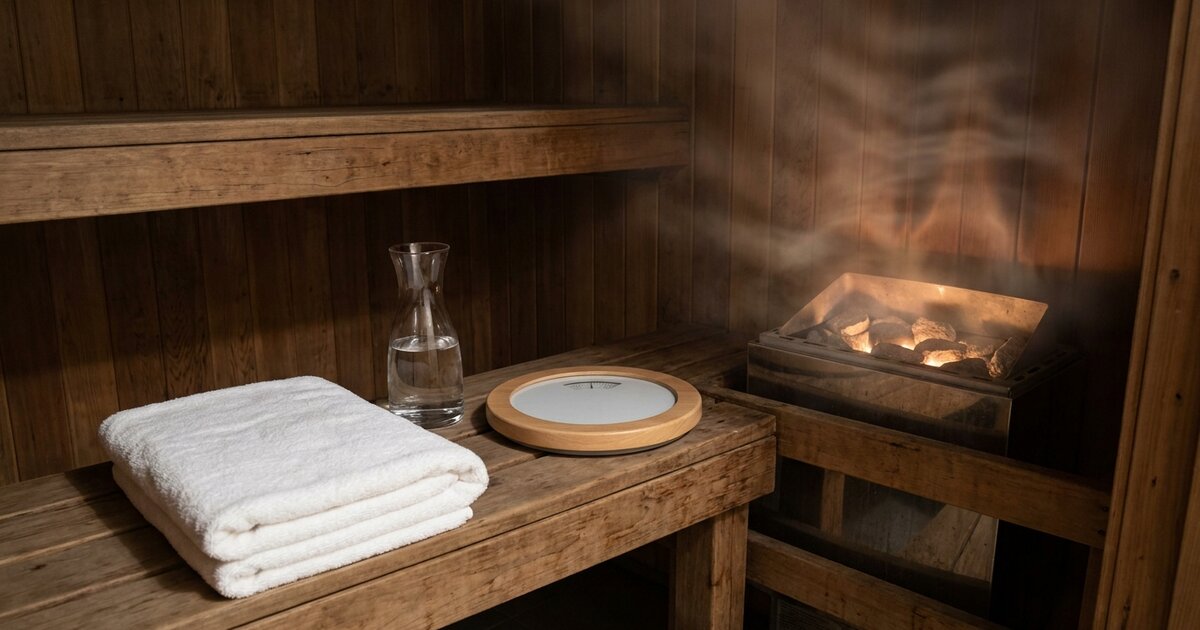
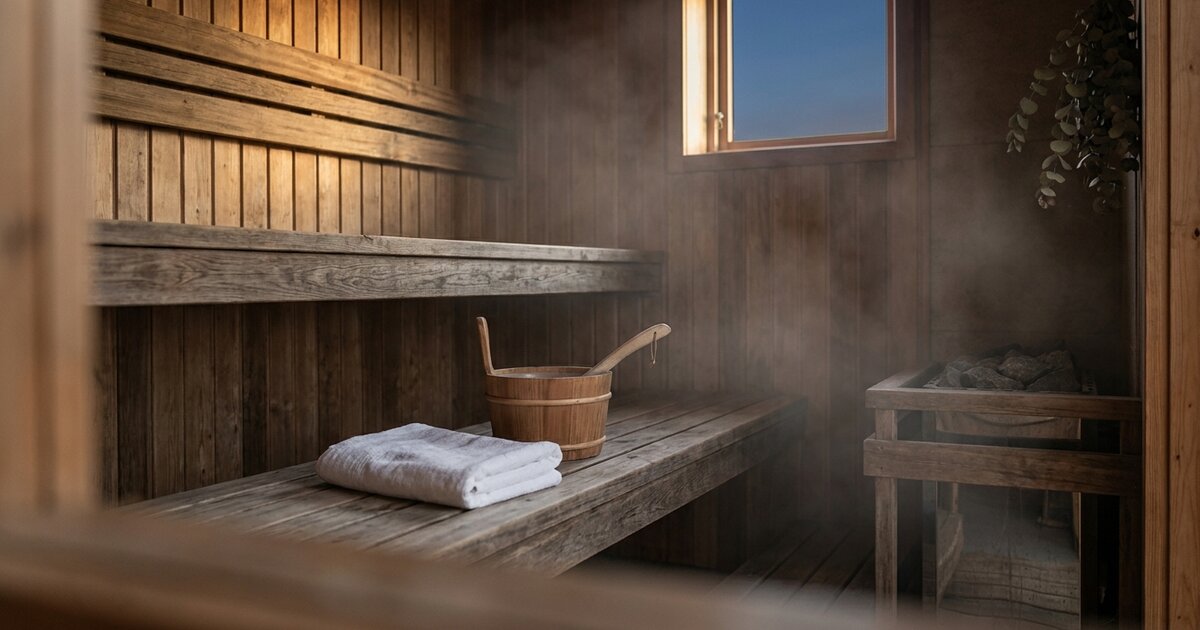
- Ask about the heat format. Traditional saunas heat the room; infrared cabins use radiant panels. Tell staff you are new and ask how to choose a lower setting or cooler seat. The sauna temperature guide explains the differences.
- Agree on a short first round. Follow staff guidance and leave before the timer if you feel uncomfortable. A longer appointment does not mean you should spend the entire time in heat. See how long to sit in a sauna for session-planning cautions.
- Leave room to cool down. Sit in a cooler area and wait until you feel steady before showering or driving. You can skip cold exposure. If you want a gentle shower instead, read cold shower after sauna before trying a hot-to-cold switch.
- Arrive hydrated and avoid alcohol. Do not enter already overheated from an outdoor workout. A review in the American Journal of Medicine links alcohol during sauna use with increased risk of low blood pressure, heart rhythm problems, and sudden death (Hannuksela and Ellahham, 2001).
- Choose a quiet appointment. Ask whether the room is shared, whether staff play music, and where you can rest afterward. Leave your phone outside if the venue offers secure storage.
If you want to add movement, keep it outside the heat on your first visit. The sauna stretches guide explains why a warm feeling does not establish a safer or more effective stretch.
Afterward, judge the visit by whether you enjoyed it and felt comfortable. You do not need a wearable improvement or a sweat target to justify taking a quiet break. If your goal includes sleep, the sauna and sleep guide separates that research from stress-relief claims.
Who should be careful
Heat puts real load on your heart and blood pressure. Talk to a clinician before using a sauna if you are pregnant, have heart disease, uncontrolled blood pressure, or a history of fainting, or take medication that affects heart rate, blood pressure, or sweating. Some medications for anxiety and depression fall in that last group. The full list is in who should skip the infrared sauna.
Sauna or something else?
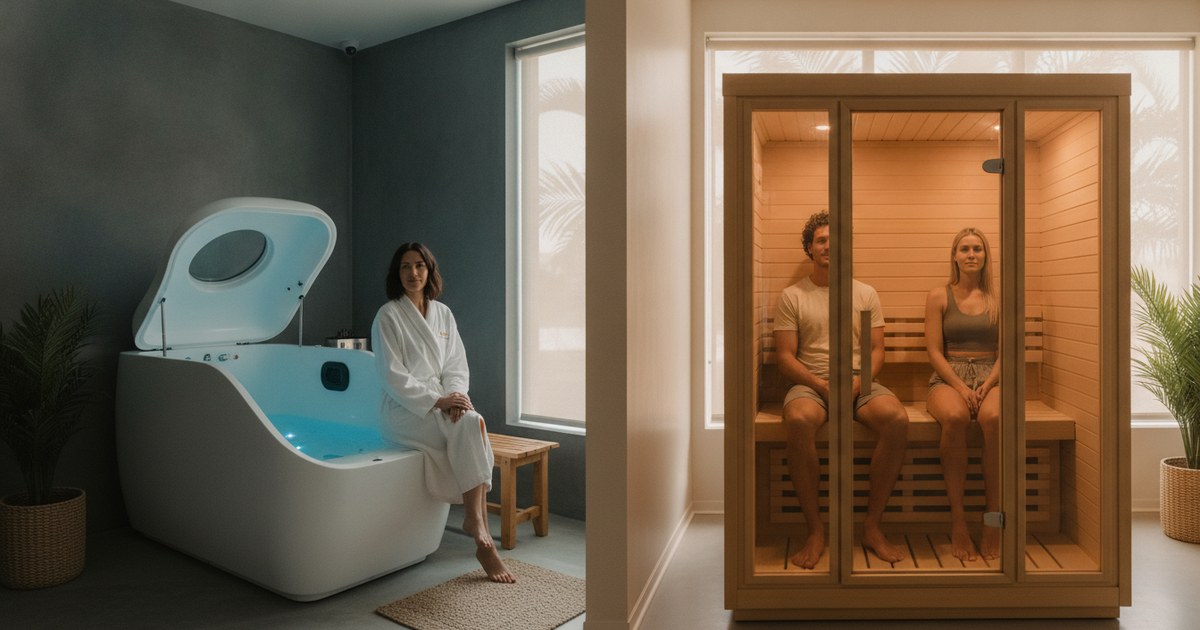
A sauna tends to suit people who feel worn out, since it asks nothing of you. If you feel wired and overstimulated, a float tank may fit better. The sauna or float tank for stress guide walks through that choice.
Booking a stress-relief sauna session in Tampa
Compare providers and formats on the sauna in Tampa page. Check the address as well as the name: a Tampa Bay listing may require a drive to another city. Choose a location you can reach without squeezing the session between obligations.
Before buying a package, ask:
- Can I book one visit? Compare the full single-session cost, including any first-visit fees, before committing to a membership.
- Is the room private or shared? A social bathhouse and a solo cabin offer different experiences. Choose the one where you expect to feel at ease.
- Can I leave and rest outside the room? Check whether the booking includes changing, showering, and cooldown time.
- Does the booking include other treatments? You can decline a cold plunge or another add-on. More treatments do not establish greater stress relief.
For an infrared-versus-steam decision, see steam room vs sauna. For a bathhouse visit, compare the Tampa Bay bathhouse guide and Korean spa in Tampa. Confirm current prices and amenities on the provider's site before booking.