The short version
Vibration plates have real research behind them, just not for everything on the box. Here is how the main claims hold up, from strongest to weakest:
| Claim | How it holds up | Best evidence |
|---|---|---|
| Leg strength in older adults | Good | 2023 meta-analysis of 18 randomized trials |
| Lumbar spine bone density after menopause | Moderate, with specific settings | 2023 meta-analysis of 23 studies |
| Balance and fall prevention | Mixed | 2026 systematic review of 36 studies |
| Leg circulation | Short-term, at lower frequencies | 2019 systematic review |
| Lymphatic drainage | Untested in humans | No trials found |
| Weight loss on its own | Not what the trials measured | None of the reviews above |
The gap between marketing and research is widest on the lymphatic claim, so it gets its own section below.
What a vibration plate does
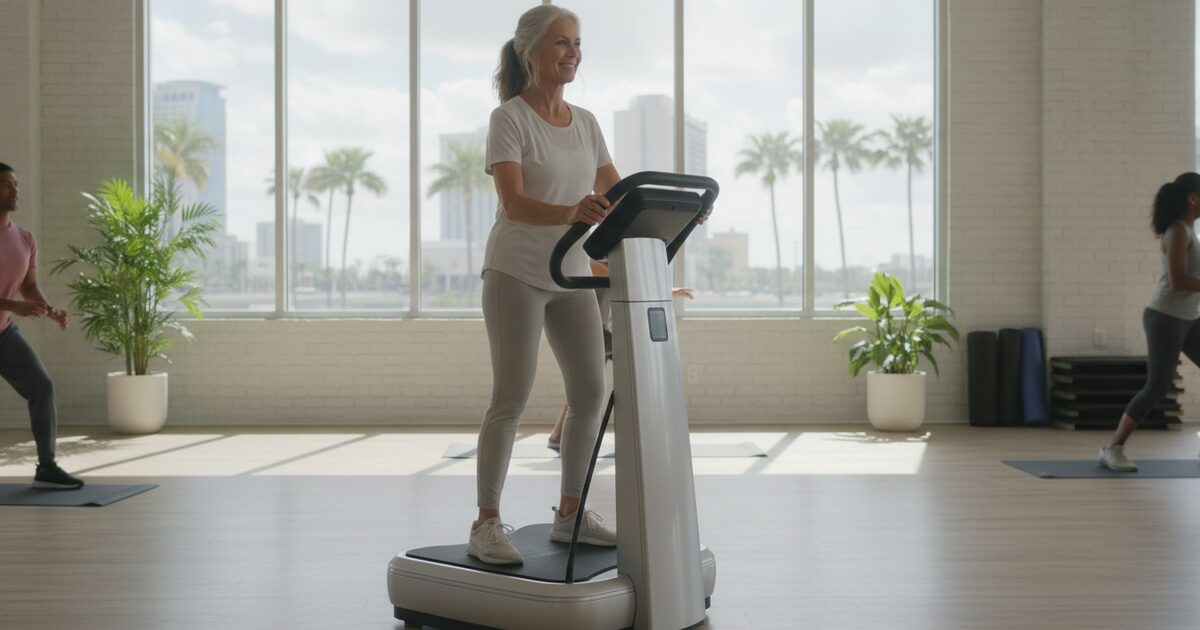
You stand, squat, or hold a position on a platform that moves quickly. Side-alternating plates tilt like a seesaw around a center pivot. Synchronous plates move the whole platform up and down. Settings are described by frequency, in hertz (cycles per second), and magnitude, often in g (multiples of gravity).
The vibration causes quick reflexive muscle contractions. That is the proposed reason for most of the benefits: a lot of small, involuntary work for muscles, and repeated loading for bone.
Strength and physical performance: the best-supported benefit
A 2023 meta-analysis in the Archives of Physical Medicine and Rehabilitation by Tan and colleagues pooled 18 randomized trials in adults 65 and older. Whole-body vibration training improved knee strength, explosive power, the sit-to-stand test, the Timed Up and Go test, walking speed, and walking endurance. The effect on knee strength was moderate in size.
A 2026 systematic review in the Journal of the American Medical Directors Association by Dong and colleagues looked at 36 studies and found a similar pattern. About two-thirds reported significant strength gains, with knee extensor strength the most consistent. Adverse events were rare, mild, and short-lived, and none were serious.
This matters for people who find standard strength training hard to start. A vibration plate is not a replacement for lifting, but for a frail or deconditioned older adult it is one way to add muscle work.
Bone density: real, but narrow
This is the claim with the most studies, and the answer depends on the settings.
A 2023 meta-analysis in Osteoporosis International by de Oliveira and colleagues included 23 studies in postmenopausal women. Vibration improved bone density at the lumbar spine and trochanter (part of the hip) in the main analysis. Only a few protocols reached high-quality evidence. The authors' recommendation was specific: high frequency (about 30 Hz), low magnitude (about 0.3 g), and a high cumulative dose, around 7,000 minutes in total, to improve lumbar spine bone density.
An earlier 2018 meta-analysis in Medicine by Marín-Cascales and colleagues, covering 462 postmenopausal women, also found gains at the lumbar spine, and at the femoral neck in women under 65.
Plate type made a difference in the subgroup results. In the 2023 analysis, side-alternating plates improved density at both the lumbar spine and trochanter, while synchronous plates showed an effect at the lumbar spine. A 2016 meta-analysis in the same journal, by Oliveira and colleagues, found no difference in its primary analysis of 15 trials and only saw gains in subgroups, including side-alternating vibration and standing with semi-flexed knees. The takeaway is that settings and plate type matter, and a cheap plate on a random setting is not the protocol those trials tested.
Seven thousand minutes is a lot. At 15 minutes a day, it takes more than a year. Treat a plate as an add-on to what your doctor recommends for bone health, not a substitute for medication, weight-bearing exercise, or calcium and vitamin D advice.
Balance and falls: promising, unproven for falls
Tan's 2023 meta-analysis found better Timed Up and Go scores, a common balance and mobility test. Dong's 2026 review was more cautious: about half the studies showed balance or function benefits, often in frail or mobility-limited adults, while others found vibration no better than regular exercise. Most studies had moderate quality. None was built to measure whether people fell less.
Better test scores are a good sign. Fewer falls is the result that matters, and it has not been shown.
Circulation: short-term, and settings matter
A 2019 systematic review in Clinical Physiology and Functional Imaging by Mahbub and colleagues found that vibration at 30 Hz or lower improved blood flow and skin temperature in the legs. At 31 to 50 Hz, results conflicted. The authors also noted that vibration levels in many studies went beyond the limits in the international standard for whole-body vibration exposure, ISO 2631-1, and recommended staying within them until safe settings are better established.
So a plate can warm your legs and increase blood flow for a while. That is useful context for the next claim.
Lymphatic drainage: the claim with the least behind it
Vibration plates are widely marketed for lymphatic drainage, cellulite, and puffiness. We searched PubMed for trials of whole-body vibration and lymph flow or lymphedema in people and found none. The closest result was a 2026 animal study on drainage around the brain after bleeding, which says nothing about swollen ankles.
The argument for it is indirect. Lymph moves when muscles contract, and vibration makes muscles contract. Walking, calf raises, and elevating your legs work on the same principle and cost nothing.
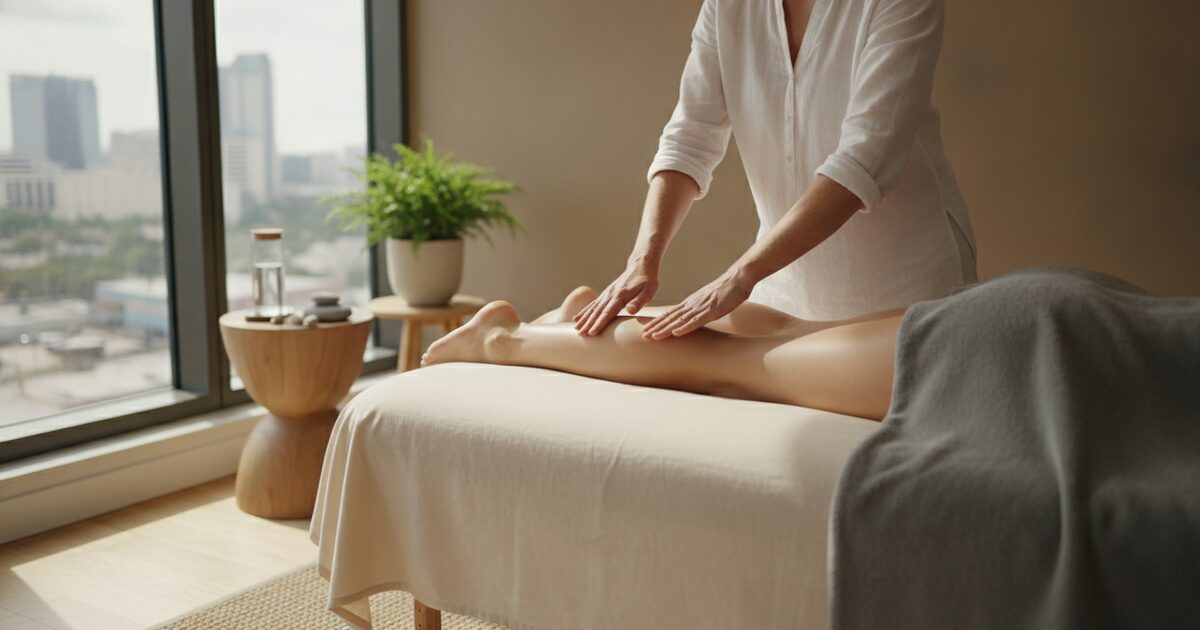
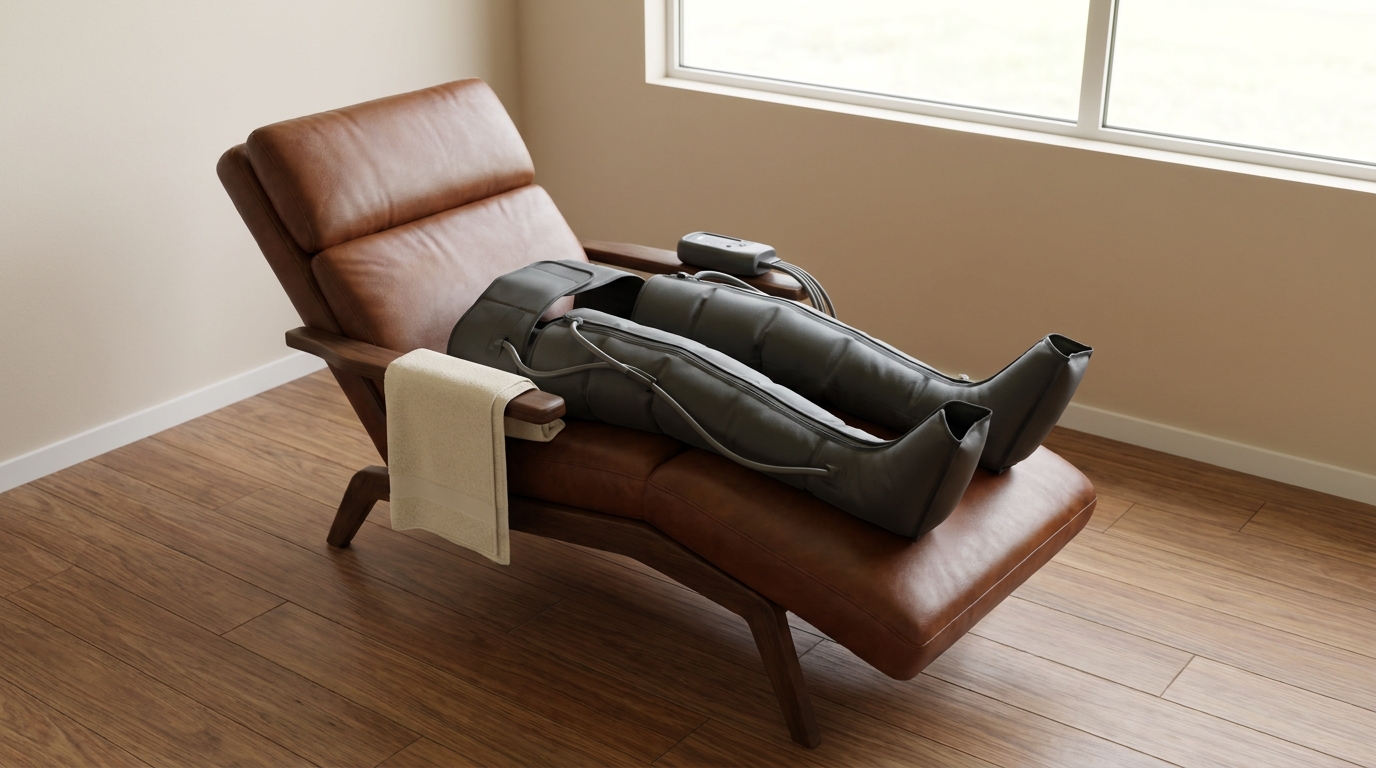
For swelling after surgery or from lymphedema, the tested options are manual lymphatic drainage by a trained therapist, compression garments, and prescribed exercise. Our lymphatic drainage massage guide covers the research and Tampa prices, and the Tampa lymphatic drainage page lists verified providers. If you want a machine-based option, compression boots have more research behind them for moving fluid than vibration plates do.
Who should avoid vibration plates
Power Plate, a vibration plate maker, publishes guidance medically reviewed by a physician that says to get a doctor's approval before using a plate if you:
- Are pregnant
- Have a pacemaker or another implanted medical device
- Have cardiovascular disease, uncontrolled high blood pressure, or a serious heart condition
- Have had recent surgery, especially a joint replacement or spinal procedure
- Have deep vein thrombosis, blood clots, or a clotting disorder
Many manufacturers add other warnings, so read your device's manual. If a plate makes you dizzy, gives you a headache, or causes joint pain, stop.
Weight loss
Plates are often sold for fat loss and toning. None of the reviews above measured fat loss as an outcome, so we cannot grade the claim. What the trials do show is extra muscle work, which can fit into a broader exercise routine alongside diet and regular activity.
Using one sensibly
Most trials had people stand with knees slightly bent, which reduces how much vibration travels up to the head. Sessions were short bouts repeated several times a week. Start with a few minutes at a low setting, keep your knees soft, and do not lock your joints.
Vibration plates in Tampa
As of September 2026, none of the Tampa Bay recovery studios in our directory lists whole-body vibration on its published service menu. Most Tampa users have a plate at home or use one at a gym. If recovery is the goal, local studios offer compression therapy and PEMF therapy instead. If you find a Tampa studio with a vibration plate on its menu, tell us and we will verify it.