The Studio Pitch
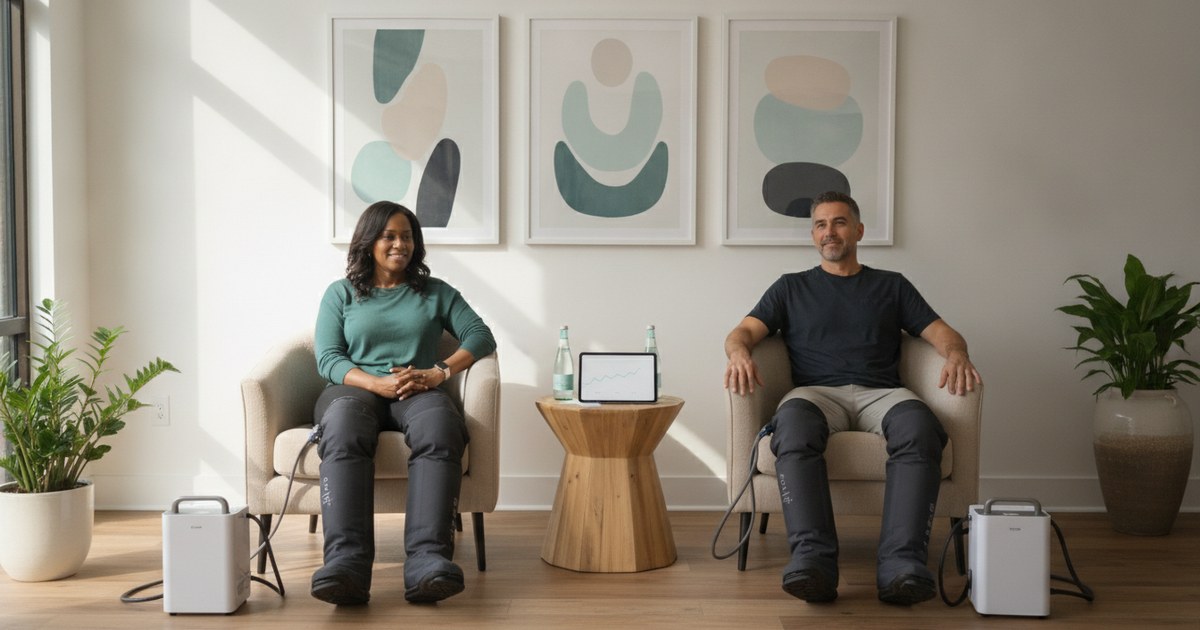
A studio puts you in tall inflatable boots, the boots squeeze your legs in a sequence, and someone tells you they are "moving your lymph." You leave forty minutes later feeling lighter, wondering whether you experienced something legitimate or paid sixty dollars to nap in plastic pants.
Compression therapy has real medical use cases where the mechanism is established and the benefit is meaningful. It also has general-wellness use cases where the session feels good and changes little physiologically.
What The Boots Do
Pneumatic compression boots inflate in a wave from the foot upward, squeezing each segment of the leg before moving to the next. The wave releases and starts again. Over a 30 or 45 minute session, you get a few hundred of these waves.
That mechanical squeeze does two things. It assists venous return, which is why your legs feel less heavy afterward. It can also move excess interstitial fluid back toward the lymphatic system. A healthy body handles both without help. With impaired circulation, post-surgical swelling, or lymphedema, the assist matters more.
Compression cannot detoxify your body, mobilize fat, or reset your lymphatic system.
When This Is Worth It
The strongest use cases are clinical, not the ones studios feature in their marketing.
Post-surgical recovery, with clinician guidance
After certain surgeries, including some cosmetic procedures, joint replacements, and cancer surgeries involving lymph node removal, fluid management is a clinical priority. Compression as part of a recovery plan, supervised by your surgeon or a certified lymphedema therapist, is established practice. Walking into a wellness studio and doing whatever protocol they offer is not the same thing.
Chronic lymphedema management
People with diagnosed lymphedema use compression as part of standard care. This is clinical care with prescribed pressures, garment fitting, and monitoring, not a wellness studio scenario.
Chronic venous insufficiency and heavy-leg syndromes
Some people have legs that swell by evening from venous return issues. Compression, both passive garments and active pneumatic devices, is part of mainstream treatment for that.
Heavy training blocks for athletes
For runners, cyclists, triathletes, and team-sport athletes in volume-heavy weeks, a compression session feels real. Whether it accelerates measurable recovery is less clear, but the perceived recovery effect and the legs-feel-lighter outcome are reproducible enough that it earns its place as a tool.
Long-haul travel
Long flights pool fluid in your lower legs. For some travelers that swelling lingers for days. A compression session within 24 hours of landing often delivers more relief than the session cost suggests.
When It Is Mostly A Vibe
Most healthy adults using compression therapy weekly are paying for the experience, not for measurable physiological change.
That does not make it worthless. Forty minutes in a recliner with your legs being squeezed is relaxing. It produces a clear before-and-after sensation. People sleep better that night, though some of that comes from any forty-minute rest in the middle of a busy week.
If that is what you are buying, price it as such. You are paying for enforced rest and a mild fluid shift, not a body reset.
The worse purchase is using compression instead of actual recovery: sleep, hydration, training load adjustment, addressing whatever is making your legs heavy. A boot session fixes none of those.
Hype Claims
Studios often bundle compression sessions with claims about toxin removal, weight loss, immune support, or "resetting" the body. None of that is supported.
Mechanical, physiological terms are a good sign. "Detox" and "reset" mean you can ignore the framing while still enjoying the session.
If your goal is medical, see a clinician, not a wellness studio. If your goal is experiential, a studio works fine. Know which one you are paying for.
Compression for Lymphatic Drainage: How It Works
People search for "compression for lymphatic drainage" expecting a specific medical intervention. What most Tampa studios offer is pneumatic compression, which assists lymphatic return through mechanical pressure rather than the manual technique a certified lymphedema therapist uses.
The mechanism is direct. The inflatable boot or sleeve presses on the limb in a wave. That pressure helps interstitial fluid move into lymphatic capillaries and along to larger lymphatic vessels. For a healthy body, the assist is modest. For a body managing post-surgical swelling, chronic venous insufficiency, or diagnosed lymphedema, the assist is meaningful.
The studios marketing "lymphatic compression" as a wellness session and the clinics offering compression for diagnosed lymphedema are doing two different jobs. Both use similar equipment. The expertise around the equipment is what changes the outcome.
Compression Boots Versus Manual Lymphatic Drainage
Studios conflate these two, often using the same language for both.
A trained therapist performs manual lymphatic drainage using very light pressure following lymphatic anatomy. It is slower, more expensive, more targeted, and strongest in clinical contexts: post-surgical recovery, lymphedema, certain chronic conditions.
Pneumatic compression is mechanical, faster, applied across a whole limb, and easier to do consistently. That is what most "lymphatic compression therapy" sessions are.
If you want a deeper comparison of how these differ in practice, our manual lymphatic drainage versus compression post breaks down when each one is the better fit. For a focused look at the most common boot system used at studios, see our Normatec compression recovery boots guide.
At-Home Versus Studio
For frequent users, owning boots makes more financial sense within a year than paying per session.
A home compression system runs $700 to $1,500. A studio session runs $30 to $60 depending on location and membership pricing. Two sessions a week means the home system pays for itself in under a year.
The studio makes sense when you pair compression with other services on the same visit, or if you know from experience that equipment you own becomes closet decoration within six months. A paid appointment gets used more reliably for some people.
For travel-heavy workers, the home setup is hard to beat. Boots in your living room, twenty minutes after you land, then sleep. The compression therapy for travel and swelling post covers this scenario in more detail.
What A Session Feels Like
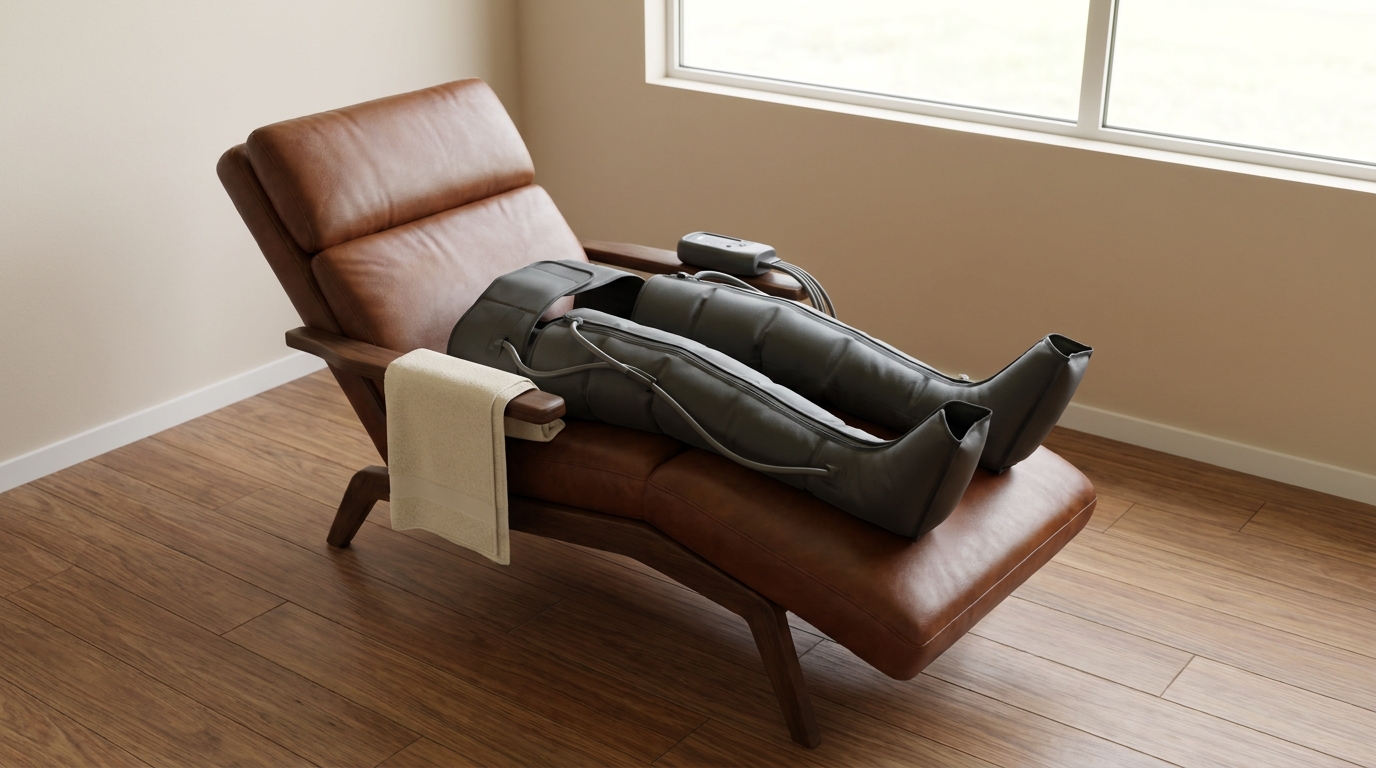
You sit or recline. The boots zip up to your hips. The first inflation cycle is firm, sometimes firmer than expected, but not painful. After the first minute or two the pressure becomes background and you stop tracking it.
Most people drift. Some sleep. The session ends, the boots release, you stand up. For about an hour your legs feel lighter, your shoes fit a little looser.
By morning, the effect has dissipated. The fluid shift was temporary. Use it when the lighter-legs window matters: during travel or heavy training. Nothing changes permanently.
How To Decide
If you have a clinical reason for compression, post-surgical recovery, diagnosed lymphedema, or chronic venous insufficiency, talk to your clinician before booking a wellness studio session.
Athletes in a serious training block or frequent flyers with recurring flight-leg swelling will get real value from it. Use it after the hard sessions.
If you are healthy, training moderately, and curious, try a few sessions and decide whether the experience is worth the cost. Skip any studio framing about detox or resets. You are paying for how the boots feel while you wear them.
The compression therapy hub lists local studios and the broader category context. For manual lymphatic drainage, look for clinics with certified lymphedema therapists rather than general recovery lounges.