The Real Question
Is hyperbaric oxygen actually going to help your training, or is this another expensive thing that takes an hour you do not have?
The answer breaks in two directions depending on what you are using it for, and the marketing tends to blur the difference because the blur is good for business.
There are real, supported uses where HBOT earns its place in an athletic recovery plan. There are also broad-stroke wellness uses where the evidence is thinner and the price-per-perceived-benefit is high. People who get the most out of hyperbaric are usually the ones who have already accepted that distinction and chosen accordingly.
The Two Versions That Get Conflated
Hospital-grade hyperbaric oxygen therapy runs at 2.0–2.4 atmospheres of pressure with 100% medical oxygen. It treats a specific list of FDA-approved conditions: decompression sickness, certain serious infections, carbon monoxide poisoning, problem wounds in diabetics, radiation tissue injury, and a few others. The protocols are clinical, the evidence is established, and you do not access this at a wellness studio.
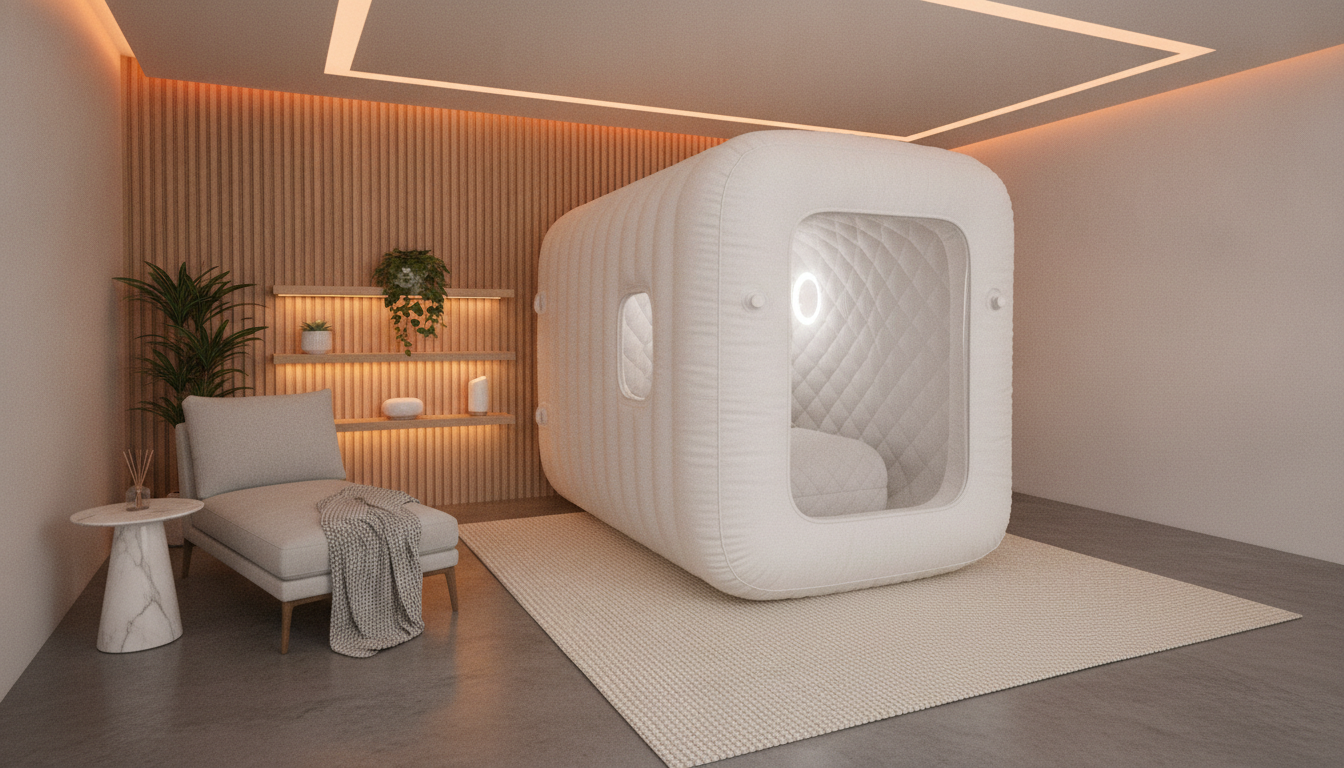
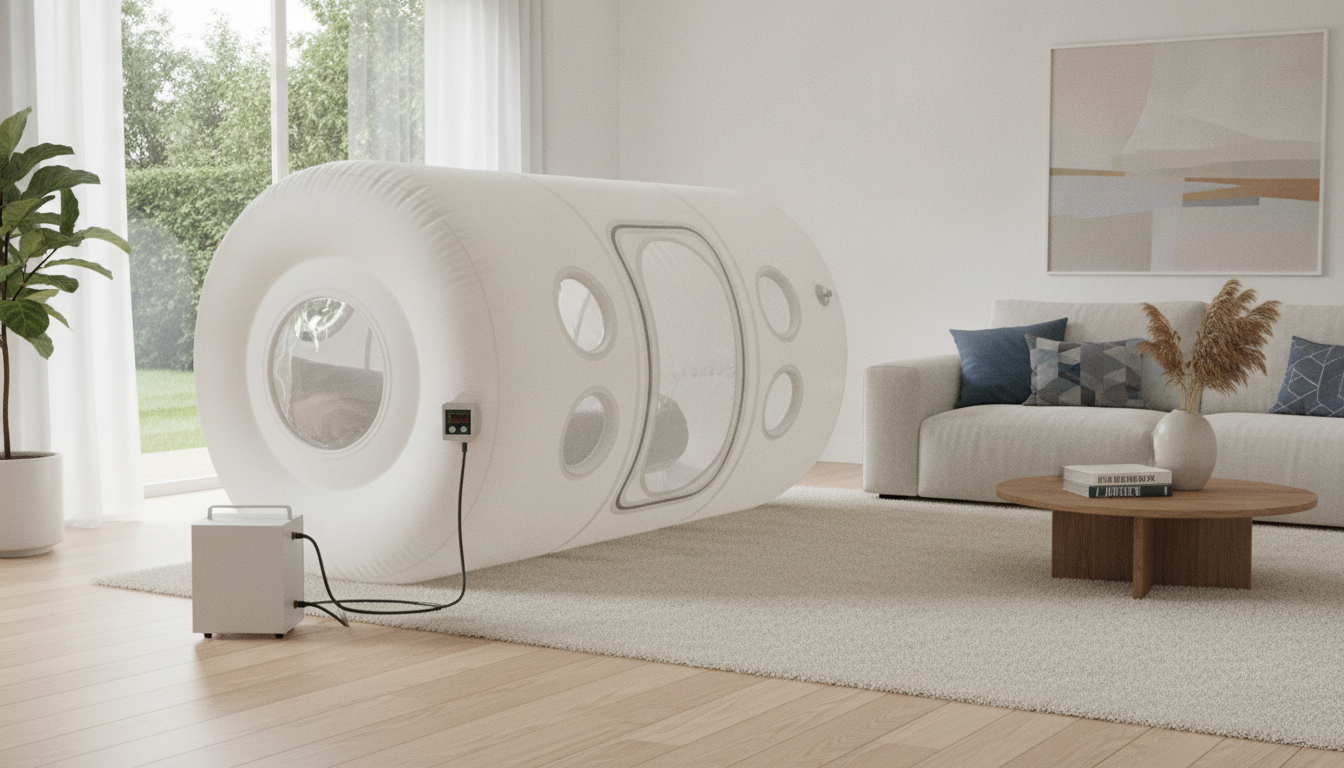
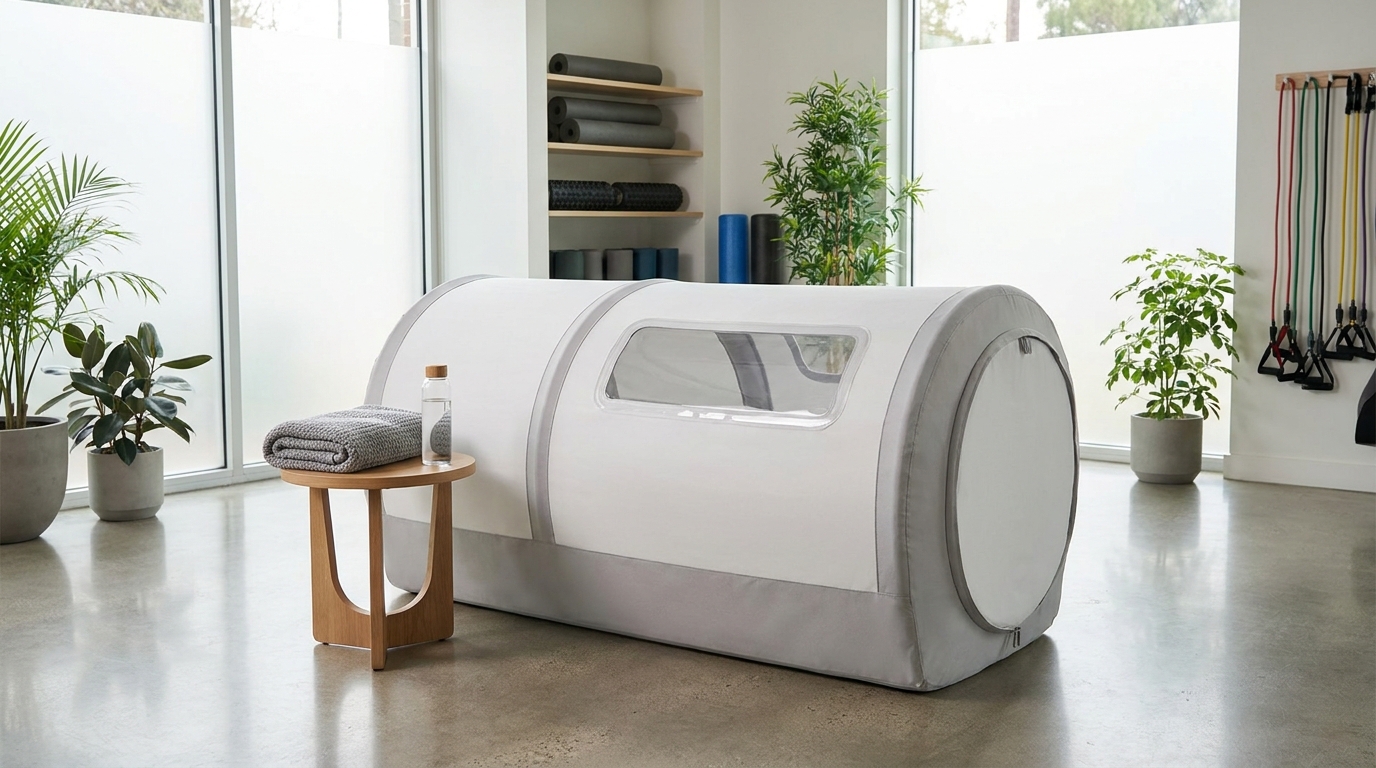
Mild hyperbaric (what most studios offer) runs at 1.3–1.5 atmospheres, often with concentrated oxygen rather than pure 100%. The pressure is gentler, the chamber is usually a soft-shell unit, and the experience is more accessible. The evidence base for mild hyperbaric is real but narrower, and the conditions it addresses are different from the hospital list.
When somebody says "hyperbaric works for X," the first question is which version they mean. Studies on hospital-grade HBOT do not transfer cleanly to a 1.3 ATA soft-shell session, and vice versa. Lumping them together does the consumer a disservice.
For more on the technology side, our hyperbaric oxygen therapy science and applications post covers the mechanism, and our mild hyperbaric oxygen in Tampa post focuses on the wellness-studio version specifically.
Where The Athletic Case Is Strongest
The clearest athletic use cases are not the ones in social media ads.
Soft-tissue injury recovery
Strains, sprains, contusions, and other soft-tissue injuries seem to respond to hyperbaric exposure in a way general training fatigue does not. The mechanism is reasonable: increased oxygen availability supports tissue repair, and pressure may help with edema management. Athletes returning from a meaningful injury, especially one that risks long layoff, are the cleanest case for a focused course of sessions.
Post-surgical recovery
If you have had a procedure — joint, soft tissue, dental — and your surgeon supports adjunct hyperbaric, this is one of the better uses. Tissue oxygenation matters during the early healing window, and well-timed sessions can be a meaningful addition to standard rehab.
Concussion and post-concussion symptoms
This is more contested. Some studies suggest mild hyperbaric helps with persistent post-concussion symptoms, others are equivocal. If you are dealing with this, do it under the care of a sports medicine doctor or a concussion specialist, not as a self-prescribed wellness experiment. The framing matters: this is medical territory.
Heavy training blocks with poor recovery
Lower-confidence use case but plausible. Athletes deep in marathon training, heavy strength cycles, or multi-event seasons sometimes use hyperbaric sessions to stay functional through weeks they would otherwise unravel in. The evidence here is less direct, and you should treat it as a possibly-helpful add-on rather than a load-bearing recovery strategy.
Where The Case Is Weak
Hyperbaric is not a sensible purchase if:
- You are training moderately and your real bottleneck is sleep, fueling, or stress
- You are using it as a way to feel like you are doing something rather than addressing the obvious problem
- You expect one or two sessions to produce a noticeable change
- You are healthy, uninjured, and "just curious"
Curiosity is fine, and trying a session to see what it is like is reasonable. But buying a multi-session package for general wellness with no specific recovery target is the use case where price-to-benefit is worst.
There is also a category of marketing claims around longevity, cognitive enhancement, and whole-body anti-aging that exceed the scientific evidence. The studies that exist are either small, unreplicated, or done at hospital pressures with hospital protocols and do not generalize to a 60-minute session at 1.3 ATA. Reasonable people can disagree, but if a studio leads with longevity claims for general healthy adults, that is a yellow flag worth noticing.
What A Session Actually Feels Like
You climb into a soft-shell chamber. The chamber zips closed. Air starts pumping in and the pressure climbs over five to ten minutes. The most noticeable sensation is in your ears: they pop, and you yawn or swallow to equalize. If you have ever flown commercially, the feeling is similar but more pronounced.
Once you are at pressure, the chamber is mostly quiet. Some studios provide audio or video. Most people read, listen to something, or doze. The session itself is uneventful and many people fall asleep. After 60 to 90 minutes the chamber depressurizes, and you climb out.
There is no big post-session buzz. People often feel a little drowsy and clear-headed at the same time. Whatever the session is doing physiologically, it is not producing the dramatic before-and-after sensation that, say, a cold plunge does. That is a feature, not a bug. It does affect how people feel about the cost when they leave.
The Time Cost Is The Real Cost
Money is part of the calculation, but most people quit hyperbaric for a different reason. The time investment is real.
A session is 60 to 90 minutes inside the chamber, plus check-in, briefing, and travel. For an athlete with an actual training schedule, family, and a job, two sessions a week of effective hyperbaric is closer to four hours of weekly schedule allocation.
The athletes who get the most out of hyperbaric tend to be the ones who pair it with something else they would do anyway (reading time, sleep, podcast catch-up), so the chamber time is not pure overhead. People who try to add it as a separate obligation usually drop it within a month, regardless of whether it was working.
Costs To Plan Around
Mild hyperbaric in Tampa runs roughly $80–150 per session at most studios, with package and membership pricing bringing it lower. A serious course, say 10 sessions for a soft-tissue injury, is several hundred to over a thousand dollars in real terms.
Hospital-grade HBOT for FDA-approved indications is usually covered by insurance with a physician referral. If you are dealing with a clinical issue that meets the criteria, the conversation should start with your doctor, not a studio.
This split matters. People sometimes pay out of pocket at a wellness studio for something that, if their condition actually qualified, would be covered through medical channels. That is a worse outcome both clinically and financially.
The Filter Question Worth Asking
Before buying a hyperbaric package, the most useful question is what specific outcome you are buying it for.
If the answer is "I have an injury that is healing slowly," the case is reasonable and a focused course is sensible.
If the answer is "I had surgery and my doctor said this could help," the case is reasonable and you should coordinate the protocol with your physician.
If the answer is "I want to recover from training faster," the answer is probably to fix sleep, training load, or fueling first, and revisit hyperbaric only if those are already in order.
If the answer is "I want to feel optimized," the best move is to pick a different problem to solve. There is nothing wrong with trying a session, but a long-term package on that motivation tends to disappoint.
For deeper context on what hyperbaric oxygen does for the brain specifically, our hyperbaric oxygen and brain health post covers that angle. For local options, hyperbaric oxygen therapy in Tampa and the oxygen therapy category page list studios.
The most defensible use of hyperbaric oxygen in an athletic context is treating something specific. The least defensible is using it as a vague optimization tool. Most of the disappointment people report sits squarely in the second category.