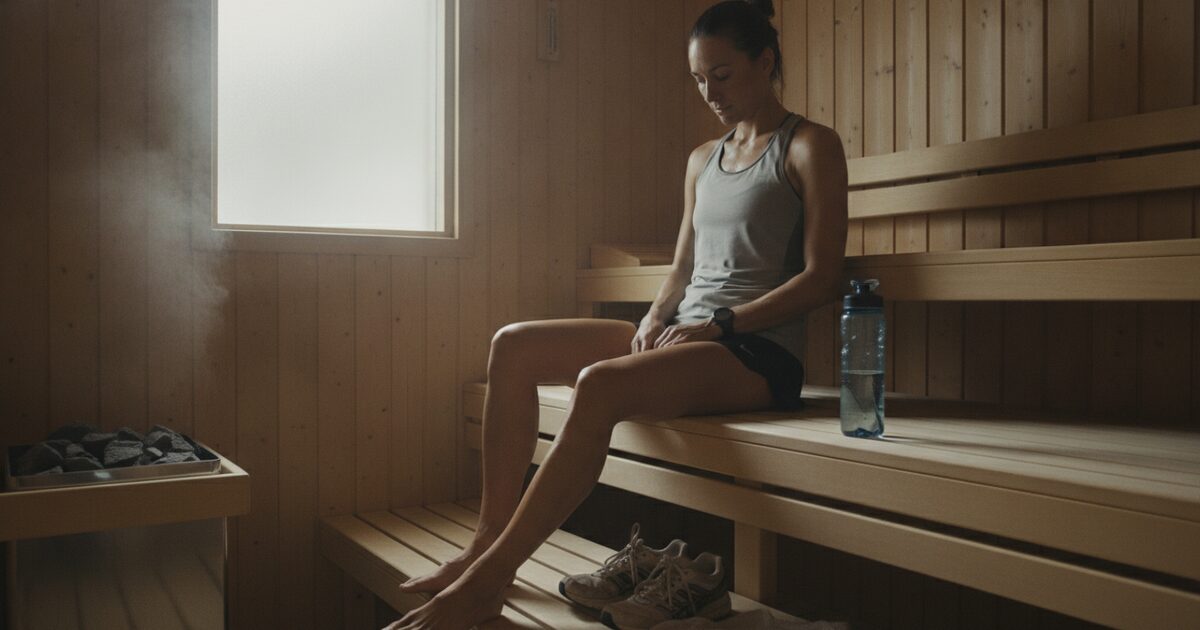
The runner in this post is a composite, built from how people commonly use the sauna during a winter race build in Tampa. The research is real. The goal is to show where sauna sessions fit into a normal training week and where they get in the way.
Week zero: why bother with heat at all
She is six weeks out from a February race. Her long runs are going fine, but she has noticed something every runner in Florida learns eventually: the weather on race morning is not guaranteed. A cool start can become a warm, humid finish.
Heat acclimation is what helps with that. When your body adapts to heat, it tends to sweat earlier, store more fluid in the blood, and run at a lower core temperature and heart rate for the same pace. Training outside in heat does this, but in winter Tampa does not always provide it. A sauna after training is one way to add the heat without changing the runs.
What the studies found
Scoon, 2007, Journal of Science and Medicine in Sport. Six competitive male distance runners in New Zealand spent three weeks using a humid sauna at about 90°C (194°F) right after training, for about 31 minutes, roughly 13 times in total. Compared with three weeks of training alone, their time to exhaustion on a treadmill test at 5K race pace increased by 32 percent. The authors estimated that as about a 1.9 percent improvement in a time trial. Plasma volume went up by about 7 percent, and the performance gains tracked closely with that increase.
Stanley, 2015, European Journal of Applied Physiology. Seven well-trained cyclists did 30 minutes of sauna at 87°C (about 189°F) after training for 10 days. Plasma volume peaked after just four sessions, with an increase of close to 18 percent.
Kirby, 2021, European Journal of Applied Physiology. Twenty trained middle-distance runners, 13 of them women, trained normally for three weeks. Twelve of them added about 28 minutes of sauna at 101 to 108°C after training, three times a week. In a hot running test afterward, the sauna group had a lower peak core temperature and a heart rate about 11 beats per minute lower than the group that trained normally, along with improvements in markers of aerobic fitness.
These are small studies with trained athletes. The findings point the same way, though: post-run sauna, a few times a week for about three weeks, leads to measurable heat adaptation.
Weeks one to three: the heat block
The composite runner spread the sessions over three weeks, starting about six weeks before the race.
Week one. Sauna after two easy runs, 10 to 15 minutes each. She waits long enough after the run to drink a bottle of water and let her heart rate settle, then goes in. No sauna after her long run or her workout day, because those already leave her drained.
Week two. Three sessions, 15 to 20 minutes each. She notices she starts sweating sooner. That is a common early sign of adaptation.
Week three. Three or four sessions, building toward 25 minutes on the days she feels good. She splits longer sessions into two rounds with a few minutes outside the sauna between them.
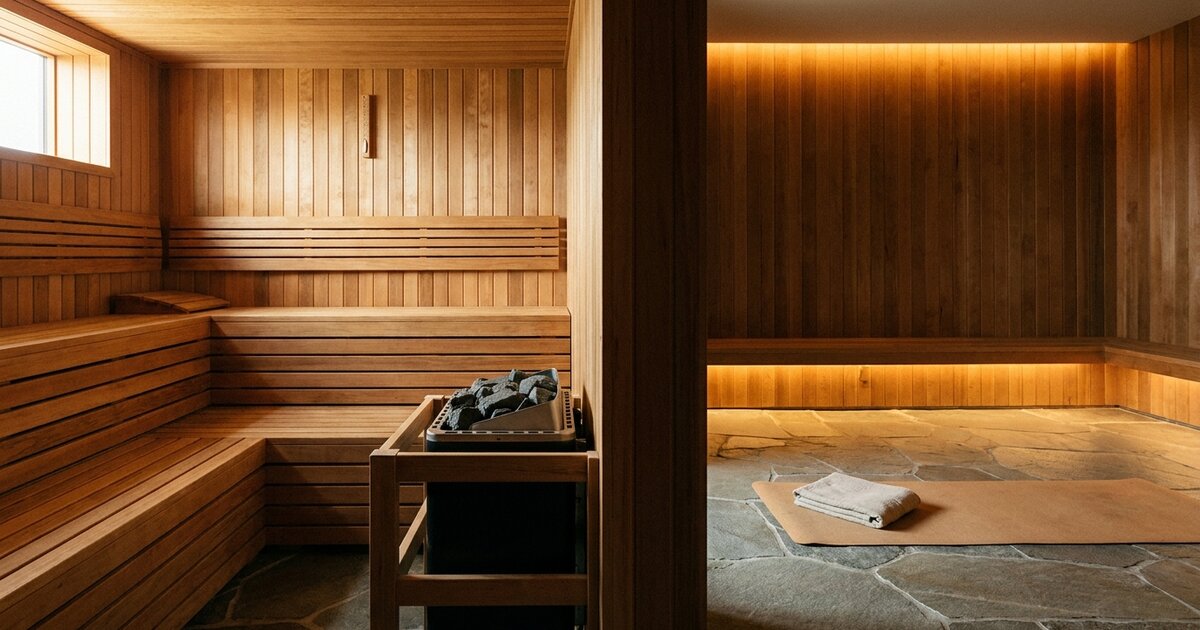
She keeps infrared sessions a little longer than traditional ones because the air is cooler. For general guidance by sauna type and experience level, see how long to sit in a sauna.
Where it gets in the way
Heat is a stressor. Added carelessly, it takes away from running rather than adding to it.
- After a long run or a hard workout. You are already low on fluid and fuel. Many runners skip the sauna on these days or keep it very short.
- Before a run. A sauna before a workout raises your core temperature and costs fluid before you start. Sauna before or after a workout goes through the timing in more detail.
- On a poor night's sleep or during a cold. Skip it. Heat stress and a run-down body do not mix well.
- In the final days before the race. Most runners stop a few days out to arrive rested and fully hydrated.
In a 2019 study in Frontiers in Physiology, heat acclimation from post-exercise hot water immersion was still present two weeks later. Stopping sauna a few days before the race will not erase the adaptation.
Hydration, without the guesswork
Runners in these studies were closely monitored. At home, the simplest check is a scale.
- Weigh yourself before the run and after the sauna. Almost all of the difference is fluid.
- Replace it over the next few hours with water and some sodium, from food or an electrolyte drink. The American College of Sports Medicine's position stand on fluid replacement stresses replacing electrolytes as well as water after heavy sweating.
- Check your urine. Pale yellow is the target.
- Skip alcohol on sauna days.
If your weight keeps dropping from one day to the next, you are not rehydrating enough between sessions, and your runs will show it before the sauna does.
Race week and after
On race week she does no sauna for the final several days. After the race, she waits until she is eating, drinking, and moving normally before going back to heat. Most runners give it a day or two.
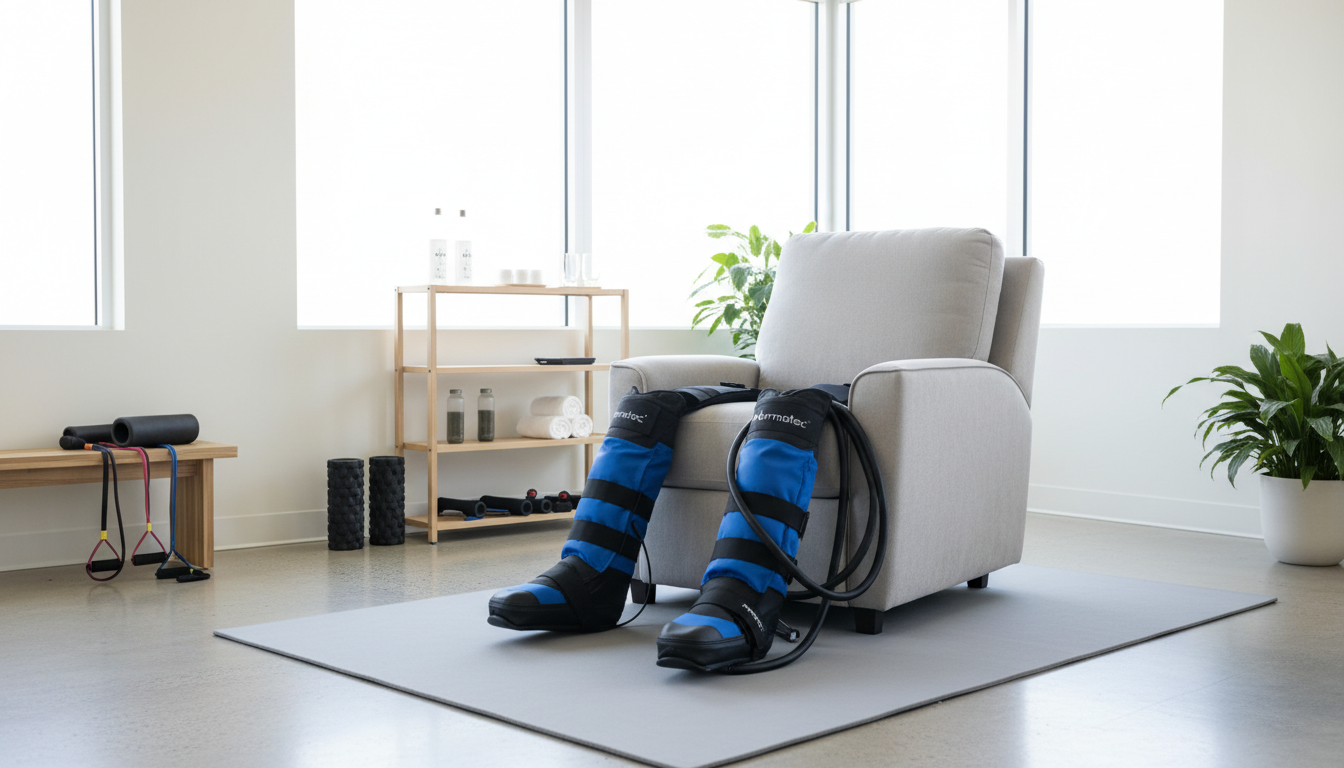
Compression fits well in that post-race window. Compression after long runs covers where it fits across a Gasparilla build. For runners weighing cold, cryotherapy for runners in Tampa goes through when it is worth the money.
Who should be careful
Runners with heart conditions, a history of heat illness or fainting, or who are pregnant should ask a clinician before starting a heat block. The same applies if you take medicines that affect blood pressure, heart rate, or sweating.
Finding a sauna near your running routes
Tampa Bay has traditional saunas, infrared suites, and contrast studios from South Tampa to Wesley Chapel. Some runners pick a studio on the way home from Bayshore; others use a gym sauna after a treadmill session. The infrared sauna options in Tampa page lists local providers so you can find one that fits your week.