Monday Legs
You finished Sunday's long run on Bayshore somewhere around nine in the morning, already soaked, and you felt fine for about four hours. Then the afternoon happened. By the time you went to bed, sitting down and standing back up had become an event.
Monday morning the stairs give you the real report.
The question runners ask at that point is pretty consistent. Is this worth booking a session for, or is this a walk, some coffee, and getting on with the day?
Honest answer: it depends where you are in the build. Compression is not a thing you either believe in or do not. It is a thing that makes more sense in some weeks of a Gasparilla cycle than others, and most people use it backwards, heavy early when they are excited and then nowhere near it in the weeks that actually grind.
Base Weeks, November Into December
Early in a build, the long run is long relative to where you are, not long in absolute terms. Twelve miles when your weekly mileage is thirty is a real stimulus, but it is not the kind of day that leaves you wrecked into Tuesday.
So compression here is occasional at best. Once every few weeks, usually after the first long run that felt like a jump in effort, or after a weekend where a race pace effort landed close to the long run.
What runners report from these early sessions is modest and worth saying plainly. Legs feel lighter that evening. The next easy run starts with less of the thick feeling in the calves. Nobody comes out of a November compression session with a story.
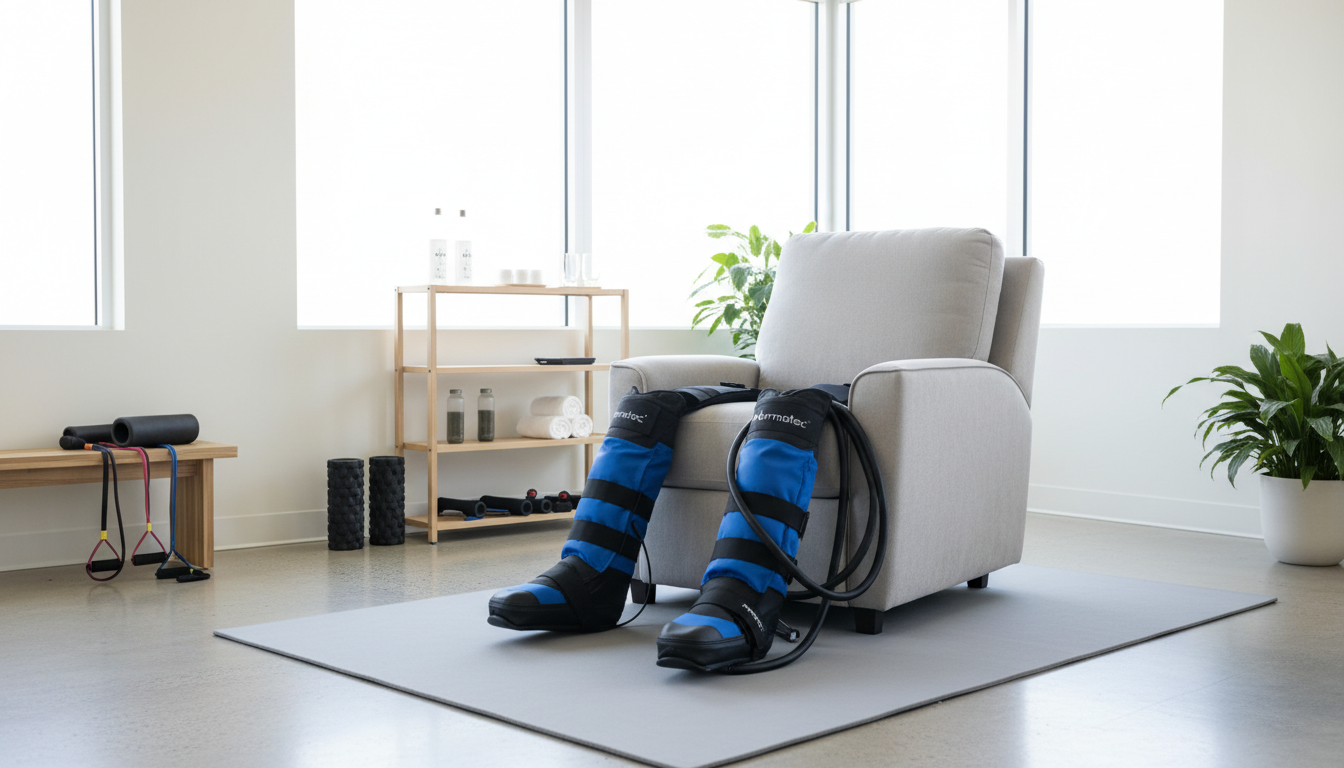
If you are curious about the tool itself before you start spending on it, the Normatec compression boots guide covers what the machines do and what they do not.
Peak Weeks, January
This is where it earns the money.
By January the long runs are sixteen, eighteen, maybe twenty depending on your plan, and they are happening in whatever Tampa decides January means that year, which can be forty five degrees or seventy eight with the sun out. The mileage stacks. The last two hours of Sunday and most of Monday are where the cycle either holds together or starts leaking.
Timing: same day if you can manage it. An hour or two after you finish, once you have eaten and put fluids back, through to that evening. Runners who wait until Monday morning still report the legs feeling better, so treat the timing as a preference rather than a rule that makes or breaks the session.
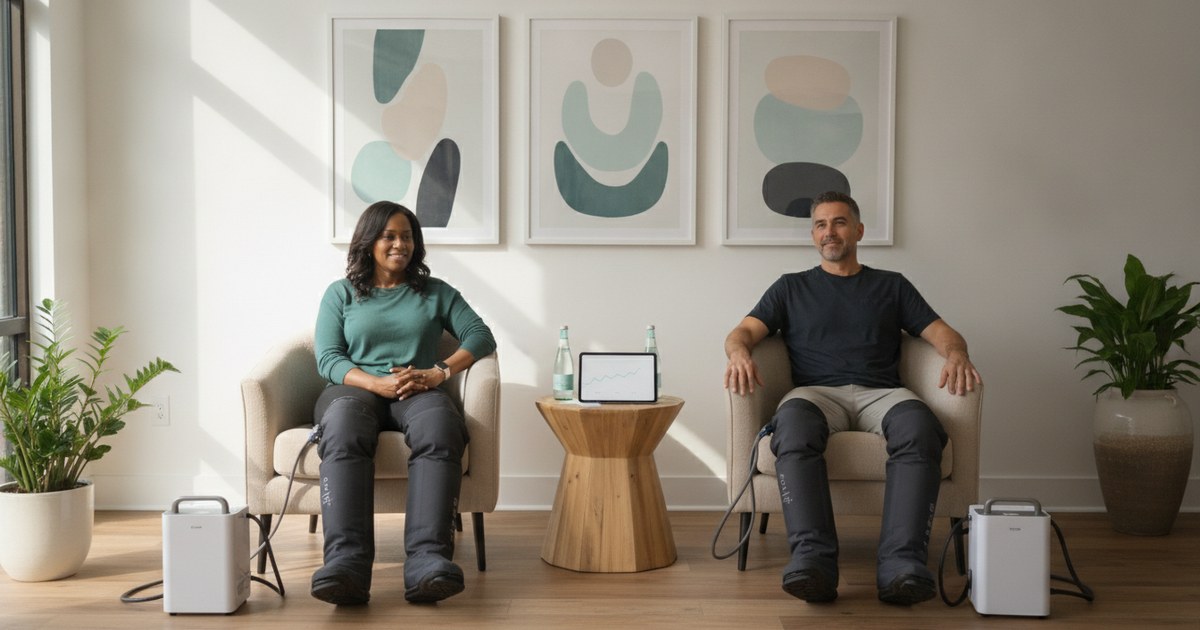
Length: twenty or thirty minute blocks are what studios book, and after eighteen miles most people take the thirty. Past that you are mostly sitting somewhere pleasant, which is allowed but is not doing much more for the legs.
Pressure: moderate. The instinct is to crank it, on the theory that harder squeezing means more of whatever this does. What tends to happen instead is that you spend the session braced against the cuffs, which is the opposite of the point. If you are gritting your teeth, turn it down.
Frequency in peak weeks runs one to two sessions, anchored to the long run and sometimes to a midweek quality day. A lot of runners book the same slot every Sunday afternoon for six weeks and stop thinking about it, which is the version most likely to survive January. Local options are listed on compression therapy in Tampa, and the general overview lives at compression therapy.
Taper And Race Week, Early February
The taper is when practitioners see people go sideways.
The mileage drops, the nervous energy has nowhere to go, and runners start filling the empty hours with recovery. They book more compression than they did in peak weeks, add modalities they have never tried, and show up twice in three days.
None of it is dangerous. It is just untested, in the one week where you do not want anything untested. If compression has been a Sunday habit since December, keep it a Sunday habit. If it has not been part of your routine, race week is a strange time to introduce it.
The pre run version is a separate question with a narrower case, and it is covered in compression boots before a workout rather than here.
The 48 Hours After The Race
Walk first. Not far, just enough that you are not going straight from the finish line to a chair for six hours.
Compression usually fits later that afternoon or the next morning, and thirty minutes is plenty. What runners report in that window is less about soreness scores and more about stairs, curbs, and whether getting out of the car in the morning requires a plan.
Day two is typically worse than day one. That is normal and not a sign that something went wrong or that the session did not work.
Stacking With Cold
Plenty of runners pair compression with something cold in the same visit, especially after summer and early fall long runs when you finish overheated.
The case for cold as a runner's tool, including where it is oversold, is already made in cryotherapy for runners in Tampa, and the hot and cold cycling version sits in contrast therapy for Tampa athletes. No point repeating either. The only scheduling note worth adding is that if you are going to do both in one visit, doing cold first and finishing in the boots is what most people settle on, mainly because sitting still in compression is a better way to end a session than to start one.
When The Boots Are Not The Answer
A calf that hurts in one specific spot is not general soreness. Neither is pain that showed up mid run and changed how you were landing, or swelling in one leg that you cannot trace to the run, or anything with numbness attached.
Calf strains are a diagnosis. So is a stress reaction. Putting sequential compression on a leg with an injury you have not had looked at is at best a delay and occasionally worse. Sports medicine or physical therapy first, then come back to the recovery schedule once someone has told you what you are dealing with.
Swelling in one leg after a flight or a long drive, particularly with tenderness or warmth, is a same day medical question rather than a studio question.
What February Usually Looks Like
The runners who use compression well through a build do not claim much for it afterward. Ask them in February whether it made a difference and you get a shrug and something like: Mondays got easier to deal with.
That is a smaller claim than the marketing around these machines, and it is the one that keeps showing up.