You can stretch without sitting in a sauna. If you want to combine the two, the simplest first-visit plan is to do your movement outside the heat and use the sauna as a separate activity. You have more room, fewer hot surfaces, and less reason to mistake heat discomfort for exercise effort.
Sauna stretches appeal to people who feel stiff after a workout or a day at a desk. Warmth can feel pleasant, but that feeling does not establish that a hot-room routine will improve flexibility more than stretching elsewhere. For Tampa residents arriving after an outdoor run, extra heat also adds to an already hot afternoon.
What the flexibility research supports
Researchers study stretching, warm-ups, and local heat treatments. Those are different interventions from exercising inside a sauna.
A 2013 systematic review in the Journal of Foot and Ankle Research evaluated 23 studies involving 734 participants. Researchers found evidence that static stretching could improve ankle dorsiflexion, which is the movement that brings your toes toward your shin. Some combinations of stretching and other treatments also helped. The authors noted a shortage of quality evidence for other interventions.
That review does not establish an effective sauna-stretching protocol. Applying a warm pack to an ankle is different from exposing your whole body to a hot room. You cannot use a local-heat result to pick a sauna temperature, session length, or stretch depth.
A review of sauna benefits and risks in the American Journal of Medicine describes the cardiovascular changes during heat exposure and the risks of combining sauna with alcohol. Heat is a physical load even when you are sitting still. Adding movement does not make that load disappear.
Stretching before or after sauna
Choose the order around your comfort and the purpose of the visit.
Before a workout: use a warm-up appropriate to the activity you plan to do. A passive sauna session does not rehearse the movements of running, lifting, or a court sport. If you need advice about an injury or restricted movement, ask a physical therapist rather than choosing a heat routine from a recovery menu.
After a workout: catch your breath and get out of the sun first. Do not enter a hot room while you already feel overheated or lightheaded. Keep any stretching comfortable, and decide whether you still want heat once you have rested.
On a rest day: you can keep the activities separate. Move in a cool area, use the sauna if it suits you, and leave time afterward to rest. There is no need to alternate repeatedly between stretching and heat.
After sauna, wait until you feel steady before moving into standing stretches. If you feel dizzy or nauseated, stop the visit rather than trying to stretch through it. See how long to sit in a sauna for session-planning cautions.
A movement plan outside the hot room
You do not need an elaborate sequence. Choose movements you already know and can perform without pain. These examples illustrate low-complexity options, not a treatment plan for an injury:
- Seated ankle movement: sit in a stable chair and move your ankles through a comfortable range. Keep both feet close to the floor if you feel unsteady.
- Gentle shoulder movement: move your shoulders without forcing them into an unfamiliar position. Stop if you feel pain or tingling.
- An easy walk: take a short walk in a cooler area before deciding whether you want to stretch. Walking gives you a chance to notice whether you feel steady after the heat.
Avoid bouncing, forcing a joint to its end range, or asking another person to push you deeper. You do not need to reach a particular pose to justify a recovery visit. If a clinician has given you a mobility plan, follow that plan and ask before adding heat.
If you still want to move inside the sauna
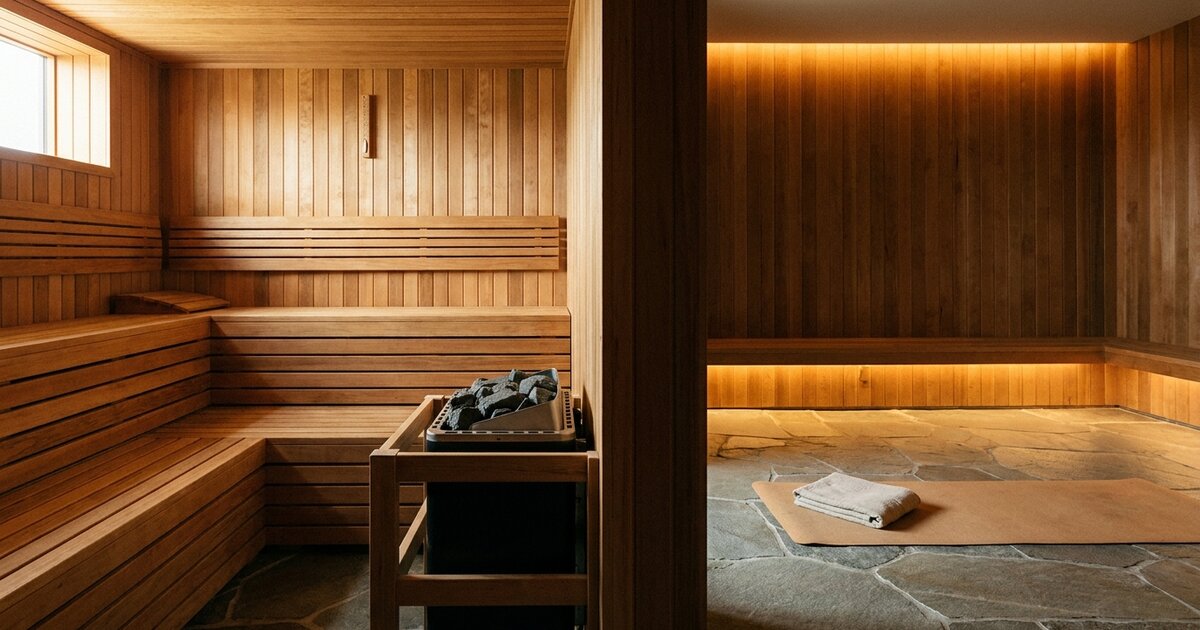
Ask staff first. A venue may allow only seated use, and a small cabin may have no safe space for floor exercises. Other guests also need room to sit and reach the exit.
Check for hot panels, a heater, slippery surfaces, and the path to the door. Do not use a heater, rail, or sauna bench as an exercise prop unless the venue has designed and approved it for that purpose. Bring no equipment that blocks another person's exit.
Keep movement within a comfortable range and remain aware of how you feel. A longer stretch hold also means more time in heat; it is not a reason to extend the sauna session. Leave if you develop dizziness, nausea, unusual breathlessness, or a headache. For symptoms such as chest pain or fainting, seek medical help.
Infrared sauna yoga is a different booking
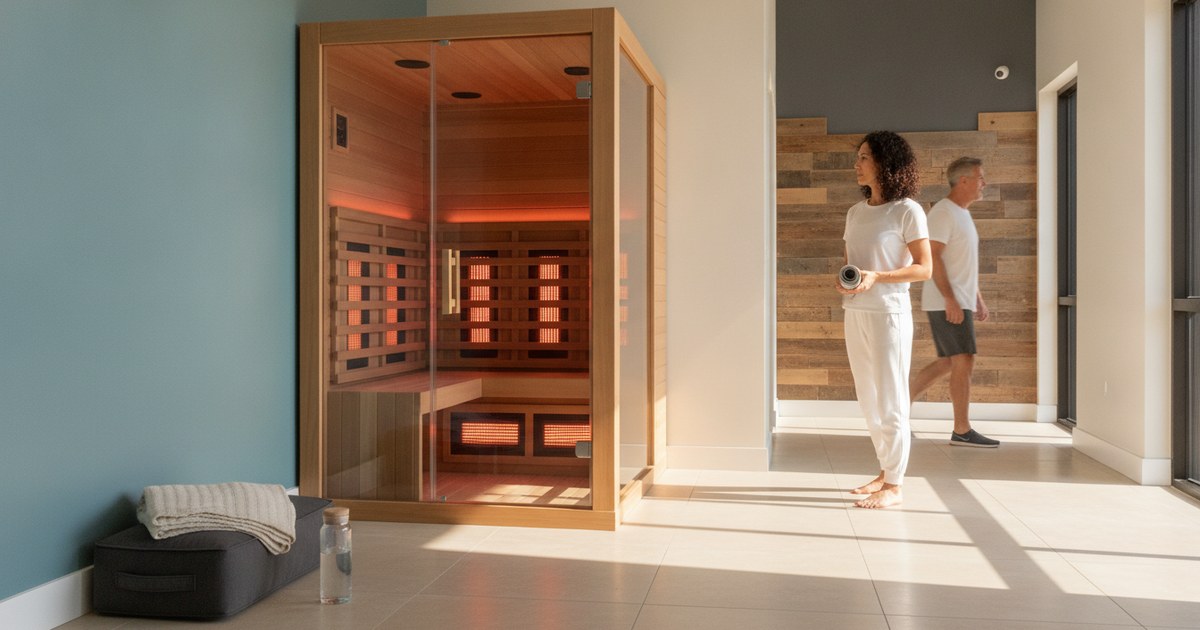
A studio that advertises heated yoga may provide a room, flooring, supervision, and a class format designed for movement. A one-person infrared cabin does not automatically provide those conditions.
Before booking, ask whether the session is a class or access to a standard sauna. Ask who supervises it and what experience they expect. A label such as "infrared yoga" does not establish that the class is safer or more effective than exercise at room temperature.
The infrared versus traditional sauna guide explains the heat formats. Neither format gives you permission to ignore symptoms or stretch past discomfort.
Planning a Tampa visit
Compare sauna providers in Tampa and check the address, room setup, and house rules before booking. A private cabin in South Tampa and a shared bathhouse can offer different amounts of space, but privacy alone does not make a cabin suitable for exercise.
Ask whether the location has a cool area where you can rest, whether changing time comes out of the reservation, and whether any stretching is allowed. Do not assume the venue has a mat or an exercise area because it lists recovery services.
If your main goal is to unwind, you may prefer a seated sauna visit without extra activity. The sauna for stress relief guide covers that choice. You can leave the stretching for another time and still enjoy the visit.