The parking lot question
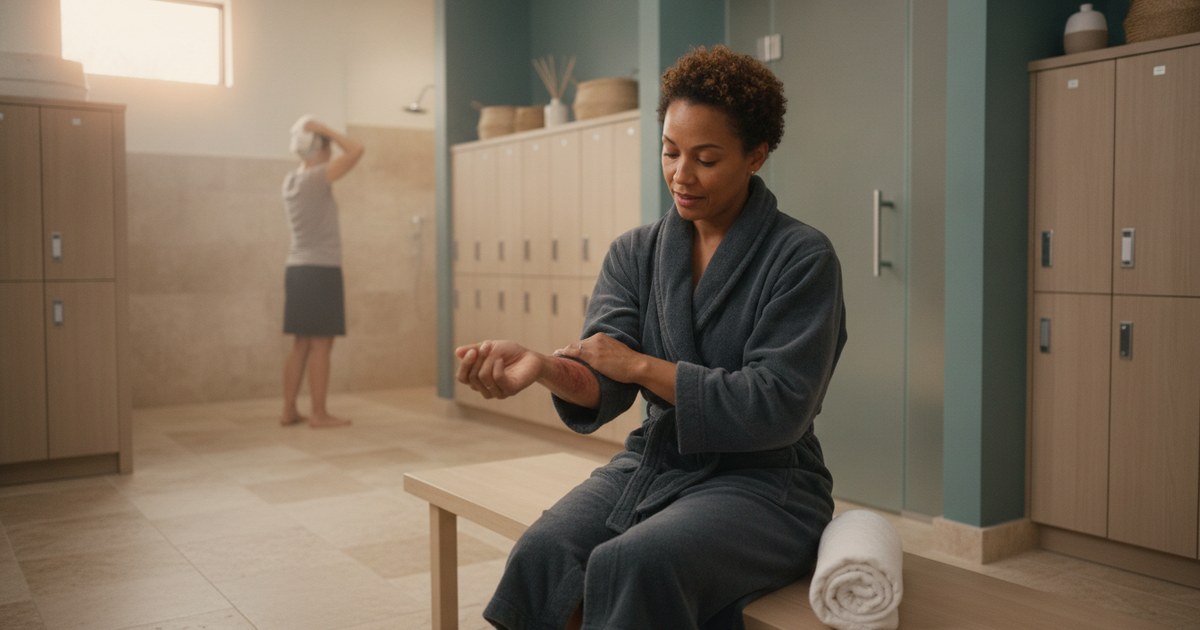
Someone steps out of a 25 minute session, catches sight of their chest in the locker room mirror, and it is covered in blotches. Not an even red. Patchy, raised in places, starting to prickle. They find the nearest staff member and ask the same thing everyone asks.
Is this normal?
Most of the time, yes. Occasionally it is worth a closer look. The frustrating part is that the ordinary version and the version worth checking can look alike for the first ten minutes, and neither one announces itself.
What follows is how studio staff generally talk about this. Nobody at a front desk can tell you what is happening on your skin, and neither can a blog post. What both can do is help you sort the boring from the not boring.
Flush, heat rash, and hives do not look the same once you know what to watch
A flush is the common one, and it is what most people are actually seeing. Heat pushes blood toward the surface, vessels widen, and skin turns warm and pink or red. On plenty of people it comes up unevenly, in patches across the chest, neck, and cheeks, which is what makes it look like a rash in bad lighting. It is flat. You can feel warmth but not texture, and it usually fades within 10 to 30 minutes of cooling down.
Heat rash is what people describe when the red areas have texture. Tiny bumps or small clear blisters, generally in the spots where fabric pressed against skin or where two skin surfaces touched. Under a bra band. Along a waistband. Backs of the knees, crease of the elbow. The usual explanation is sweat that could not get out to the surface. It prickles or itches rather than burns, and people commonly report it settling over a few hours to a couple of days once the skin stays cool and dry.
Hives are the ones that worry people, reasonably. Raised welts with defined edges that behave oddly, showing up in one place, fading, and reappearing somewhere else inside the same hour. Some people get them from heat or sweat consistently, every time, in any hot room. If you search the symptom you will land on the term cholinergic urticaria, which is the medical name for one pattern of heat triggered hives. That is a diagnosis, and a diagnosis comes from a clinician who can look at your skin, not from a search result.
The shorthand staff tend to use is simple. Flat and fading is ordinary. Bumpy and itchy means change something about the session. Raised welts, spreading, or anything involving swelling or breathing means you are finished for the day and calling someone.
Sunburn and the sauna
In Tampa this is a real question rather than a hypothetical one. People book an evening session after a morning on the water and turn up already pink, hoping the heat will somehow help.
Studios almost always suggest waiting, and the reasoning is easy to state plainly. Sunburned skin is inflamed and already struggling to shed heat, and a sauna adds more heat plus salty sweat to skin that is raw. The people who go anyway tend to report stinging, deeper redness afterward, and a slower recovery than they expected.
How long do people wait? Usually until the area is no longer warm to the touch, no longer tight, and no longer tender under a shirt. For a mild burn that is often a day or two. If skin peels, it is longer, and the new skin underneath is sensitive on its own terms for a while after that.
There is no strict published rule here, which is exactly why it is worth asking the studio instead of guessing. If you came looking for what heat actually does for skin in the normal case, that is covered in the post on sauna and skin, and the reasons people sit out infrared sessions covers the rest of the skip list. A fresh burn is not the normal case.
The causes nobody suspects
Heat gets blamed because heat is the memorable part of the session. It is often not the culprit.
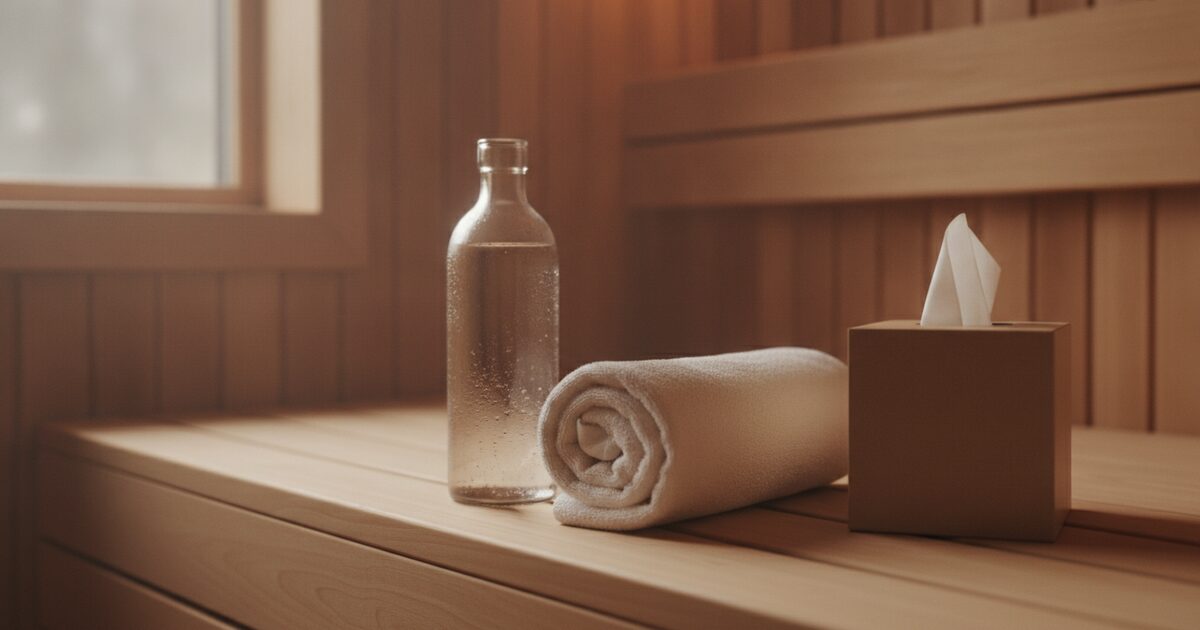
Bench contact is a common one. Bare skin on hot wood, or on a bench someone cleaned with a strong product an hour earlier, produces redness in the exact shape of where you sat. Sitting on your own towel solves more of these than people expect.
Skincare is another. Retinoids, acid exfoliants, and heavy occlusive products behave differently when you are sweating in a hot room than they do on your bathroom counter. Plenty of people find that skipping actives on sauna days makes the itching disappear entirely, which tells you something about what was actually going on.
Then there is laundry. A new detergent, a scented fabric softener, or a fresh batch of studio towels lines up with a first time reaction more often than anyone would guess. If the reaction shows up only at one location and never at home, the towels are worth asking about. The differences between sauna formats matter less here than what your skin is touching and what is already on it.
When to skip the next session
Skip it, and get someone qualified to look, if you are seeing blistering, a rash spreading past the areas that were hot and covered, fever or chills, pain that seems out of proportion to how the skin looks, or anything that is still there the following day.
Welts along with swelling of the lips, face, or tongue, or any tightness in the throat or trouble breathing, is not a wait and see situation. That is urgent care or 911, immediately, and worth saying out loud because people talk themselves out of it.
One more that people skip over: if the same reaction shows up every session and fades every time, it is still worth a visit. Repeat patterns are the thing a clinician can actually work with, and the answer is frequently a small adjustment rather than giving up heat entirely.
Lowering the odds next time
The adjustments that studios suggest are unglamorous. Shorter sessions, at a lower temperature, with a rinse and a proper dry before you go in so you are not sealing product and sunscreen against your skin. Loose cotton afterward instead of the same damp workout clothes. Your own towel under you.
Cooling down gradually helps some people and does nothing for others, though a cool rinse after the sauna at least gets sweat off the skin before it sits there. If you are the kind of person who reacts to heat generally, the lower temperature formats covered across heat therapy give you a way to test your tolerance without committing to 20 minutes at full heat.
The thing that surprises people most is how often the answer turns out to be a towel or a new body wash rather than the sauna at all. Heat is the obvious suspect because heat is the part you feel. It is also the only variable most people know how to change, so it gets changed first, and sometimes that works for reasons nobody at the front desk can actually explain.