The number on a sauna thermometer matters less than people think, and more than they'd like.
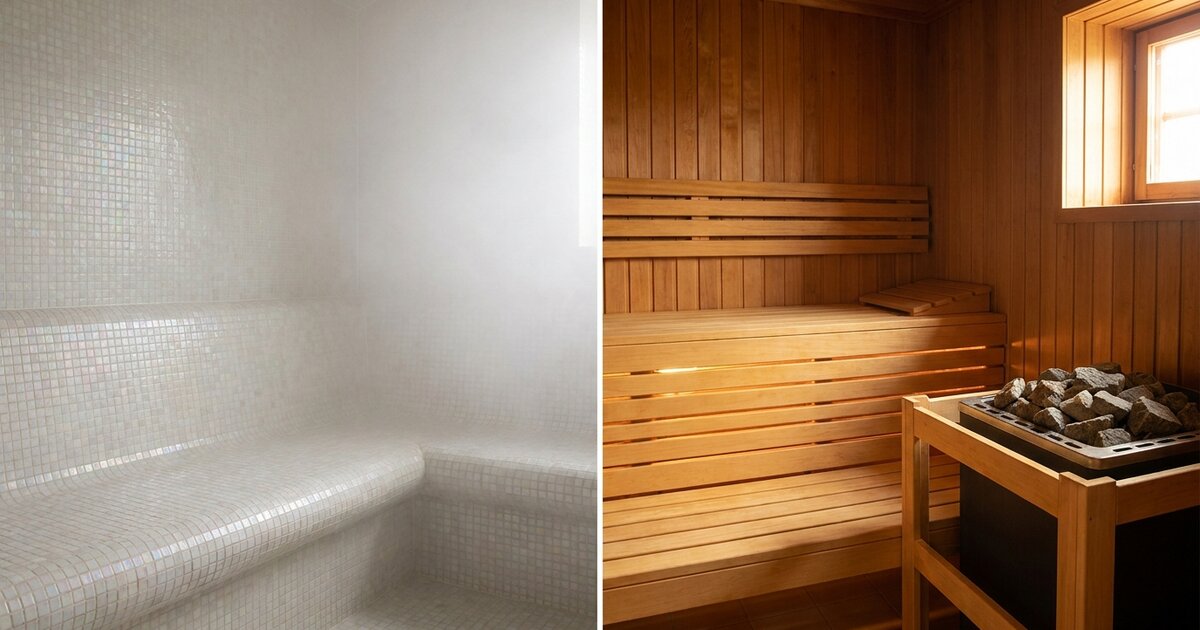
A traditional sauna usually runs 150 to 195°F (65 to 90°C). An infrared sauna runs about 120 to 150°F (50 to 65°C). A steam room runs about 110 to 120°F (43 to 49°C) at close to 100 percent humidity. Humidity, where you sit, and how long you stay change how that heat feels.
Sauna temperature by type
| Type | Air temperature (°F) | Air temperature (°C) | Humidity | How it feels |
|---|---|---|---|---|
| Traditional (Finnish, dry) sauna | 150 to 195°F | about 65 to 90°C | Low, roughly 10 to 30%, higher when water hits the stones | Hot, dry air that spikes when steam is added |
| Infrared sauna | 120 to 150°F | about 50 to 65°C | Low | Gentler air, warmth on your skin from the panels |
| Steam room | 110 to 120°F | about 43 to 49°C | Close to 100% | Wet, heavy, harder to breathe for some |
| Korean spa (jjimjilbang) heated rooms | Varies by room, often posted at the door | Varies | Varies by room | Several rooms at different heats, some cooler than a sauna |
The traditional and infrared ranges match the ones used in our infrared sauna vs dry sauna comparison. Published sources vary a bit around the edges. Wikipedia's summary puts traditional Finnish saunas at 75 to 100°C, and a 2022 study in Biology describes the usual range as 70 to 100°C with 80 to 90°C as the sweet spot and 15 to 30 percent humidity.
Steam rooms sit lower on purpose. Wet heat at dry-sauna temperatures would scald. The full wet-versus-dry comparison is in steam room vs sauna. A sauna maker's guide in Google's top results puts steam rooms at 110 to 120°F, and a physician quoted by GQ put them at about 100 to 120°F.
Korean spas are their own category. A jjimjilbang usually has a series of rooms, some hot, some warm, and one cold. Wikipedia notes that each room's temperature is usually displayed at the entrance, and some spas also have a hotter kiln-style room. Read the sign before you walk in.
Why 180°F air doesn't cook you
It seems like it should. Water boils at 212°F, and a hot sauna isn't far off.
Two things protect you. First, dry air is a poor carrier of heat compared with water. You can put your hand in a 200°F oven for a moment, but you can't do the same with 200°F water. Second, you sweat, and that sweat evaporates off your skin and cools it.
A 2014 study in The Scientific World Journal describes the typical response: skin warms to around 40°C (104°F) and core temperature rises from about 38 to 39°C (100 to 102°F). Your skin stays at less than half the air temperature.
That changes when someone pours water on the stones. The Finns call the steam löyly. Your skin is cooler than the dew point of that suddenly humid air, so steam condenses on you and dumps its heat straight into your skin. The thermometer barely moves, yet the room feels much hotter for a minute. It's the same reason a steam room at 115°F can feel as intense as a dry sauna at 175°F.
Bench height matters
Heat rises. The top bench is the hottest seat in the room and the floor is the coolest. A well-built sauna keeps the gap between levels small, but you'll still feel it.
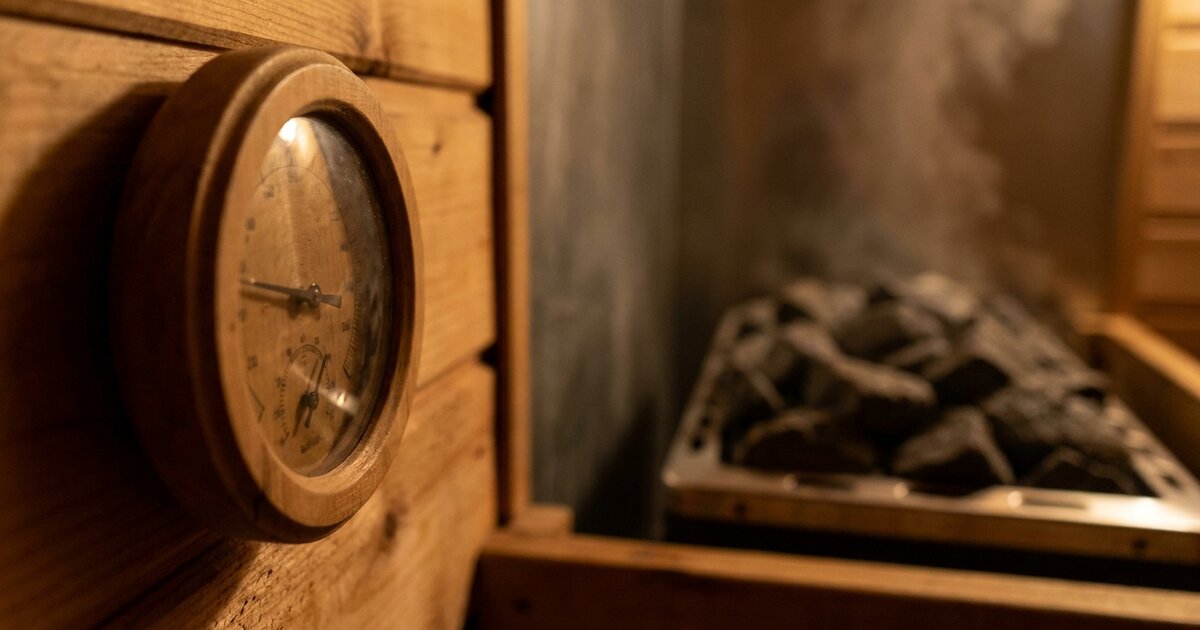
If you're new, sit low. If the heat feels like too much partway through, move down before you give up on the session. And note where the thermometer is mounted. One near the ceiling reads hotter than what you feel on a bottom bench.
How hot is too hot?
There's no single legal maximum we could verify for sauna rooms, so here's what the research shows.
Most sauna studies use about 80 to 93°C (176 to 199°F). The long-term Finnish data on heart health and longevity comes from traditional saunas in that range. The details are in the Finnish sauna research post.
Hotter isn't better. A 2023 study in Frontiers in Public Health had 22 young women who used saunas only now and then sit for 20 minutes at 80°C and again at 120°C (248°F). At 80°C, their mood scores improved. At 120°C, mood got worse, some felt nauseated or confused, and some fainted. The authors recommended 80°C for occasional users and advised against 120°C.
The extreme end has a grim example. The World Sauna Championships in Heinola, Finland, started the men's final at 110°C (230°F) and poured water on the stove every 30 seconds. The Finnish Sauna Society opposed the event. It ended for good after one finalist died and another nearly died in 2010.
Some people should aim lower. The 2022 Biology paper notes that people with high blood pressure are often advised to use saunas at 45 to 50°C. Anyone with heart disease, uncontrolled blood pressure, a history of fainting, or pregnancy should ask a clinician first. Who should skip an infrared sauna covers the common reasons.
Temperature and time go together
A hotter room means a shorter session. Rough pairings for healthy adults:
- Traditional sauna, 150 to 195°F: 10 to 20 minutes, or 5 to 10 if you're new
- Infrared sauna, 120 to 150°F: 20 to 30 minutes, or 10 to 15 if you're new
- Steam room, 110 to 120°F: Shorter than you think. Humidity blocks sweat from cooling you, so leave when breathing starts to feel heavy
The full breakdown is in how long to sit in a sauna. If you alternate with cold water, cold plunge temperature covers the other side of the contrast.
Sauna temperature in Tampa
Florida adds its own twist. For much of the year, you walk into a sauna already warm and a little dehydrated from the heat outside. The same 175°F sauna that feels great in January can feel rough after a July afternoon on the water.
A few adjustments help:
- Cool off first. Sit in the air-conditioned lobby and drink water before you go in.
- Take the lower bench on hot days. Or ask the studio if it can set the room a few degrees lower.
- Ask what the room runs. Studios set their own temperatures, and few publish them. A quick question at the front desk tells you whether you're walking into 160°F or 190°F.
- Watch your skin. Heat on top of a sunburn is a bad mix. See rash after the sauna.
Tampa Bay has traditional saunas, infrared suites, and at least one Korean-style bathhouse. Bathhouses in Tampa Bay covers the social and Korean-style options, and the infrared sauna options in Tampa page lists local studios by area.