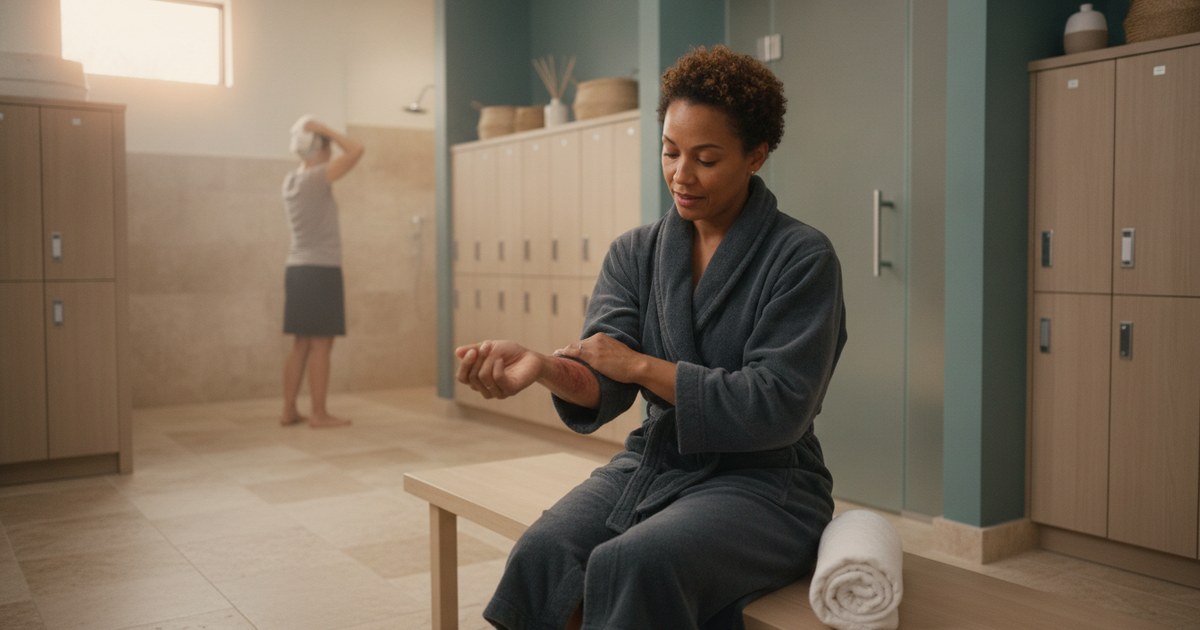
The question usually comes up on day two of a cold. Your head is full, your throat is scratchy, and your sauna membership is sitting there unused. Plenty of people have heard that you can sweat a cold out. The science on that is short and fairly clear, and it points to a different answer depending on whether you are already sick or trying not to get sick.
This post splits those two questions apart, then covers the part that matters most at a Tampa studio: whether you should be in a shared hot room at all.
Short answer first
- Already have a cold, no fever: a sauna will not shorten it. A brief, easy session may feel good. It is optional.
- Have a fever, body aches, or feel wiped out: skip the sauna completely.
- Healthy and hoping to catch fewer colds: regular sauna use has some weak supporting evidence, nothing you should count on.
- Thinking about a shared studio while sick: stay home and reschedule.
Does a sauna help a cold once you have one?
The best test of this idea comes from a Berlin sauna. In a randomized trial published in the Medical Journal of Australia in 2010, researchers from Charité University Medical Center enrolled 157 adults who had just come down with a cold. Everyone sat in a hot sauna wearing a winter coat for three days. Half breathed the hot sauna air. The other half breathed room temperature air through a tube.
The theory being tested was simple. Cold viruses replicate best at cooler temperatures, so breathing hot air might slow them down.
Overall symptom severity across the week did not differ significantly between the groups. The hot air group did better on a couple of individual measures, such as symptoms on day two and use of cold medicine on day one, but the authors concluded that inhaling hot air in a sauna has no significant impact on overall symptom severity.
So a sauna is not a cold treatment. What people often report is short term comfort. Warm air can make a stuffy nose feel more open for a while, and so can the humid air in steam rooms. The quiet can feel restful too. That is fine, as long as you treat it as comfort and not as a fix.
Why a fever changes the answer
A fever means your body has turned its own thermostat up. A sauna then asks it to handle even more heat, while you sweat out fluid you are already short on from not eating or drinking much.
No trial has put feverish people in saunas on purpose, and for good reason. The practical guidance from studios and clinicians is consistent: no sauna with a fever. The same applies if you have body aches, chills, vomiting, or diarrhea, or if you feel lightheaded when you stand up. Each of those makes dehydration and fainting more likely in the heat.
A reasonable rule is to wait until you have been fever-free for a full day without taking fever-reducing medicine, and your energy is coming back. Then go back gently. Your usual 20 minute session can wait another week. Start with half that, at a lower temperature.
Some medicines people take for colds, especially decongestants and antihistamines, can change heart rate or how you tolerate heat. If you are on anything beyond the basics, the reasons people sit out infrared sessions list is worth a look, and your pharmacist can tell you more about a specific product.
Can regular sauna use prevent colds?
This is where the evidence is more encouraging, though still thin.
In a 1990 study published in the Annals of Medicine, researchers at the University of Vienna had 25 volunteers take regular saunas and compared them with 25 people who did not, over six months. The sauna group had significantly fewer colds, and in the last three months their rate was about half that of the controls. How long each cold lasted and how bad it was did not differ. The authors themselves wrote that more studies were needed.
The Finnish Kuopio cohort adds a different kind of data. In a 2017 paper in Respiratory Medicine, researchers followed 2,210 middle-aged men for a median of 25.6 years. Men who took four or more saunas a week had a lower risk of hospital-diagnosed pneumonia than men who took one or fewer, even after adjusting for fitness, income, and other factors.
Neither study proves a sauna protects you. The Vienna trial was small. The Finnish data is observational and included only men, and people who sauna often may differ in many ways from people who do not. The same research group's larger findings on heart health are covered in the Finnish sauna research post.
Regular sauna use while healthy is reasonable, and there is a small chance it helps with colds. It is not a substitute for sleep, handwashing, or vaccines. The same caution applies to claims about cold exposure, discussed in cold plunge and the immune system.
The shared studio problem
Tampa has many sauna studios, and most of them are shared spaces. A traditional sauna bench or a contrast room puts you shoulder to shoulder with strangers in a small, enclosed room. Many people come in straight from work or the gym.
CDC guidance for respiratory viruses is to stay home and away from others while you have symptoms, and to return to normal activities once symptoms are improving overall and you have been fever-free for 24 hours without medicine. A shared sauna is the kind of indoor close contact that guidance has in mind.
In practice:
- Call or message the studio. Most Tampa studios let members reschedule or freeze a session for illness. Ask before you assume you will lose the credit.
- Private suites are different, not exempt. A private infrared suite limits contact with other guests, but staff and the next guest still share the space. If you are coughing and sneezing, stay home anyway.
- Coming back after a cold: bring your own towel, sit on it, and choose a quieter time slot for your first visit back.
If you want to compare formats for when you are well again, the infrared sauna options in Tampa page lists providers by neighborhood, including private rooms and shared studios.
If you use a sauna while you have a mild cold
Some people have a home sauna, no fever, and a mild head cold, and want to know how to do it sensibly. For a healthy adult, this approach carries little risk:
- Drink a full glass of water first, and another afterward. Colds already dry you out.
- Keep it short. Aim for about half your usual time.
- Turn the temperature down if you can.
- Sit, don't lie flat, and stand up slowly when you finish.
- Get out right away if you feel dizzy, your heart pounds, or your headache gets worse.
- Rinse off with lukewarm water afterward. A hard cold plunge is a stress on its own, and a sick day is not the day to add one. The cold shower after sauna guide covers gentler ways to cool down.
When to call a clinician instead
A sauna question sometimes turns out to be a question about being sicker than you thought. Call a clinician if your fever stays high or keeps coming back, you have shortness of breath or chest pain, symptoms last more than about ten days or improve and then get worse, or you have a condition such as heart disease, lung disease, or pregnancy that changes the picture.
For most colds, the answer is dull. Rest, drink fluids, and give your membership a week off. A sauna will still be there when you are well, and you will enjoy it more.