Cold plunge advice online tends to swing between extremes. Either you need ice water near freezing or anything below room temperature counts. The studies land somewhere more useful than both. Here are five common beliefs about cold plunge temperature and time, the evidence behind each, and a chart you can use at a Tampa studio or at home.
Cold plunge temperature and time chart
| Water temperature | Who it suits | Typical time per plunge |
|---|---|---|
| 60 to 65°F | First few sessions, cold-sensitive people | 1 to 5 minutes |
| 55 to 59°F | Most regular users | 2 to 5 minutes |
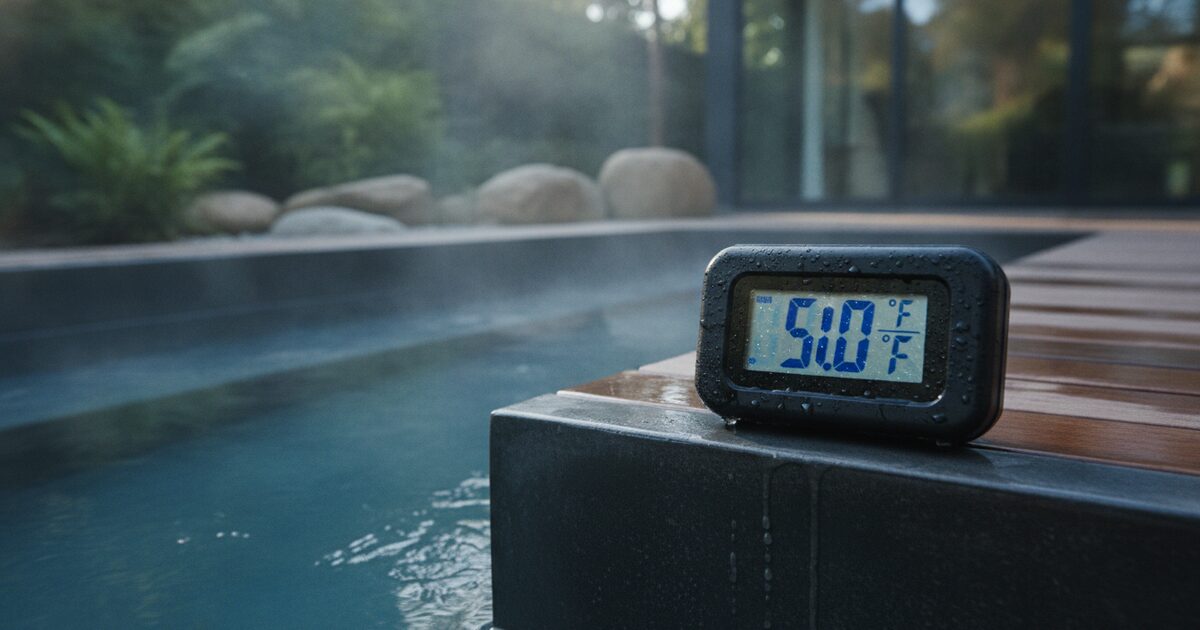
| 50 to 54°F | Regular users who want more intensity | 1 to 3 minutes |
| 45 to 49°F | Experienced users | 30 seconds to 2 minutes |
| Below 45°F | Experienced users, ideally supervised | 30 seconds to 1 minute |
These are common starting points, not doses tested head to head in a trial. The colder the water, the shorter the plunge. If your hands stop working or you can't slow your breathing within the first minute, the water is too cold for you today.
Myth 1: Colder is always better
The best-known analysis of temperature comes from a 2016 meta-analysis in Sports Medicine that pooled nine randomized trials comparing cold water immersion with passive recovery after exercise. Cold water was slightly better than resting for muscle soreness. The best results came with water at about 11 to 15°C, or roughly 52 to 59°F.
A larger 2023 update in the Clinical Journal of Sport Medicine, covering 44 studies, found that water temperature did not change the result much. Cooler and colder water both helped soreness compared with doing nothing.
So near-freezing water is not required. If you enjoy 40°F water, go ahead, but 50s°F water is enough for recovery, and it is much easier to stay consistent with.
Myth 2: Longer is always better
The same two reviews looked at time. In the 2016 analysis, 11 to 15 minutes performed best, but those trials mostly used water in the 50s°F with athletes after hard exercise. The 2023 update found that short and medium immersions helped, while longer immersions did not add delayed benefit for soreness.
For most people at a studio, two to five minutes per plunge at 50 to 59°F is plenty. Many do two or three short plunges with warm-ups in between rather than one long one. First-timers should stop at 30 seconds to a minute, as covered in first cold plunge questions.
Myth 3: There is a proven weekly dose
The "11 minutes a week" figure comes from a 2021 study in Cell Reports Medicine led by Susanna Søberg at the University of Copenhagen. Researchers studied young Danish men who had been winter swimming two to three times a week and compared them with controls. The winter swimmers reported a weekly average of about 11 minutes in cold water and 57 minutes in the sauna. They showed differences in how their bodies produced heat in response to cold.
That 11 minutes described what these experienced swimmers already did. The study did not test 11 minutes against 5 or 20. It is a sensible weekly target to spread across two or three sessions, but it is not a threshold you need to hit for something to happen.
Myth 4: The first-minute panic means something is wrong
The gasp and fast breathing in the first seconds is the cold shock response. A 2024 meta-analysis in the Journal of Thermal Biology found that this response gets smaller with repeated immersion, often after about four sessions, with lower heart rate and breathing rate on later plunges.
That is good news for beginners. The first few plunges are the hardest part. Get in slowly, keep your hands on the edge, and focus on long exhales. It is also the reason not to plunge alone in very cold water, and the reason some people should skip it, covered in who should not cold plunge.
Myth 5: Timing does not matter
For soreness, plunging soon after hard endurance work is fine. For muscle growth, it may not be. In a 2015 study in The Journal of Physiology, 21 active men lifted twice a week for 12 weeks. Those who did 10 minutes of cold water immersion after each session gained less strength and muscle than those who did active recovery.
If building muscle is the goal, plunge on rest days, before training, or several hours after lifting. More detail on protocols is in the ice bath science guide.
Why Tampa tap water won't get cold enough in summer
The City of Tampa lists the Hillsborough River as its primary water supply. Surface water in this part of Florida gets very warm in summer. NOAA's water temperature gauge in St. Petersburg averaged about 89°F in August 2025, and even in mid-January through mid-February 2026 it averaged around 60°F.
That explains two things you will notice here:
- Ice-only home plunges struggle. Getting a tub from summer tap temperature down into the 50s°F takes a lot of ice, and it melts fast in a hot garage or on a patio.
- Most studios use chillers. Commercial plunges hold a set temperature all day. Published ranges vary. Plunsana in St. Petersburg, for example, lists cold plunges at 39 to 51°F on its site. Ask any studio what its tubs run before you book, especially if you are new.
If you want to compare studios in the area by setup and price, the cold plunge options in Tampa page lists local providers, and the Tampa Bay bathhouse guide covers social sauna and cold tub venues.
A simple way to pick your number
- Start at 60 to 65°F if you are new, for 1 to 2 minutes.
- Drop a few degrees every week or two as long as you can steady your breathing within the first minute.
- Settle in the 50 to 59°F range for 2 to 5 minutes per plunge.
- Aim for roughly 10 to 15 minutes of total cold per week across your sessions.
- Keep cold away from right after lifting if muscle growth matters to you.
Most people find their long-term temperature within the first month. It tends to be a few degrees warmer than the number they read about online, and they keep going back.
For the heat side of a contrast routine, sauna temperature covers the numbers for traditional, infrared, and steam rooms.