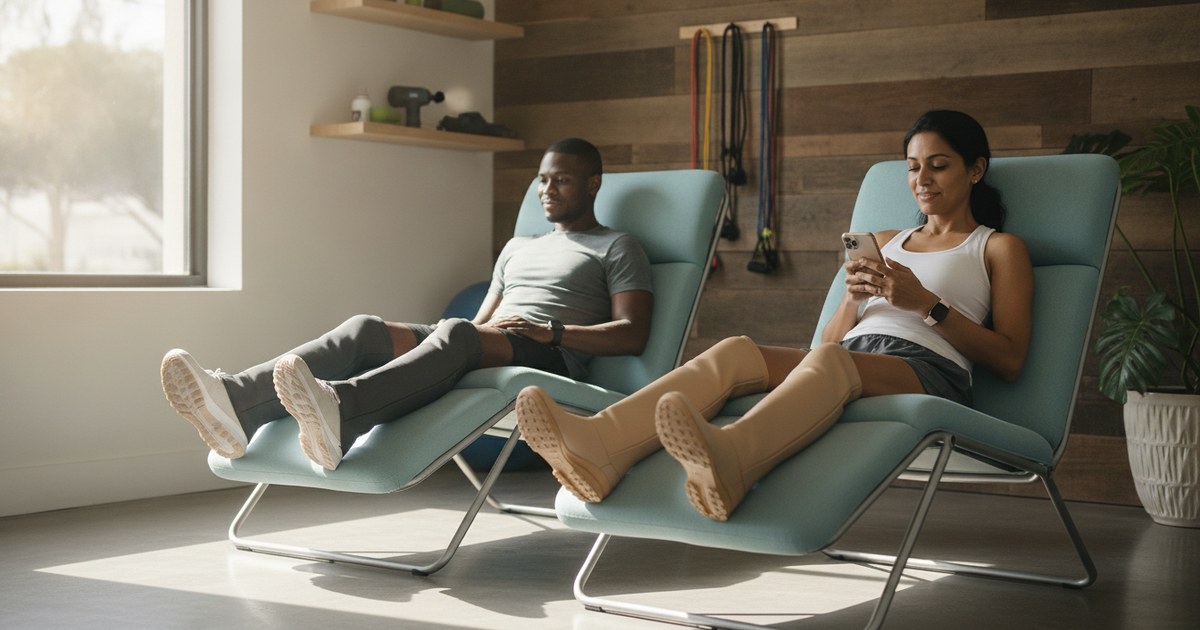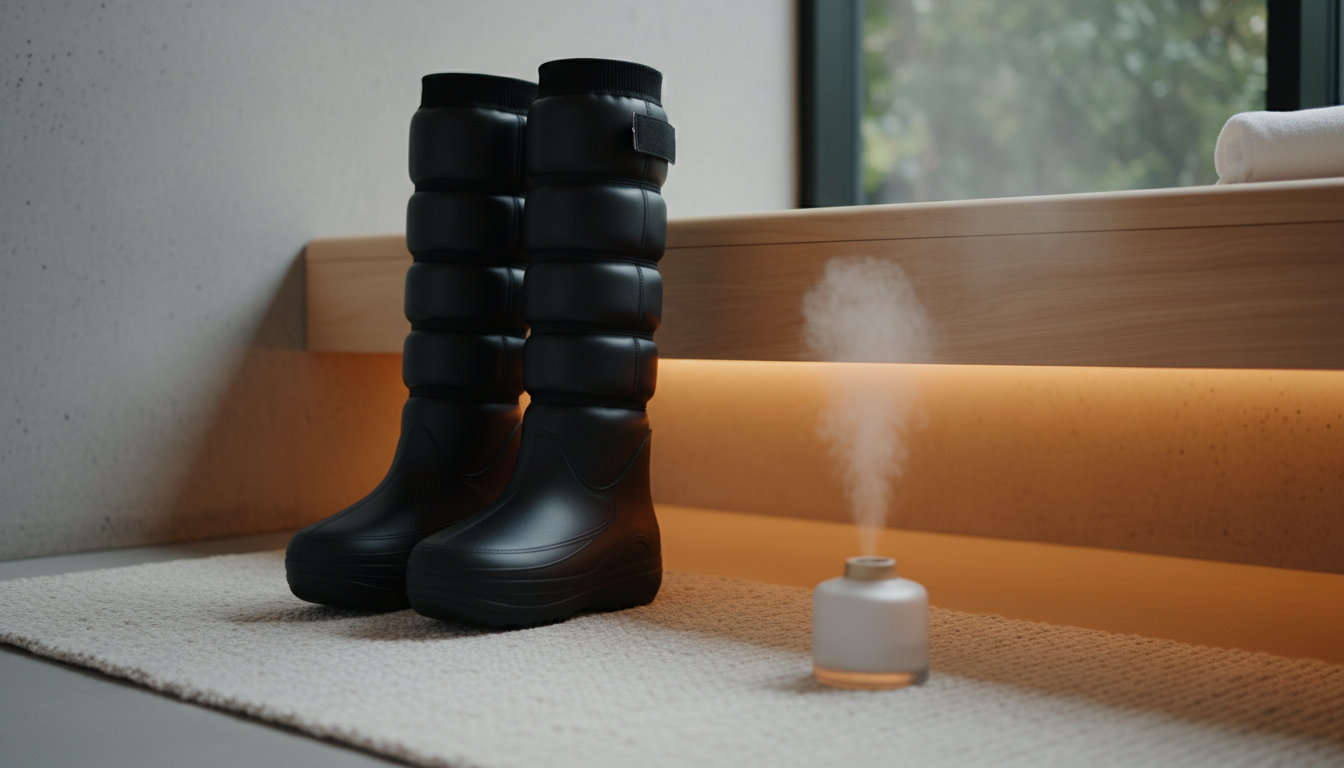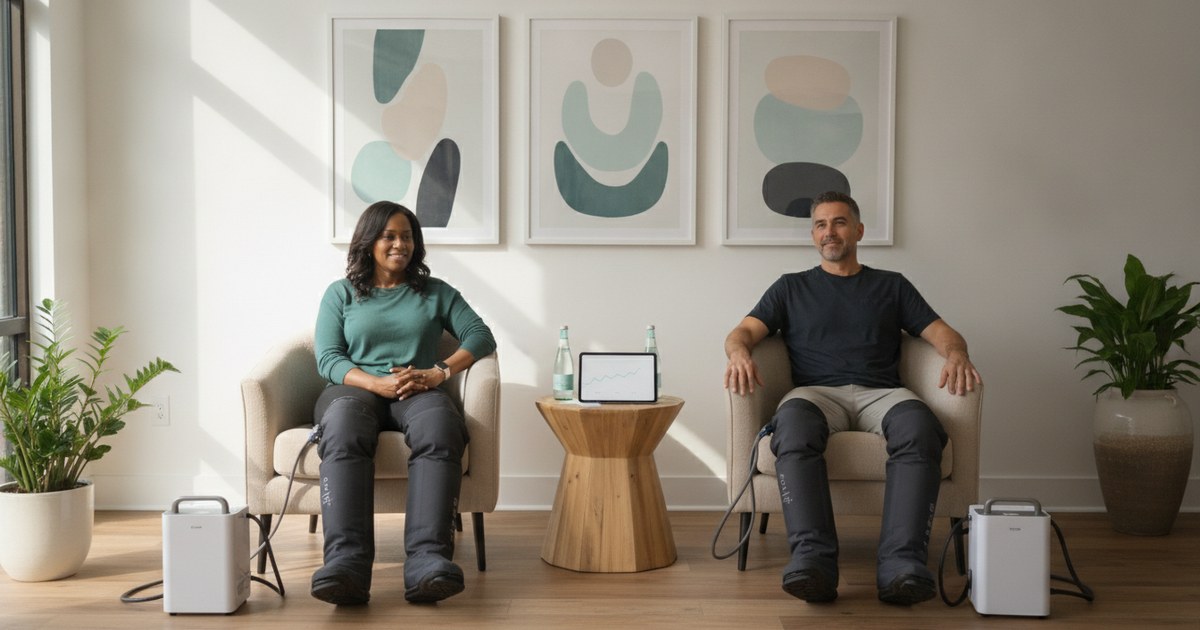
A booking for compression massage may mean inflatable recovery boots, hands-on massage, or a combination. In a recovery studio, staff often use the term for pneumatic boots that squeeze and release around your legs. Ask what the price includes before comparing it with a massage therapist's appointment.
This guide covers machine-based compression. Tampa Bay providers may sell it as a standalone session, an add-on, or a membership benefit. Get a current quote for the location and session length you want.
What compression massage includes
Pneumatic compression devices use inflatable chambers to apply pressure in cycles. Staff fit boots or sleeves, choose settings within the device instructions, and explain how to stop the session. You usually sit or recline while the machine runs.
A therapist's hands-on massage is a different service. The therapist can assess how you respond to touch and adjust the work during the appointment. Manual lymphatic drainage is another specific technique; a boot session is not automatically equivalent to clinician-directed care for lymphedema or post-surgical swelling.
Before booking, ask whether the fee covers:
- The boots or sleeves you want to use, including a fit check.
- Staff setup, pressure adjustment, and instructions for stopping.
- The advertised session time, rather than only access while another treatment runs.
If you are comparing medical swelling treatments, discuss the options with your clinician. The manual lymphatic drainage versus compression guide describes the different service types.
Does compression massage improve recovery?
A 2024 systematic review and meta-analysis examined 17 studies involving 319 participants. Researchers found small effects on muscular function, some potential improvement in pain or soreness, and variable findings for muscle-damage markers. Protocols differed, which limits how well those findings translate to a particular studio visit.
A 2025 systematic review found moderate-certainty evidence that intermittent pneumatic compression did not reduce muscle soreness at 24 hours compared with control. The reviews do not establish a reliable performance benefit from every session.
You may enjoy the pressure or feel more comfortable afterward. Do not treat that as proof the boots flushed toxins, prevented an injury, or replaced sleep and an appropriate training plan. Compare cost against the experience you value, not a guaranteed recovery result.
Who should ask a clinician first?
Seek advice before using compression if you have a suspected blood clot, circulation problems, unexplained swelling, a recent operation, or another condition that may make pressure unsuitable. New one-sided swelling, redness, or pain needs assessment rather than a recovery-studio experiment. Seek urgent care for symptoms such as chest pain or shortness of breath.
Ask staff to check fit and explain the pressure settings. More squeeze is not a marker of better treatment. Stop if you develop pain, numbness, tingling, or skin-color changes.
Why Compression Is the Cheap Item on the Menu
A pair of recovery boots costs a studio a fraction of what a cold plunge or an infrared cabin costs. No plumbing, no ventilation, no water chemistry, no dedicated room. One staff member can keep several chairs running at once, and the whole setup fits in the space a single sauna would eat.
So compression ends up doing a job that has little to do with recovery science. It fills the gap while a room turns over. It makes a membership tier look fuller. It gives the desk something to offer when the plunge is booked solid.
Priced on its own, compression therapy generally lands between $20 and $40 per session in the Tampa Bay area. Treat that as a typical band rather than a quote. Studios set their own numbers, and plenty of them do not publish a standalone rate at all.
The Standalone Price and the Add-On Price Are Different Questions
People get quoted the wrong one constantly.
The standalone price is what you pay when compression is the only reason you drove over. It sits in that $20 to $40 band and buys you a chair for a fixed block of time.
The add-on price is what you pay when the boots are stapled to something else. Studios built around sauna or plunge tend to price compression at the bottom of the band as an attachment, or fold it into the session and not charge separately.
The add-on is usually the better deal, and it is also the version most people actually use. If you are already paying for 40 minutes in a sauna, 20 minutes in boots afterward rarely moves the bill much. It is worth asking about, because it is not always on the menu board.
What Memberships Do to the Number
A compression-focused monthly membership in this market generally runs $100 to $200, again as a typical range that varies by studio.
Run that against singles before you sign anything. At $30 a session, a $150 month needs five visits to break even, and the sixth visit is where you start actually saving. If your honest usage is twice a month, the membership is a donation.
Most people are not buying a compression-only membership anyway. They are buying a multi-service one and the boots come along for the ride. For a credit-based membership, ask how many credits one compression visit uses, whether credits expire, and whether a minimum commitment applies. A published monthly fee is not the same as the cost of the visits you will use. Check the location's current terms rather than assuming all branches offer the same plan.
MyJourneyMD in Land O' Lakes (19455 Shumard Oak Drive Unit 106) includes compression boots in its wellness membership tiers. Atlas Performance Center in Wesley Chapel (3740 Windcrest Dr) runs compression next to its cold plunge and sauna and quotes pricing directly.
If you are comparing local options side by side, compression therapy in Tampa lists who offers it and where.
Buying Your Own Boots
This is the real question behind most compression price searches, and it deserves an honest answer rather than a confident number.
Consumer compression gear falls into rough tiers. At the bottom are basic sleeve systems with one or two chambers, simple timers, and limited pressure control. In the middle sit the recognizable recovery brands, including the Normatec line Hyperice sells, with multiple chambers, adjustable pressure, and app control. At the top are clinical and professional units built for repeated daily use in a training room.
I am not going to quote prices for those tiers. They move with sales cycles, model refreshes, and refurbished stock, and prices vary widely even inside a single tier. Check current retail for the specific model you are considering.
The math itself is simple. Take that current price and divide it by the per session price you would otherwise pay. The quotient is your break-even session count. If it comes out near 30, you are committing to roughly once a week for seven months before the purchase beats walking in.
Then ask the harder question: will you actually use them that many times? Boots that live in a closet have an infinite cost per session. If you want the background on what the devices do differently, Normatec compression recovery boots covers the equipment side.
Thirty Minutes or Sixty
Most studio sessions are sold in 20 to 30 minute blocks, and that is usually enough. Longer sessions exist, and some studios will let you sit for an hour if the chair is free. The price difference tends to be small, because the marginal cost to the studio is a chair and a timer.
Longer is not automatically better. Plenty of people find the back half of a 60 minute cycle tedious rather than useful, and the protocols studios lean on are generally shorter than that. Timing also depends on when you use them. Compression boots before a workout is a different use case than a flush after a long run, and the block length people report liking differs between the two.
Who Probably Should Not Buy
Four times a year is not a purchase. It is a $30 walk-in. Travelers who want leg relief after a flight are better served by an occasional session than by hauling a boot system through an airport.
Same goes for anyone still deciding whether they like the sensation. Compression is oddly polarizing. Some people fall asleep in the chair. Others find the squeeze around the calf genuinely unpleasant and never go back. One walk-in tells you which camp you are in for less than the cost of dinner.
And if your interest is swelling rather than sport recovery, the decision changes shape. Lymphatic compression therapy uses covers that side, and it is worth a conversation with a clinician before spending anything, since pressure settings and contraindications matter more there than they do for sore legs.
Compare compression massage and recovery-boot providers in Tampa by total cost, equipment, and travel time. Before paying, confirm that your booking is machine-based compression and ask whether you can try one visit before buying a package.