Short answer: red light therapy does not make you lose weight. What the studies measured was inches, at the waist, hips, and thighs, over a few weeks. The scale did not move, because the studies were designed so it wouldn't.
That distinction is the whole story. It's also why the marketing and the research sound like they're describing two different treatments.
Inch Loss vs Weight Loss vs Fat Loss
These three get used interchangeably in ads. They're not the same thing.
| Term | What it measures | What red light research shows |
|---|---|---|
| Weight loss | Pounds on a scale | Not tested as an outcome; weight was held steady |
| Inch loss | Tape measure at set body sites | Small, statistically significant drops in some trials |
| Fat loss | Fat layer thickness, fat mass | Mixed; one small trial found no change on ultrasound |
Inches are the easiest of the three to move and the easiest to move temporarily. Tape placement, water, bloating, and time of day all shift a circumference measurement. That's not a reason to dismiss the trials. It is a reason to read the numbers carefully.
What the FDA Actually Cleared
Low-level laser devices for body contouring fall under a specific FDA regulation, 21 CFR 878.5400, "Low level laser system for aesthetic use." FDA's product code for the category (OLI) is labeled "Fat Reducing Low Level Laser." The first device in that category was Erchonia's, through a de novo decision in 2010.
The wording of the clearances matters. Here is what FDA's 510(k) documents say for Erchonia's Zerona devices:
- Zerona (K121695, 2012) and Zerona 2.0 (K123237, 2013): "a non-invasive dermatological aesthetic treatment as an adjunct for individuals intending to undergo liposuction procedures for the reduction of circumference of hips, waist, and thighs." Prescription use.
- Zerona VZ8 (K243811, January 2025): "a non-invasive dermatological aesthetic treatment for the reduction of body circumference." Over the counter.
Notice what isn't there. No weight loss. No fat loss claim in the indication. Clearance also isn't approval; a 510(k) means FDA found the device substantially equivalent to one already on the market, not that it ran its own efficacy review.
So when a clinic says "FDA cleared for weight loss," that's not what the paperwork says.
What the Trials Found
Three studies come up again and again. They point in different directions.
Jackson and colleagues, 2009 (Lasers in Surgery and Medicine). A double-blind, sham-controlled trial of 67 adults with a BMI between 25 and 30. The device used 635 nm diode lasers, three sessions a week for two weeks. The treated group lost 3.51 inches of combined circumference across waist, hips, and both thighs, against 0.68 inches in the sham group. Two weeks after treatment ended, the treated group had gained back 0.31 inches.
Caruso-Davis and colleagues, 2011 (Obesity Surgery). 40 adults with a BMI under 30, randomized to laser (635 to 680 nm) or control. Waistlines were treated 30 minutes, twice a week, for four weeks, and people were told not to change diet or exercise. The laser group ended up with a waist about 2.15 cm (under an inch) smaller than the control group. The analysis only included people whose body weight stayed within 1.5 kg during the study.
Elm and colleagues, 2011 (Lasers in Surgery and Medicine). A tiny split-body study, five people, using the Zerona system. No statistically significant circumference reduction at one week or one month, and no significant change in fat thickness on ultrasound. Three blinded dermatologists picked the post-treatment photo correctly 51.1% of the time, which is a coin flip.
There's also a 2012 report of 689 clinic patients averaging 3.27 inches of loss. It was retrospective and uncontrolled, using numbers the clinics sent in, so it tells you what clinics recorded rather than what the light did.
Here's the thing about the positive trials: they're real, they were controlled, and the effect is small. Less than an inch at the waist over a month, or a few inches spread across six measuring sites, some of which drifts back.
Why Red Light Could Shrink Inches Without Burning Fat
The proposed mechanism is that certain wavelengths make fat cells release some of their stored lipid, so the cells shrink without dying. Caruso-Davis's lab work found triglyceride release from fat cells without the cells breaking apart.
Where that fat goes next is the open question. If you're eating the same and moving the same, your body can simply store it again. That lines up with the small regain seen in the 2009 trial, and it's why even device makers pair these treatments with diet and exercise advice.
Burning fat still comes down to energy balance. Light doesn't change that.
The Studio Red Light Bed Is a Different Thing
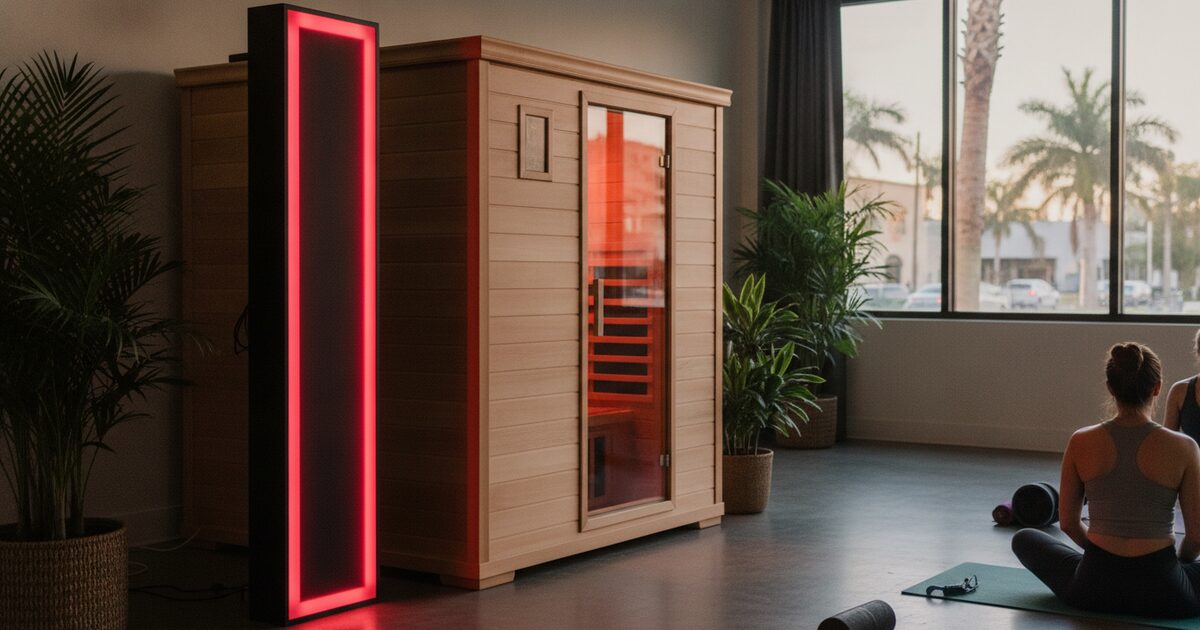
Most red light in Tampa Bay is sold through recovery studios and wellness clinics as full-body LED beds and panels, for skin, soreness, and general recovery. Those are not the same devices used in the body contouring trials, which were specific laser systems run on a fixed protocol.
That doesn't mean a studio bed does nothing. It means you can't borrow Zerona's trial numbers for it. If a studio is selling red light specifically for inch loss, ask three things:
- What device is it, and what does its FDA clearance say?
- How are measurements taken, by whom, and at the same time of day?
- What happens to the result a month after the package ends?
For how red light is usually scheduled for skin and recovery goals, see how often to do red light therapy. For what a realistic result looks like on skin, see red light therapy before and after.
What It Costs in Tampa
Single red light sessions in Tampa Bay typically run about $20 to $45, based on our red light therapy cost guide. One published example: Tampa Bay Total Wellness in Hyde Park (300 S Hyde Park Ave) listed an unlimited red light membership at $249 a month when we checked in September 2026.
Run the trial protocol through those numbers. Eight sessions over four weeks at $30 each is about $240. That buys you, based on the best controlled trial, a waist a bit under an inch smaller than if you'd done nothing, with a real chance of some of it coming back.
Dedicated body contouring packages on laser devices are priced differently and often quoted only at a consultation. Get the total in writing, and get the measurement protocol too.
Local studios and clinics offering red light are listed on the red light therapy in Tampa page.
Where Red Light Fits If Weight Is the Goal
Honestly, it's a finishing tool at best. If you're already losing weight through diet, activity, or medical treatment and want to target a stubborn area before an event, the trial data gives you a reason to think a small, temporary circumference change is possible. If you're hoping it will replace the diet and activity part, the research doesn't support that.
The same is true of the other "passive" options people ask about. Sweating in a sauna drops water, not fat, as covered in does a sauna help you lose weight. Cold exposure raises energy use a little, and the details are in cold plunge and metabolism. None of them is a substitute for eating less and moving more, and none of them claims to be in their FDA paperwork either.
Who Should Ask a Clinician First
Red light is low risk for most people, but check with a clinician first if you're pregnant, take medications that make you sensitive to light (some antibiotics, acne drugs, and others), have a history of skin cancer in the treatment area, or have a light-triggered condition such as lupus. Wear the eye protection the studio provides. And if your real goal is medical weight loss, that's a conversation for a physician, not a light bed.