The answer depends on the goal. Clinical trials give clearer guidance than most studio sales pitches. The schedule comes first below, then the reasons behind it.
The Schedule
| Goal | Schedule used in studies | How long before you judge it | Main source |
|---|---|---|---|
| Fine lines and skin texture | 2 sessions a week | About 30 sessions (15 weeks) | Wunsch and Matuschka, Photomedicine and Laser Surgery, 2014 |
| Pattern hair loss | Every other day, or 3 times a week | 16 to 26 weeks | Lanzafame, Lasers in Surgery and Medicine, 2013 and 2014; Jimenez, American Journal of Clinical Dermatology, 2014 |
| Workout performance and soreness | Before training sessions | A few weeks of training | Leal-Junior, Lasers in Medical Science, 2015 |
| Acne and redness | Several sessions a week, sometimes with blue light added | At least 4 to 8 weeks | Studio practice; see red light for acne and acne scars |
| Maintenance after a skin course | 1 to 2 times a week | Ongoing | Studio practice, not a trial |
Three rules cover most people:
- Two to three sessions a week for skin and hair.
- Run a full course before you judge. For most goals that means 12 to 16 weeks.
- Do not stack extra sessions to speed things up.
Skin: Twice a Week Worked in Trials
The best-known skin trial randomized 136 volunteers. The treated groups had two red light sessions a week. After 30 sessions, blinded evaluators rated the photos better than the controls, and ultrasound showed higher collagen density. So twice a week for about four months is a reasonable, evidence-based plan.
Studios often suggest three to five short sessions a week at the start. That is more than the trial used. It will not hurt you, and it will not necessarily help more.
Hair: Every Other Day, for Months
Hair is slower than skin, and the trials show it. The Lanzafame trials used a 655 nm helmet for 25 minutes every other day over 16 weeks. That was 60 treatments in total. Men and women in the active groups gained significantly more hair in the measured area than the sham groups. The HairMax laser comb trials used three sessions a week and measured results at 16 and 26 weeks.
If you are in a studio twice a week for hair, you are below those schedules. That is one reason people with hair goals often buy an FDA-cleared home device. More in red light therapy for hair growth.
Recovery: Timing Beats Frequency
For muscle, when you do it matters more than how often. A meta-analysis of 13 randomized trials found that red and near-infrared light improved repetitions and time to exhaustion. The most consistent results came when the light was applied before exercise. In practice, that means a short session on your training days, before the workout.
Why More Is Not Better
Light therapy follows a biphasic dose response. Harvard researchers laid this out in Dose-Response (Huang and colleagues, 2009, with an update in 2011). A low dose does little. A moderate dose works best. A much higher dose gives less benefit, and in some lab models it gives none. The same curve showed up when researchers varied the number of treatments, not just the size of each one.
So two sessions in one day, or doubling your session length, can move you past the useful range. Consistency over months matters more than intensity in one week.
The Dose Math in One Paragraph
A dose has two parts: irradiance, the power reaching your skin in milliwatts per square centimeter (mW/cm²), and time. Multiply them and you get fluence in joules per square centimeter (J/cm²).
Example: 50 mW/cm² for 3 minutes (180 seconds) is 9,000 mJ/cm², or 9 J/cm². That is close to the red light dose used in the 2014 skin trial.
Two things change this in real life:
- Distance. Irradiance drops fast as you move away from the panel. Manufacturers often measure their spec at very close range.
- Coverage. A small panel doses a small area. A full-body bed doses everything at once, often at lower irradiance.
If a studio cannot tell you the irradiance at the distance you will sit, you are guessing at the dose.
Studio or Home
Frequency drives cost. Three studio sessions a week at around $30 each comes to about $360 a month. We did the full math in red light therapy cost in Tampa.
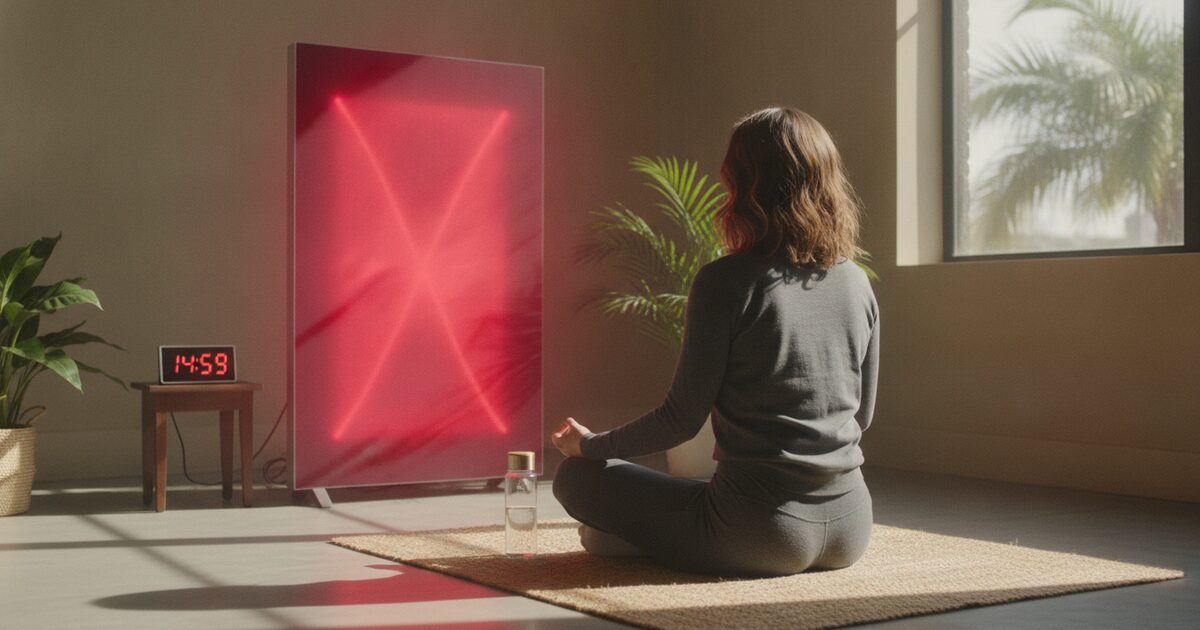
- Studio makes sense for full-body goals, for recovery, or if you already go for the sauna. Adding red light to a sauna visit is often cheap. See red light therapy vs infrared sauna.
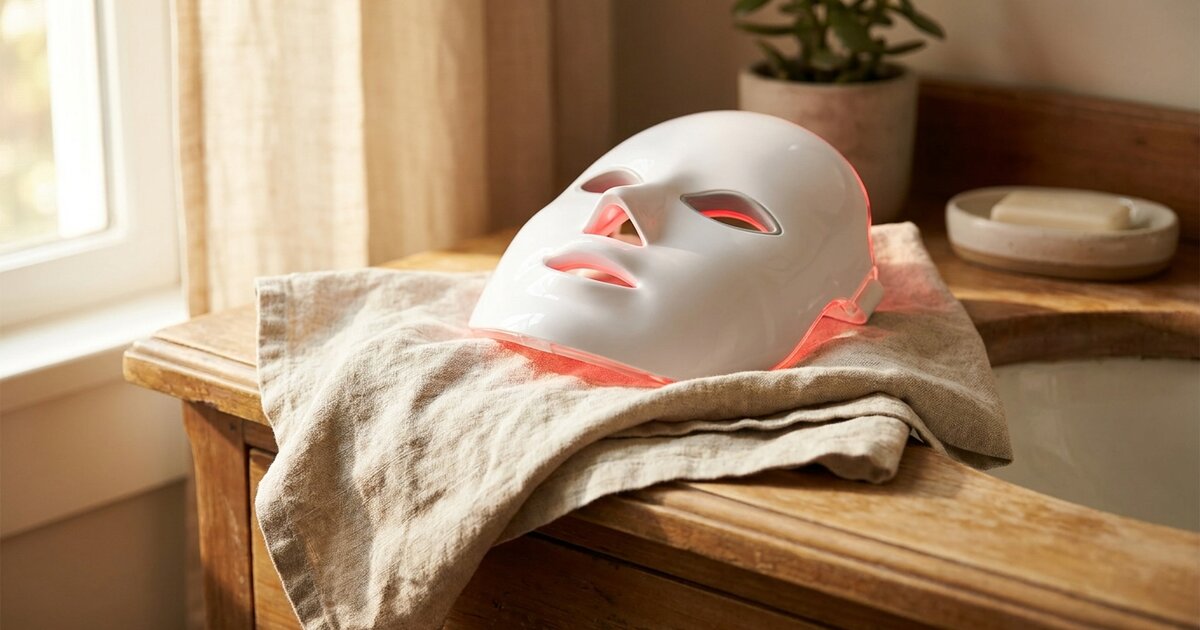
- Home makes sense for face or scalp goals that need three or more sessions a week for months. Only if you will use it. For face masks specifically, see do red light masks work.
Safety
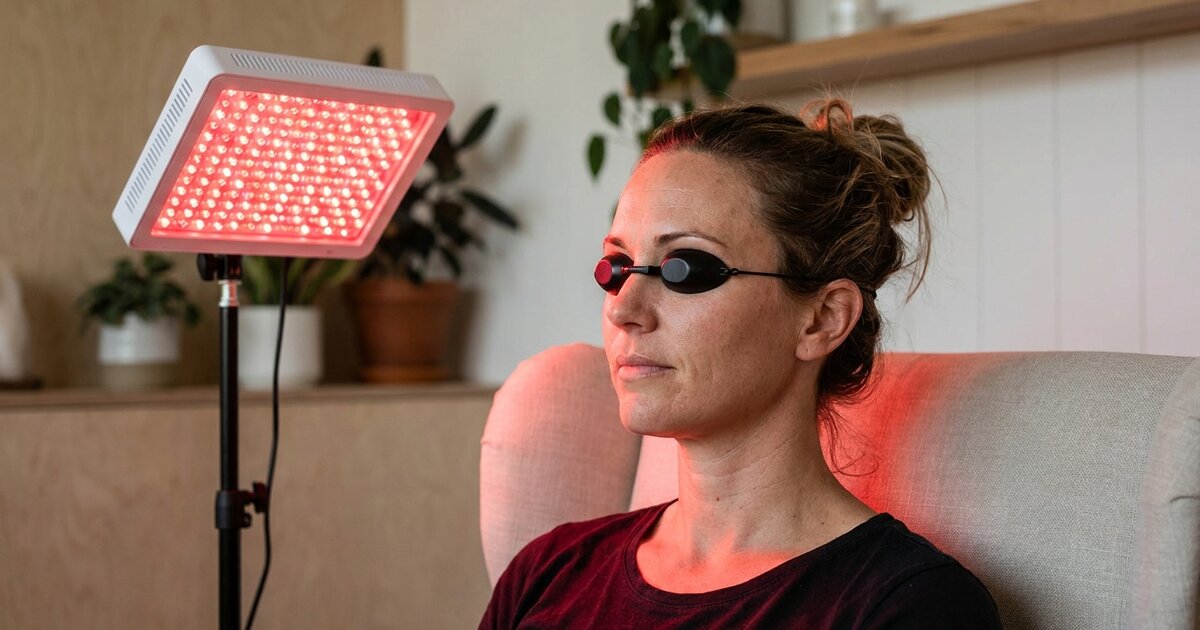
- Wear eye protection when a panel is close to your face.
- Check your medications. Some antibiotics, acne drugs, and other prescriptions make skin more sensitive to light.
- Skip sessions on active rashes, and do not use red light over a sunburn.
- Pregnancy and any light-triggered condition are a conversation with your doctor first.
- Using red light in the evening for sleep is a different question from treatment frequency. See red light therapy for sleep.
For how red and near-infrared light differ from blue and other colors, read red light therapy for skin and recovery.
Finding Sessions in Tampa Bay
If you want studio sessions, compare providers, published prices, and memberships on our red light therapy in Tampa page. Ask each one two questions before you commit: the irradiance at the distance you will sit, and whether the membership covers the number of sessions your goal needs.